 Emily Wang
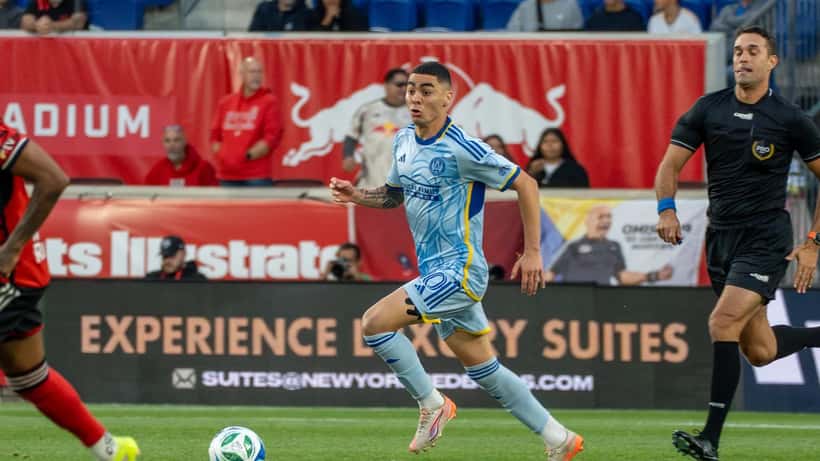
On June 20, 2026, Miguel Almirón became the first player in history to be dismissed under the new "Prestianni Rule" at a FIFA World Cup — changing the course of Paraguay's opening match against Türkiye and raising urgent questions about sports law and the limits of FIFA's disciplinary power.
What Happened in Paraguay vs. Türkiye
The incident erupted in the 45th minute of Paraguay's Group D clash at Levi's Stadium in Santa Clara, California. After a hard foul by Hakan Çalhanoglu on Paraguay's Isidro Pitta, tempers flared between players of both sides. In the chaos, Almirón — one of Paraguay's most experienced midfielders — was seen covering his mouth while exchanging words with a Turkish defender. The referee instantly produced a straight red card.
The dismissal left Paraguay playing more than 45 minutes of a World Cup group stage match with 10 men. Despite the adversity, Paraguay held on to their 1-0 lead, with Galarza's early goal proving decisive. The result was historic — but so was the legal controversy it unleashed.
What Is the Prestianni Rule?
The regulation was adopted by FIFA and IFAB in early 2026 following a highly publicized incident in the UEFA Champions League. In February 2026, Argentine forward Gianluca Prestianni of Benfica was caught covering his mouth while directing language toward Vinícius Júnior of Real Madrid during a knockout-stage match. UEFA determined the language was discriminatory, handing Prestianni a six-match ban — three of which were suspended.
The new rule — informally called the Prestianni Rule or Vinicius Rule — permits referees to issue a straight red card to any player who covers their mouth during a confrontation with a player, official, or opponent. The presumption is that the concealment is intended to hide abusive, discriminatory, or threatening language from cameras and professional lip-readers employed by governing bodies.
Under the FIFA Disciplinary Code, covering the mouth during a confrontation is now treated as misconduct equivalent in severity to violent conduct when the referee determines the gesture was intentional. The rule applies to all FIFA competitions globally as of the 2026 season.
How FIFA Red Card Appeals Work
Under the FIFA Disciplinary Code, players and national associations have the right to appeal any red card decision. However, the process is more complex than many fans realize — and the timeline is unforgiving at a World Cup.
FIFA's Appeal Committee, a standing body within FIFA's judicial structure, hears challenges to decisions made by the FIFA Disciplinary Committee. A national association — in this case the Asociación Paraguaya de Fútbol (APF) — must file a formal appeal within 24 hours of notification of the sanction. The appeal must cite specific legal grounds: factual error, procedural violation, or misapplication of the FIFA Disciplinary Code.
In practice, three outcomes are possible:
- Suspension upheld — the red card stands and the automatic one-match ban applies
- Reduced to yellow — the card is converted to a caution; no suspension follows
- Exonerated — the card is rescinded entirely and the player is immediately available
The timeline matters enormously at a tournament. Group stage suspensions at a World Cup are served in the very next match. If Paraguay's appeal is not resolved before their second group fixture, Almirón will miss that game regardless of the eventual ruling.
The Ronaldo Precedent That Paraguay's Lawyers Are Watching
A key recent precedent involves Cristiano Ronaldo, whose pre-tournament red card suspension in 2026 was "stayed" by FIFA pending a formal appeal — allowing him to play Portugal's opening game while the full review took place. The Portuguese Football Federation applied for a suspension of the suspension itself, a procedural mechanism available under Article 13 of the FIFA Disciplinary Code.
This "stay of suspension" requires an association to demonstrate that enforcing the ban before the appeal decision would cause irreparable harm that cannot be remedied later. In a World Cup context — where a missed group stage match can eliminate a nation — arbitration panels have historically been sympathetic to such applications.
Paraguay's legal team may argue exactly this point. Unlike regular-season club football, a missed World Cup match cannot be compensated by future games. An automatic suspension served before an appeal ruling could knock Paraguay out before their case is even heard.
The Prestianni Rule's Legal Vulnerabilities
The new rule faces a significant challenge: it is based on presumption, not proof. A referee cannot verify with certainty what was said when a player covers their mouth. This distinguishes the Prestianni Rule from standard violent conduct dismissals, where the act itself — the foul, the push, the dangerous tackle — constitutes the offense.
Legal challenge at the Court of Arbitration for Sport (CAS), headquartered in Lausanne, Switzerland, is also available if FIFA's internal Appeal Committee upholds the ban. CAS has overturned FIFA disciplinary decisions before, particularly in cases where burden-of-proof standards were not met. The Prestianni Rule, given its novelty and reliance on inference rather than verified conduct, may be particularly susceptible to CAS scrutiny.
For Paraguay, the legal question is whether FIFA can impose a sanction for speech it cannot verify. For sports lawyers watching from the sidelines, this is a landmark test case.
What Steps Should Paraguay Take Now?
If the Asociación Paraguaya de Fútbol — or Almirón's personal legal team — wants to challenge the red card, sports law experts outline the following immediate actions:
- File within 24 hours: The appeal window is strict. Late filings are rejected without substantive review.
- Request a stay simultaneously: Apply to suspend the ban pending the appeal, citing the irreparable harm of a missed World Cup group game under the Ronaldo precedent.
- Engage CAS provisional measures: CAS can order interim relief within hours in genuine urgent cases involving elite international competition.
- Preserve all evidence: Match footage, player statements, and expert lip-reader testimony will all be relevant if the dispute escalates beyond FIFA's internal bodies.
The complexity of FIFA disciplinary appeals — involving multilingual procedures, 24-hour deadlines, and highly specialized sports arbitration law — makes experienced legal representation essential. A lawyer familiar with both the FIFA Disciplinary Code and CAS procedure can mean the difference between Almirón lining up for Paraguay's next match or watching from a suite.
Isidro Pitta, the Paraguay forward whose collision with Çalhanoglu triggered the entire sequence, has already been navigating the legal landscape around his high-profile World Cup debut.
The Almirón red card is more than a sporting controversy — it is the first real stress test for a FIFA rule designed to protect players from hidden discrimination. How the appeals process resolves it will shape how referees, players, and lawyers interpret the Prestianni Rule for years to come.
This article provides general information about FIFA disciplinary procedures and sports arbitration. It does not constitute legal advice. For guidance on a specific sports law matter, consult a qualified attorney.
