 Michael Campbell
When a noncontact drill during practice ends Calvin Austin III's entire NFL season before a single regular-season snap, the image is jarring. No collision. No hit. One awkward plant, one torn ACL, and an entire contract year erased. Yet the deeper story is not about football — it is about the 53.7% of non-retired American households that carry no disability insurance whatsoever, according to 2026 industry data. For more than half of working Americans, a single injury on a Tuesday afternoon is the difference between financial stability and a spiral into savings depletion, credit card debt, and wage loss that SSDI was never designed to cover.
The Giants' 2026 Injury Wave: Three Players, Three Income Clocks Stopped
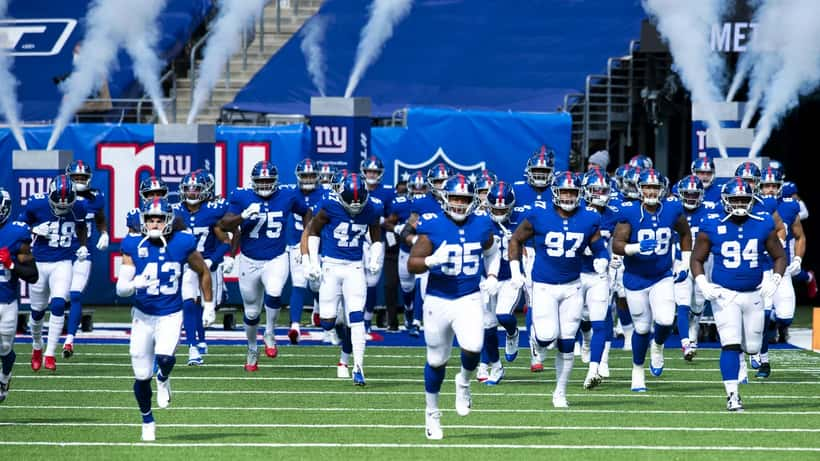
The New York Giants entered their 2026 NFL season having already absorbed a punishing sequence of injury losses, most occurring before their September 13 opener against the Dallas Cowboys.
Wide receiver Calvin Austin III signed a one-year deal in the offseason after four seasons with the Pittsburgh Steelers. He was playing for his next contract — the kind of productive, prove-yourself season that earns a wide receiver his first significant long-term guarantee. During a one-on-one practice drill, he went down with a noncontact knee injury. ESPN's Adam Schefter confirmed it was a torn ACL. Austin was carted off the field. His season, and his contract-year opportunity, was over before it began.
Wide receiver Malik Nabers, a former first-round pick, had already endured a September 2025 season-ending knee injury that required a follow-up procedure to remove scar tissue. Even heading into Week 1 of 2026, head coach John Harbaugh described his return as "reasonable to assume," which is NFL-speak for cautious optimism, not certainty. Gunner Olszewski was feared to have suffered a torn Achilles tendon during spring workouts.
Three players. Three serious injuries. Three income situations thrown into uncertainty — each handled differently under their respective contracts, their CBA protections, and the NFL's injured reserve rules.
NFL players have agents, union-negotiated protections, and guaranteed salary provisions. Most American workers have none of those.
By the Numbers: America's Disability Insurance Desert
The disability coverage landscape in the United States in 2026 can be described with a few figures that should alarm any working household.
At least 51 million working adults in the United States have no disability insurance beyond the basic Social Security Disability Insurance program, according to data aggregated by The Global Statistics. A separate measure shows that 53.7% of non-retired U.S. households report carrying no disability coverage of any kind.
When injury or illness strikes and a worker files for SSDI, the program's structural limitations come into immediate focus:
- 5-month mandatory waiting period before any payments begin
- Average monthly SSDI benefit: $1,630 (maximum: $4,152 per month)
- Average duration of a long-term disability claim: 34.5 months — nearly three years
A worker earning $75,000 a year who suffers a serious injury and relies exclusively on SSDI would receive approximately $55,000 in benefits over a 34.5-month claim period. Their lost income during that same window: roughly $215,000. The gap — more than $160,000 — does not close itself.
The Social Security Administration's own actuarial projections estimate that one in four of today's 20-year-olds will experience a long-term disability before reaching age 67. The risk is not rare. The coverage is.
70% of small businesses with fewer than 50 employees offer no long-term disability coverage to their employees, according to data from AssuredPartners. For workers at these companies — which employ roughly 47% of the U.S. private-sector workforce — SSDI is effectively the entire safety net.
What the NFL Can Teach Non-Athletes About Income Risk
Calvin Austin III's situation is illustrative beyond sports. He was not a starter with a fully guaranteed three-year deal. He was a free agent on a one-year contract, performing labor with a non-trivial chance of physical harm, trying to earn his financial security. The torn ACL did not just sideline him; it reset his leverage in the next contract negotiation, his earnings for 2026, and potentially the trajectory of his career.
Under the NFL's Collective Bargaining Agreement, injured reserve placements carry specific protections. A player on IR with a "non-football injury" designation receives a reduced benefit; one with a "football injury" designation receives a stipend based on their contract week, with the team obligated to cover certain medical costs. These distinctions — which require an agent and a union rep to navigate — exist because the NFL negotiated them over decades.
For the overwhelming majority of American workers injured on the job or off it, the equivalent infrastructure is either the employer's disability plan (if one exists) or an independent policy they took out themselves. According to Mercer Advisors, the average employer-provided long-term disability benefit replaces only 40% to 60% of pre-disability income, and those benefits are frequently taxable when the employer pays the premiums — meaning the actual take-home is lower still.
Internal context: for a detailed breakdown of what NFL injured reserve designation actually means for players' contract rights, see the Chargers IR placement breakdown or the earlier analysis of Tyreek Hill's pre-vesting release and what players are owed.
A Phoenix Teacher's 8-Month Recovery: Scenario A vs. Scenario B
Consider the situation of a 34-year-old high school teacher in Phoenix, Arizona, earning $68,000 per year — $5,667 per month gross. She receives employer-provided short-term disability coverage through the Arizona Department of Education: 60% of base salary for up to 90 days. Her employer offers no long-term disability plan. She has $18,000 in a savings account and no private disability policy.
In early October 2026, she fractures her ankle in a noncontact fall, requires surgical repair, and her orthopedist projects an 8-month recovery before she can stand for the 6-hour school day her role demands.
Scenario A — Employer coverage only, no private policy:
- Months 1–3 (state short-term benefit): 60% × $5,667 = $3,400/month → $10,200 total
- Month 4: SSDI application filed. The mandatory 5-month waiting period means no federal benefit until month 9 — which falls after her expected return to work.
- Months 4–8: zero income outside savings
- Emergency fund exhaustion: approximately month 6
- Total income during 8-month recovery: $10,200
- Estimated income lost vs. normal salary: $35,133
- Likely outcome: $16,933 in debt or depleted assets by month 8
Scenario B — Short-term employer coverage plus a private long-term disability policy at $92/month:
- Months 1–3 (employer short-term): $10,200 (same as above)
- Month 4 onward: private LTD benefit activates after 90-day elimination period, paying 60% of $5,667 = $3,400/month
- Months 4–8: $17,000 in protected income
- Total income during recovery: $27,200
- Income gap reduced from $35,133 to $18,133
- The $92/month premium cost $1,104 over 12 months — and prevented $17,000 in forced asset depletion
If the recovery extended to 18 months — consistent with complications common in surgical ankle reconstruction — the numbers widen dramatically. Scenario A produces total financial collapse (depleted savings, credit card debt at high interest, possible mortgage default). Scenario B delivers approximately $61,200 in protected income across the full recovery window, against a premium cost of roughly $1,656 for the year.
The key distinction is not luck. It is a $92/month decision made before the fall — the kind that never feels urgent until the moment it becomes essential.
What "Employer Coverage" Actually Means in Practice
Workers who believe they are covered because their employer "offers disability insurance" often discover, at the worst possible moment, what their policy actually says. Several distinctions matter:
Short-term vs. long-term: Most employer short-term plans cover 60 days to 90 days. After that, a separate long-term disability plan — if it exists — takes over, typically after an "elimination period" that aligns with the end of short-term coverage. If no long-term plan exists, the worker transitions to SSDI, with the 5-month waiting period described above.
Own-occupation vs. any-occupation: A policy that pays when you cannot perform "any occupation" is far less generous than one that pays when you cannot perform "your own occupation." A surgeon with a hand injury may be physically capable of working retail — but an any-occupation policy will deny the claim.
Benefit taxability: When an employer pays the premium, the benefit is typically taxable as ordinary income. A $4,000/month benefit may net $2,900 after federal and state withholding — a fact many policyholders discover only after they file their first disability claim.
Understanding these distinctions is not complicated, but it requires reviewing actual policy language rather than assuming coverage is adequate because coverage exists.
Closing the Gap Before You Need It
The New York Giants' 2026 injury epidemic is a reminder that income disruption from physical injury is not a hypothetical risk reserved for athletes. It is a statistically common event that the majority of American workers are financially unprepared for.
The steps to address the gap are straightforward: review your current employer-provided coverage, calculate the replacement income it would provide under a realistic injury scenario, assess how long your liquid savings would cover the difference, and determine what a private policy would cost to fill that shortfall.
A wealth management advisor or certified financial planner who specializes in income protection can run that calculation in a single consultation — identifying the actual dollar exposure, the policy type that fits your occupation and income, and whether your current assets provide sufficient runway to extend an elimination period (which lowers premium cost).
The Social Security Administration's disability resource portal at ssa.gov/benefits/disability provides a baseline overview of SSDI eligibility and benefit calculations — useful as a starting point for understanding the floor, not the ceiling, of your coverage.
Calvin Austin III had a contract year taken from him by a torn ACL in a Tuesday practice drill. Most Americans lack even the partial protections NFL players negotiate through their union. The cost of closing that gap is modest. The cost of discovering it does not exist — typically measured in five-figure emergency fund depletion and four to five months of zero income — is not.
Note: This article discusses general financial planning concepts. It does not constitute personalized financial, legal, or insurance advice. Consult a licensed professional for guidance specific to your situation.
produced: 1 (out of max 3) early_stop_reason: hard cap for 1 topic (1/1) format_used: Data deep-dive
