 Carl Graham
The Miami Dolphins made a business decision in February 2026 that cost wide receiver Tyreek Hill $11 million overnight — and it was entirely legal. The case is dominating sports headlines, but the legal question it raises extends far beyond football: what actually protects an employee when an employer cuts them just before contractual guarantees kick in?
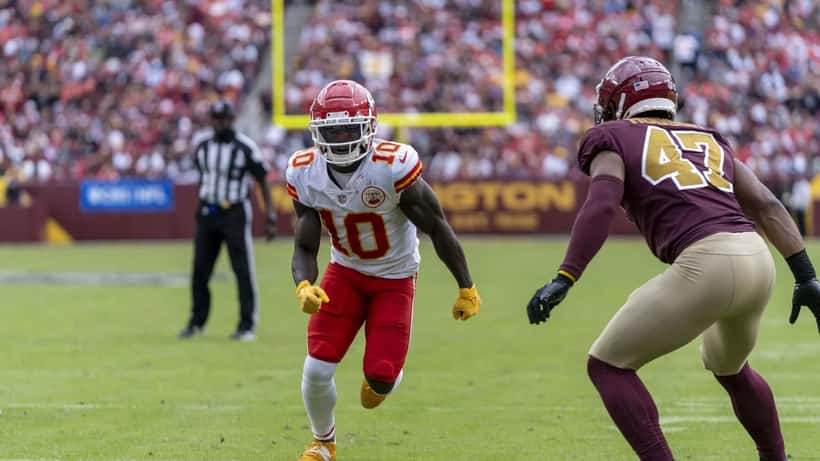
Hill suffered a dislocated left knee and a torn ACL on September 29, 2025, in a game against the New York Jets, ending his season in Week 4. The injury was devastating. The financial aftermath was worse. The Dolphins released him weeks later, just before February 15, 2026 — the date that would have made $11 million of his $30.3 million contract fully guaranteed. Hill, an eight-time Pro Bowler and five-time All-Pro, became an unrestricted free agent for the first time in his career. His agent, Drew Rosenhaus, does not expect him to play in the 2026 NFL season.
How a Contract Trigger Date Costs a Player $11 Million
NFL contracts contain date-based guarantee triggers — clauses that convert money from "guaranteed for skill" to "fully guaranteed" on a specific calendar date, typically tied to the start of the new league year. Teams structure these trigger dates deliberately to retain financial flexibility. The further the guarantee date sits from the prior season's injury deadline, the longer the team retains the right to release the player before paying.
In Hill's case, the Dolphins structured his deal so that $11 million remained conditional until mid-February 2026. When it became clear the injury would keep him sidelined for months, the team exercised the one option that contract structure gave them: cut him before the clock ran out.
This pattern — releasing an injured player shortly before a financial trigger — is not unique to Hill. The NFL Players Association identifies "guarantee date mechanics" as one of the most commonly disputed areas in modern player contracts. Multiple star players have faced the same timing squeeze in recent seasons, losing millions not because their contracts were unclear, but because the trigger dates were structured in ways that weren't fully explained at signing.
What the NFL CBA Actually Provides
The NFL's Collective Bargaining Agreement (CBA) offers some protection for injured players, but it is narrower than most fans — and many players — assume. Under Article 17 of the CBA, a team that releases a player who is not medically cleared must follow a defined legal process.
The player is placed on "waived/injured" status, signaling to all 32 teams that they are not medically available. If no team claims the player during a 24-hour waiver period, they revert to the releasing team's Injured Reserve list. From IR, the team is required to continue covering all medical expenses, and the two sides negotiate an injury settlement — a lump sum calculated based on a physician's determination of how many weeks the player is medically unable to perform.
Critically, this injury settlement is separate from — and typically far smaller than — any guaranteed money in the original contract. Hill did not receive the $11 million. What he received was a recovery settlement and the right to pursue other teams as an unrestricted free agent once medically cleared. According to the NFLPA's player guidance program, approximately 40% of NFL players enter their first major contract without dedicated independent legal review beyond their certified agent. The union has been actively working to reduce that figure for years.
As of October 2026, multiple teams have expressed interest in Hill, but a 2026 return remains uncertain. The injury left him in a position that no contract negotiation can fully reverse: the money tied to the trigger date is gone.
Why These Situations Require a Sports Law Attorney
NFL agents and sports attorneys serve different functions that are often confused. An agent negotiates deal terms — the numbers, the structure, the incentives. A sports law attorney examines the legal mechanics: which clauses are enforceable under state and federal labor law, what happens when a guarantee trigger is conditioned on roster status, and whether an injury-protection rider exists to convert the conditional money if a qualifying injury occurs before the trigger date.
For Hill specifically, a sports law attorney reviewing his 2022 contract would have flagged the February trigger date and pushed for injury-activation language — a clause converting the $11 million to fully guaranteed upon any in-season injury requiring surgery. This language exists in the NFL contract toolkit. It is not always used. And without an attorney advocating for it at signing, it rarely appears.
The principles here apply well beyond professional sports. Employment contracts with retention bonuses, equity vesting schedules, and performance-based guarantees follow the same structural logic as NFL player contracts: a trigger date, a condition, and a window in which the employer retains maximum flexibility. The mechanics that cost Hill $11 million are the same mechanics that routinely cost employees five and six figures in standard employment situations — just with less public scrutiny. Understanding how this pattern appears in NFL injured reserve and player contract rights cases makes the broader employment law risk much easier to see.
Concrete Case: The $58,000 Retention Bonus That Disappeared
Consider this scenario: a senior operations manager in Denver signs an employment agreement in January 2024 with a $58,000 retention bonus, vesting on March 1, 2027, as long as she remains a full-time active employee. On February 8, 2027, she is injured in a car accident on her way to a company offsite and begins a mandatory 10-week medical leave under FMLA.
The company's legal team reviews the contract on February 22, 2027. The retention bonus clause contains no injury exception — it simply requires continuous full-time employment on the March 1 vesting date. FMLA protects her job, but it does not extend contractual vesting dates. The company issues a termination notice on February 24, citing the vesting condition and the leave status.
If her original contract had included standard injury-protection language stating that any approved medical leave does not interrupt the continuous-employment threshold for the retention bonus, then the $58,000 would have vested on March 1 regardless of her leave. If the contract was silent on that point — as most boilerplate retention agreements are — then her only recourse is a lawsuit arguing that the termination was retaliatory under Colorado's workers' compensation retaliation statute (C.R.S. § 8-43-304). That case would cost at least $15,000–$25,000 in legal fees, with no guarantee of recovery, and takes 18–36 months to resolve.
A one-hour employment law review at the time of signing: typically $400–$600 in Denver. The gap between those two numbers is $57,400, at minimum.
Steps to Take When Your Contract Has Vesting Dates
These principles apply to anyone — athlete or employee — sitting across from a contract that includes date-based financial triggers:
Before signing, ask a labor or contract attorney to identify every vesting date, guarantee trigger, and condition precedent in the agreement. Ask explicitly whether injury, illness, FMLA leave, or disability can break the continuous-employment threshold. Push for protective language at that stage — employers are far more willing to add injury-protection riders before the contract is signed than after an injury has already occurred.
During employment, document medical events immediately and in writing. Verbal notification of an injury does not create the same legal record as a timestamped email citing the date, the nature of the injury, and your expected return timeline. In any dispute about a trigger date, the paper trail matters.
After a trigger date passes, do not accept the first settlement offer without independent legal review. Injury settlements — in the NFL and in standard employment — are negotiated figures, not fixed amounts. An attorney experienced in employment contracts can evaluate whether additional claims exist, including retaliation or breach of implied contract.
Tyreek Hill had one of the most experienced agents in the NFL. He had years of elite performance, a nine-figure career, and full union representation through the NFLPA. He still lost $11 million to a contract trigger date he did not control. For anyone with a retention bonus, an equity vest, or a performance guarantee in their employment agreement: the date in the contract matters as much as the number. Make sure both are working in your favor before you sign.
This article is for informational purposes only and does not constitute legal advice. For guidance specific to your circumstances, consult a qualified employment or sports law attorney.
