 Emily Wang
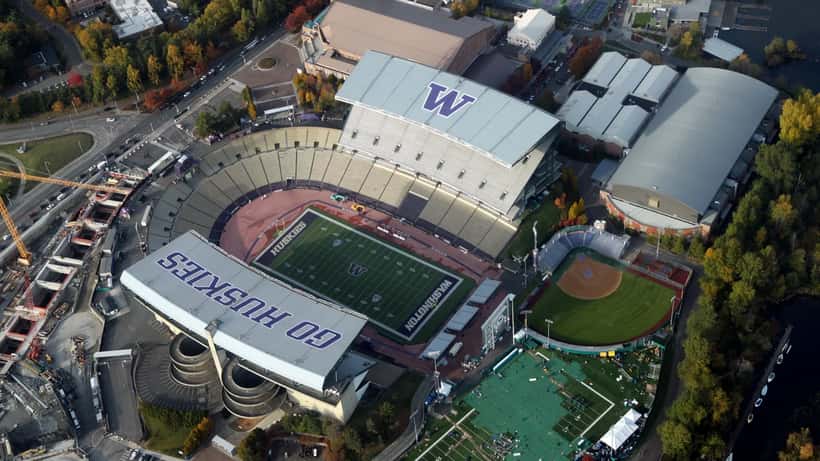
The Minnesota Golden Gophers traveled to Seattle on Saturday, September 26, 2026 — unranked, 2-1, and walking into one of the loudest atmospheres in the Big Ten. The Washington Huskies, sitting at 3-0 and listed as 10-point favorites on nearly every offshore line, hosted their conference opener at Husky Stadium. Millions of fans in both states had the same question: "Where can I put money on this?" The answer, under state law, is nowhere legal.
Why Neither State Allows Legal Sports Betting in 2026
Minnesota and Washington are two of a dwindling number of states that have failed, repeatedly, to pass sports betting legislation. Their shared situation is not a coincidence — it reflects the same structural battle playing out in statehouses across the country: tribal gaming compacts, racetrack operators, and competing revenue models that cannot reach agreement.
In Minnesota, the 2026 session ended May 18 without a bill reaching the governor's desk. Senator Nick Frentz's SF 4139 — which would have authorized the state's 11 federally recognized tribes to operate mobile sportsbooks under a 22% tax rate — cleared committee in January but failed a procedural Senate vote in March and was never revived. Sports betting advocates had hoped 2026 would be Minnesota's year after a similar collapse in 2025. It was not.
In Washington State, the situation was arguably closer. The House passed HB 4074 by a striking 100-to-11 vote, sending a clear signal of legislative appetite. But the Senate's Gaming Committee declined to hold hearings on either of the two companion bills before the session clock ran out. No hearings meant no amendments, no floor vote, no bill. The Huskies' home state enters the Big Ten season with the same legal landscape it has had since the Supreme Court struck down PASPA in 2018: nothing.
For context, the legal sports betting patchwork across all 50 states remains one of the most fragmented gaming law environments in U.S. history, with roughly a dozen holdout states still lacking any framework.
The Question Fans Keep Googling: "Can I Use DraftKings in Minnesota?"
No. And the "no" has legal teeth.
DraftKings, FanDuel, BetMGM, and every other licensed U.S. sportsbook use IP geolocation and device GPS checks before accepting a wager. A Minnesota resident logging in from Minneapolis will see a message directing them to daily fantasy (still legal) rather than fixed-odds sports betting. The app complies with state law — not because it wants to turn away business, but because operating outside it would risk its licenses in the 38 states where it is legal.
The workaround many fans assume exists — a VPN that masks your location — is legally riskier than most people realize. Using a VPN to circumvent geolocation checks and place a bet on a licensed U.S. platform may violate the platform's terms of service, triggering account suspension and forfeiture of any winnings. It could also expose the bettor to claims under state computer fraud statutes. A gaming attorney reviewing these facts would likely describe it as low risk of prosecution but high risk of losing both the bet and the account balance.
Offshore books — sites licensed in Curaçao or Antigua operating outside U.S. jurisdiction — are a different category. They accept Minnesota and Washington residents, they do not check geolocation, and millions of Americans use them. But "widely used" is not the same as "legally protected."
What a Gaming Lawyer Wants You to Know Before You Click "Place Bet"
Legal exposure for the individual bettor using an offshore site is genuinely low. Federal law does not make it a crime for an individual to place a bet with an offshore book — the Unlawful Internet Gambling Enforcement Act (UIGEA) targets the financial transaction processors and operators, not consumers. No state has prosecuted an individual recreational bettor for using an offshore site in recent memory.
But low risk is not zero risk, and a gaming attorney would flag three specific scenarios where "low risk" stops applying:
1. You win big. Offshore books do not report winnings to the IRS. That does not mean the IRS exempts them — it means you are legally required to self-report. Gambling winnings, regardless of source, are taxable federal income. A $5,000 win on a Husky touchdown drive that you fail to report is tax fraud, not a sports betting technicality. The IRS does not distinguish between a licensed Nevada sportsbook and a Curaçao-licensed offshore book when reviewing unreported income.
2. The book goes dark. Offshore operators have no state regulators, no consumer protection boards, and no obligation to make you whole if they decide to stop honoring withdrawals. There is no equivalent of the FDIC for offshore gambling accounts.
3. Employer or professional licensing background checks. Teachers, attorneys, financial advisors, and a range of licensed professionals in Minnesota and Washington are subject to character reviews. While recreational sports betting has never been a disqualifying factor in any case we could identify, documentation of sustained offshore gambling activity — if surfaced during a background check — could require explanation in a licensing proceeding.
These are the risks a lawyer would want you to understand before you treat "technically legal for me" as a blanket clearance.
A Concrete Scenario: What Happens to a $500 Washington Fan Bet on the Huskies
Consider a 34-year-old teacher in Bellevue, Washington — call her Maria — who decides to open an account with an offshore book to bet $500 on the Huskies minus the 10 points against Minnesota. Washington is her state; her school district ran a background check when she was hired five years ago.
The Huskies win 28-14. Maria's $500 bet pays out $455 net (standard -110 odds). She now has $955 in her offshore account.
Under current law, here is what should happen:
- Maria is legally required to report the $455 in winnings as gambling income on her federal tax return (IRS Form 1040, Schedule 1, Line 8b — "Other Income").
- Washington State has no personal income tax, so no state filing is required.
- If she withdraws, the offshore book will not send a W-2G. The IRS may never know unless audited. But if it does flag her bank transactions — offshore book withdrawals pattern-match to known gambling activity — she will need records of her deposits and withdrawals to demonstrate what was winnings versus original principal.
If/then logic that directly applies: If Maria bets $500 and wins $455, she owes approximately $91-$136 in federal income tax on the winnings (depending on her tax bracket). If she does not report it and is later audited, she faces the original tax liability plus interest (currently 7% per year) plus a 20% accuracy-related penalty — turning a $455 win into a $147+ deficit. The bet that felt free is not free.
A tax attorney or financial advisor could walk Maria through the reporting structure before she bets — something most fans never think to do.
What Should Fans in Minnesota and Washington Do?
The most direct path is to wait. Both states have demonstrated that their legislatures want to pass a bill — Minnesota's tribal coalition has been the most organized advocacy group, and Washington's 100-11 House vote suggests the political will exists. The 2027 sessions in both states will almost certainly revisit the issue. The situation mirrors other major games this season where both home states still ban sports betting in 2026 — a pattern repeating across the NFL and college football calendar.
For fans determined to engage with the game financially today, daily fantasy sports remain legal in both states — DraftKings and FanDuel both operate DFS contests in Minnesota and Washington under a separate regulatory framework.
And for anyone who has already placed significant offshore bets and is uncertain about the tax and legal implications: a 30-minute consultation with a gaming law attorney or a tax professional familiar with gambling income costs far less than a retroactive IRS audit. ExpertZoom connects users in Minnesota and Washington with licensed attorneys and tax advisors who handle gaming law questions — often with same-day availability.
The Huskies-Gophers game is a legitimate Big Ten opener worth watching. Whether you can bet on it legally where you live is a question with a clear 2026 answer: not yet.
This article is for informational purposes only and does not constitute legal or tax advice. Gambling laws vary by jurisdiction. Consult a licensed attorney or tax professional for guidance specific to your situation.
