 Carl Graham
As the Texas Rangers and Minnesota Twins square off in a late-September 2026 series that could influence final standings, millions of fans in both home states are asking the same question: "Can I place a bet on this game?" The answer is no — and the consequences of getting it wrong are steeper than many fans realize.
The Question Fans Are Actually Asking
With 39 states, Washington D.C., and Puerto Rico now permitting legal sports wagering as of August 2026, it's easy to assume the entire country has opened up to regulated sportsbooks. The reality is more complicated. Texas and Minnesota — the home states of the two teams playing this weekend — remain on the short list of states where sports betting is still entirely prohibited in every form.
That means no mobile apps, no retail sportsbooks, and no parlay tickets for the game. Fans logging into their DraftKings or FanDuel accounts at home in Dallas or Minneapolis to bet on Sunday's lineup are violating state law, regardless of where the sportsbook's servers are located.
This gap between "legal everywhere else" and "still illegal here" is exactly where legal disputes arise. And according to attorneys who specialize in gambling law, the number of fans unknowingly crossing these lines — digitally or physically — has grown substantially as sports betting has normalized across the country.
The Legal Landscape for This Weekend's Matchup
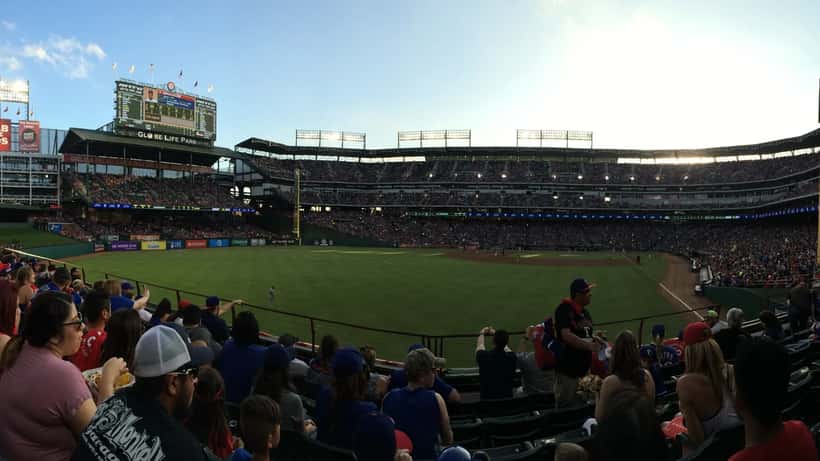
The Texas Rangers play at Globe Life Field in Arlington, Texas. Minnesota sports its home Twins games at Target Field in Minneapolis, Minnesota. Both cities sit inside states where the law has not moved.
Texas has maintained one of the strictest gambling frameworks in the country. State law broadly prohibits any person from "making a bet" as defined under Texas Penal Code Chapter 47, and the state legislature has repeatedly failed to advance legalization bills despite heavy lobbying. As of September 2026, no ballot initiative or legislative pathway to legal sports wagering is active in Texas.
Minnesota has had an even more turbulent 2026. In November 2025, Attorney General Keith Ellison sent cease-and-desist letters to 14 betting operators, declaring their platforms illegal under Minnesota law and ordering them to stop serving Minnesota residents. Then, in May 2026, the state enacted a first-in-the-nation law making it a felony to operate, host, or advertise prediction market platforms within Minnesota — a provision that took effect August 1, 2026, just weeks before the current season's stretch run began.
The federal dimension matters here too. Under 18 U.S.C. § 1084 — the federal Wire Act — it is a crime to use any wire communication to transmit wagering information across state lines. This statute applies directly to anyone placing online bets from Texas or Minnesota, even using a sportsbook that is fully licensed in another jurisdiction.
If You're in Texas or Minnesota Right Now: The Legal Reality
The question most fans ask a lawyer in these states is some version of: "But I'm just betting $50 — can they really come after me?"
The honest answer from most gambling attorneys: criminal prosecution of casual individual bettors is rare. But "rare" is not the same as "impossible," and the civil exposure for operators — and the digital paper trail you leave as a bettor — is real. More importantly, the Minnesota felony law targeting prediction market platforms creates legal risk for anyone who hosted or promoted a betting pool among friends using a commercial platform, not just offshore operators.
For fans attending the games in person at Globe Life Field or Target Field, there are no sportsbooks in the stadium or in the surrounding jurisdiction.
A Concrete Case: What Actually Happens When a Fan Bets Across State Lines
Consider this scenario: Maria is a 34-year-old Rangers fan in Fort Worth, Texas. On Friday, September 26, she opens a sports betting app she downloaded while visiting Colorado last spring, where she created a verified account. She deposits $200, places a $150 parlay on Texas winning both Saturday and Sunday's games, and wins — netting $340.
Here is what the legal picture looks like for Maria:
- The bet itself: Her account was opened in Colorado (legal). But if she placed the wager while physically located in Texas, her device's GPS data flagged the transaction. Most licensed sportsbooks use geolocation technology and are required by their Colorado license to block wagers attempted from prohibited states. If the app failed to block her, she may have violated Texas Penal Code § 47.02 (gambling) and federal statute 18 U.S.C. § 1084.
- The winnings: Even if she collects, Colorado's regulated sportsbooks are required to report winnings over $600 to the IRS using a W-2G form — and Colorado's tax rules apply. The IRS receives a copy. If she fails to report the winnings on her federal return, she has a separate federal tax compliance problem on top of the gambling law issue.
- The deposit: Texas law does not specifically criminalize depositing into an offshore or out-of-state betting account, but if the transaction is flagged by her bank and reported under Bank Secrecy Act requirements, there is a record. Financial institutions in Texas are increasingly aware of this reporting requirement.
The if/then rule a lawyer would draw: If you place the wager while your device is inside Texas or Minnesota, then you have potentially violated state law regardless of where you opened the account or where the sportsbook is licensed — and any winnings over $600 trigger federal reporting regardless of the state's legal status.
For amounts like Maria's $150 parlay, the practical risk of prosecution is low. But a $5,000 parlay on the ALCS is a different conversation entirely, and that is precisely when fans in illegal states call attorneys.
Crossing State Lines: What's Actually Legal
The most common workaround fans ask about is this: "What if I drive to Oklahoma to place the bet?"
Oklahoma has legal, tribal-operated sports betting. Louisiana, Colorado, and New Mexico all have legal mobile and retail sports betting within driving distance of major Texas population centers.
The legal answer: Yes, crossing state lines to bet is lawful as long as you are physically inside the destination state when you place the wager, you are using a licensed operator in that state, and you are not transmitting the bet back across state lines. Sportsbook apps use geolocation verification precisely to enforce this — you cannot drive to Oklahoma, place a bet on your phone, then drive home and collect. The bet must be placed while you are inside the legal jurisdiction.
What is explicitly illegal: using a VPN or location-spoofing software to trick a sportsbook's geolocation system. This violates the terms of service of every licensed operator and implicates federal wire fraud statutes. Attorney General enforcement letters in Minnesota in late 2025 specifically cited operators who knowingly accepted bets from prohibited jurisdictions — and those operators face civil penalties of up to $25,000 per violation plus disgorgement of all profits earned from illegal Minnesota-based activity.
What a Lawyer Would Tell Rangers and Twins Fans Right Now
The Rangers-Twins series this weekend is a genuine late-season contest — Texas finished June on a rough note, getting swept by Minnesota (scores of 4-2, 12-2, and 9-3 across three June games), and September is a chance for redemption. But fans wagering on that redemption from inside Texas or Minnesota are operating outside the law, often without realizing it.
Gambling law attorneys handle these situations more than the public assumes. Common issues include: frozen accounts when operators discover a bettor's location, winnings withheld pending a compliance review, bank disputes over transaction classification, and in rarer cases, state AG inquiries into organized informal betting pools.
The specific legal questions worth consulting a lawyer about include:
- You opened a sportsbook account legally in another state, placed bets from Texas or Minnesota, and now face a frozen account or withheld winnings
- You organized a workplace or fantasy-league betting pool that inadvertently used a commercial prediction market platform banned under Minnesota's August 2026 law
- You received a W-2G form for sports betting winnings that you are unsure how to report on your state and federal returns
- You were involved in running a sports betting affiliate program that included Minnesota-based advertising after August 1, 2026
This article is for informational purposes only and does not constitute legal advice. If you have specific questions about gambling law in Texas or Minnesota, consult a licensed attorney in your state.
The Bigger Picture: Two States Still Waiting on Legalization
The Rangers vs. Twins matchup underscores a geographic reality that affects millions of sports fans: you can be sitting 200 miles from a state where your exact bet is perfectly legal, while your own state still treats it as a criminal matter.
Legalization advocates in both Texas and Minnesota have pointed to the revenue that neighboring states are generating — Colorado collected over $50 million in sports betting tax revenue in fiscal year 2025 — as an argument for moving forward. Neither state appears poised to change course before the 2026 season ends.
Until then, the safest approach for fans in Arlington or Minneapolis is the same advice a lawyer gives anyone navigating a gray-area question: if you're not sure whether it's legal where you're standing, it's worth a five-minute consultation before you risk more than the cost of a box seat.
Fans who want to understand their specific situation — a frozen account, a tax form they didn't expect, or a workplace pool that got complicated — can connect directly with a licensed attorney through ExpertZoom, the platform that connects you with verified legal professionals in minutes.
For related reading on the 2026 tax implications of sports betting wins, see our breakdown of what the 2026 MLB playoff betting tax rules mean for your W-2G form.
Under federal law, the relevant statute governing interstate gambling transmissions is 18 U.S.C. § 1084, which applies to wagers transmitted electronically across state lines regardless of whether the bettor's home state has legalized gambling.
