 Laura Clark
When No. 4 Miami traveled to Death Valley in late September 2026 to face #6 Clemson, the Hurricanes brought more than just a 4-0 record into the game — they brought an injury list that had been reshaping their defensive lineup for weeks. Tackle Ahmad Moten, cornerback Damari Brown, and defensive lineman Armondo Blount were among the players nursing injuries heading into what turned out to be a blowout Clemson victory. The final score wasn't just a story about talent; it was a reminder of how quickly a football roster can be undone by physical damage.
But here's the detail that most fans scrolling past the scoreboard missed: effective July 1, 2026, the NCAA overhauled its concussion management requirements for all member schools. For athletes at every level — college, high school, recreational — that shift matters more than any single game result.
The Injury News Behind the Headlines
The Miami Hurricanes entered the Clemson matchup as 16.5-point favorites despite their battered defensive corps. Head coach Mario Cristobal confirmed that Blount was "a little banged up, but good to go" while Moten and Brown were expected to return after sitting out the Central Michigan game. These are the kinds of quick-turnaround situations that put enormous pressure on athletic trainers, team physicians, and, ultimately, the athletes themselves.
The Miami-Clemson game wasn't an isolated incident. Throughout the 2026 college football season, defensive units across the ACC and beyond have been cycling injured players in and out of lineups at an accelerating pace — Alabama's concussion crisis earlier this season illustrated just how quickly a single head injury can reshape a team's season and a player's future. And while the NFL recorded its lowest concussion numbers in the 2024 season — partly attributed to mandatory soft-shell helmet covers — the college game operates under different constraints, and the ripple effects of those injuries extend well beyond Saturdays at Death Valley.
What Sports Medicine Experts Are Watching in 2026
The NCAA's July 1, 2026 update to its concussion safety framework introduced a critical new requirement: medical personnel trained in the diagnosis, treatment, and initial management of acute concussion must now be present at all NCAA competitions and available at all practices for contact and collision sports — a category that now explicitly includes stunts, not just football and lacrosse.
This is significant because it reflects a growing consensus among sports medicine professionals that concussion management has historically been reactive rather than preventive. The traditional model — remove an athlete who shows obvious symptoms, evaluate, return when "cleared" — is giving way to a more nuanced understanding of sub-concussive impacts and delayed symptom onset.
According to the NCAA Sport Science Institute, if a student-athlete shows any signs of a concussion, they are not permitted to return to play the same day of the injury. Full stop. But the harder question — the one parents of high school athletes, weekend warriors, and even college-level players are grappling with — is: when does a head injury require more than athletic training, and when does it require a physician?
The answer, according to sports medicine specialists, is almost always "sooner than you think."
When the Trainer Isn't Enough: An Expert Perspective
Athletic trainers perform an essential function on the sideline, but they are not diagnosticians. A trainer can identify that a player should not return to the field. A physician — specifically one trained in sports medicine or neurology — can determine whether that player has a structural issue, whether imaging is warranted, and whether the injury is likely to affect long-term cognitive function.
This distinction matters enormously when an athlete:
- Reports symptoms more than 24 hours after the impact (delayed onset)
- Has a history of previous concussions (cumulative injury risk changes the equation)
- Is under 18, where developing brains respond differently to trauma
- Shows cognitive symptoms beyond the standard headache-and-dizziness profile: difficulty concentrating, mood shifts, memory gaps
In each of these situations, a sports medicine consultation — not just a trainer's clearance — is the medically appropriate next step. And yet, the vast majority of amateur and youth athletes who fall into one of these categories never see a physician. The cultural pressure to "play through it" remains powerful, even as the science has moved decisively in the other direction.
A Concrete Case: The 17-Year-Old Linebacker
Consider this scenario: a 17-year-old high school linebacker takes a hard hit in Friday night's varsity game. He doesn't lose consciousness — no stars, no obvious daze. He finishes the drive, reports mild neck stiffness afterward, and tells his parents he just "feels a little off." By Saturday afternoon, he has a headache but no vomiting. His school's trainer clears him under the district's standard return-to-play policy after 48 hours.
Here's where the NCAA update and the Miami-Clemson injury wave converge on something directly relevant to that family:
If that linebacker has had even one prior concussion in the last 24 months, his risk of second-impact syndrome — a rare but potentially fatal condition caused by a second concussion before the first has healed — increases measurably. A sports medicine physician evaluating him before clearance would assess his symptom history, conduct a neurocognitive baseline comparison (if available), and potentially order an MRI to rule out structural damage. The 48-hour trainer clearance does not include any of those steps.
The threshold for physician consultation is not "I lost consciousness." It is: any symptom, any prior concussion history, any athlete under 18, or any return to a contact sport within 7 days of impact. If one of those conditions applies, the standard of care in 2026 calls for physician involvement — not just trainer sign-off.
At $150-250 for a sports medicine consultation (or often covered by family health insurance), this is not a cost-prohibitive step. Waiting, and returning to practice before proper evaluation, costs far more.
What This Means for Parents, Coaches, and Amateur Athletes
The college football injury cycle — Miami's defensive unit, Alabama's Ryan Williams, Ohio State's ongoing concussion protocol compliance — is visible because it happens on national television. But identical situations play out every weekend across thousands of youth leagues, high school programs, and adult recreational leagues with no cameras, no medical staff, and no formal protocol at all.
The NCAA's 2026 update represents a floor, not a ceiling. For anyone outside the NCAA system — and that means the overwhelming majority of athletes in America — the burden of knowing when to seek medical care falls on individuals and families.
Key thresholds to understand:
- Same-day return is never appropriate after any suspected concussion, regardless of how mild it seems
- Return to contact sport within 7 days of a head impact should always involve physician clearance, not just rest
- Recurring headaches, sleep disruption, or mood changes in the days following an impact are clinical symptoms, not just "soreness" — they warrant evaluation
- Youth athletes (under 18) and athletes with a documented concussion history in the past two years are at elevated risk and should always be evaluated by a physician before any return-to-play decision
According to the NCAA's Sport Science Institute, concussion management plans are now required at every member institution and must meet updated legislative standards as of mid-2026. For families navigating youth and amateur athletics, the practical translation is straightforward: the system has caught up to the science. Now, so should individual practice.
The Right Expert for the Right Injury
For most minor muscle strains and overuse injuries, an athletic trainer or physical therapist is an appropriate first stop. For any injury involving the head, neck, or a blow to the skull — regardless of whether the athlete "seemed fine" immediately afterward — the appropriate specialist is a physician with sports medicine training or a neurologist.
This is not alarmism. It is the current standard of care, codified by the NCAA as of July 2026 and supported by decades of research on chronic traumatic encephalopathy (CTE), second-impact syndrome, and the long-term cognitive effects of repeated sub-concussive trauma.
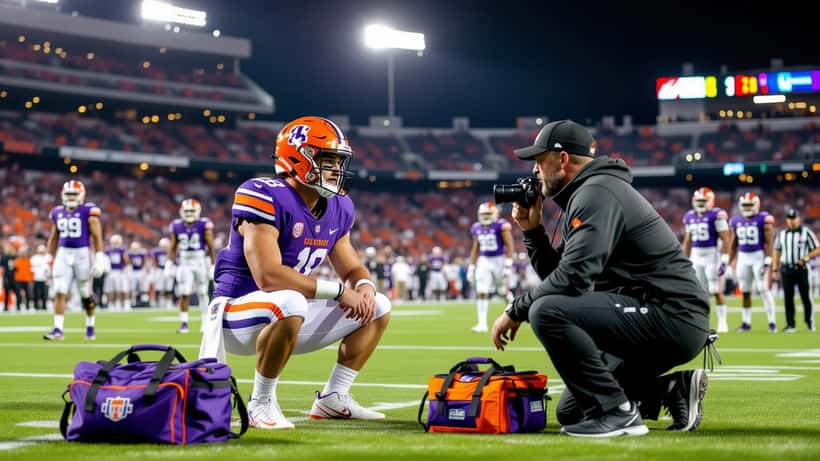
The Miami Hurricanes had a team physician present at Death Valley on that September night. The 17-year-old linebacker at Friday night's high school game may not. Knowing when to seek the same level of attention — regardless of level of play — is the most important health decision an athlete's family can make this season.
For personalized guidance from a sports medicine physician or neurologist about concussion evaluation and return-to-play protocols, Expert Zoom connects athletes, parents, and coaches with verified medical experts available for consultation. A conversation before the next game is worth more than a diagnosis after the fact.
This article contains general health information. It is not a substitute for professional medical advice, diagnosis, or treatment. Always consult a qualified health care provider with questions about a medical condition.
