 Elizabeth Chen
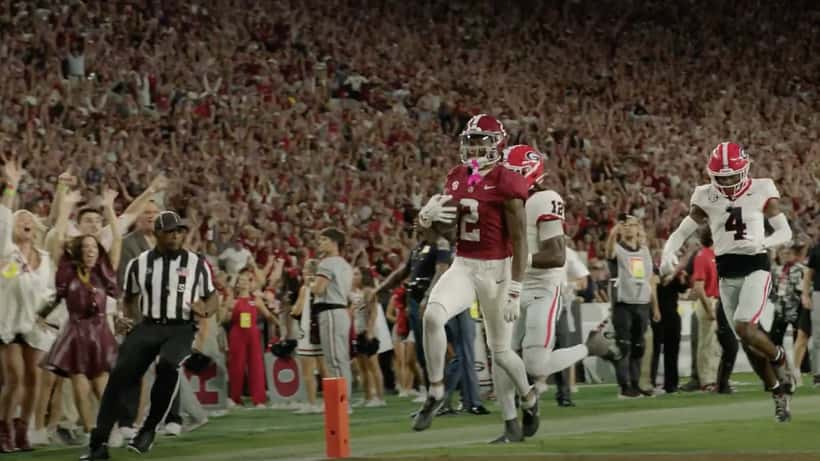
Alabama wide receiver Ryan Williams absorbed a helmet-first hit from two Florida State defenders during the fourth quarter of the Crimson Tide's season-opening loss on August 30, 2026. He walked off under his own power, disappeared into the blue medical tent, and never returned. Coach Kalen DeBoer confirmed it moments later: concussion.
The image travels fast. What travels slower is the question that quietly follows every American watching from the bleachers: what should I do if that happened to me, my child, or someone I love on a Friday-night high school field?
The News: Alabama's 2026 Season Opens With a Brain Injury Pattern
Williams was not the only Crimson Tide player sidelined by a concussion this season. Running back Jam Miller sustained a head injury during Alabama's road game at Missouri, and offensive lineman Michael Carroll missed practice time after a concussion in camp. Three concussion incidents on a single roster in under a month — and that's one program.
Nationally, the context is sobering. The NCAA estimates approximately 18,000 concussions occur across college sports each year. Football accounts for the largest share. Concussions represent roughly 7 percent of all reported football injuries, making them the most studied and most misunderstood injury in the sport.
In June 2026, the NCAA's Committee on Competitive Safeguards and Medical Aspects of Sports updated its Concussion Safety Protocol Checklist. The changes added requirements for trained medical personnel at practices and expanded coverage to include flag football and STUNT as contact sports requiring concussion-management expertise on site. The update reflected growing science around repeated sub-concussive impacts — hits that cause no immediate symptoms but may accumulate into lasting brain damage over time.
What Medical Experts Say — and What Most Families Miss
Sports medicine physicians and neurologists have grown increasingly vocal about what they call the "recognition gap": the lag between when a concussion occurs and when someone with authority to act — a parent, coach, trainer, or physician — realizes it.
Under the NCAA's protocol, any athlete suspected of having a concussion must be removed from competition immediately. A qualified medical professional trained in concussion management must evaluate them before any return-to-play decision is made. The rule is unambiguous: no same-day return, regardless of how an athlete feels 15 minutes later. This is actually stricter than the NFL, which allows same-day return after physician clearance.
Yet the recognition gap persists. Studies estimate that approximately 50 percent of youth athletes who suffer a concussion fail to report their symptoms. Either they don't recognize the signs, or they fear losing playing time. Parents and coaches face a harder challenge: they must make rapid calls on the sideline based on incomplete information, often without a trained athletic trainer present.
This is precisely where consulting a sports medicine physician or neurologist makes a meaningful difference — not just for college athletes, but for anyone playing physical sports at any level.
What Happens When You Wait: A Concrete Scenario
Consider a 16-year-old high school linebacker in Birmingham — let's call him Marcus. During a Friday night game in September 2026, he takes a helmet-to-helmet hit while making a tackle. He shakes his head, tells the coach he feels fine, and stays in for another two possessions. He finishes the game.
Two days later, Marcus still has a persistent headache. His parents aren't sure whether to take him to the pediatrician, the ER, or just wait it out.
Here's what the medical data indicates: if Marcus returns to play within 24-48 hours without clearance from a concussion-trained physician, his risk of sustaining a second concussion — even from a lighter impact — increases by approximately 3x. A second concussion during the vulnerable recovery window triggers what neurologists call Second Impact Syndrome, a condition that can cause catastrophic, rapid brain swelling. Outcomes from documented cases include permanent disability and, in rare instances, death.
The financial math is equally stark. An in-network concussion evaluation at a sports medicine clinic typically costs $150-$400 out of pocket, and is covered under most family health plans. A three-day hospital stay following a severe Second Impact Syndrome event can exceed $50,000 — often with long-term neurological rehabilitation added on top.
If Marcus shows any of these signs after the hit — headache lasting more than 24 hours, light or noise sensitivity, difficulty concentrating, disrupted sleep, or nausea — those are the NCAA's own listed red-flag symptoms. They warrant a same-day physician consultation, not a "wait and see" approach.
If he has none of those symptoms and is cleared by a medical professional, the graduated 5-step return-to-play protocol still takes a minimum of 5 days: one day each for symptom-limited activity, light aerobic exercise, sport-specific drills, non-contact practice, and finally full contact. The earliest possible return is day 6.
One rushed decision can translate to months — or years — of neurological consequences.
The NCAA's 5-Step Protocol: What Every Parent Should Know
The graduated return-to-play framework updated by the NCAA in June 2026 applies to all member institutions and is widely adopted at the high school and youth sports levels. The five stages are:
- Symptom-limited activity: rest until all symptoms fully resolve
- Light aerobic exercise: walking or stationary cycling, heart rate below 70% of maximum
- Sport-specific exercise: running drills, zero contact
- Non-contact training: full-speed complex drills allowed, no physical contact
- Full-contact practice: only after written medical clearance from a qualified physician
Each stage requires a minimum of 24 hours, making five days the absolute fastest possible return. And that clearance must come from a physician trained in concussion management — not a coach, a trainer without specific concussion credentials, or the athlete themselves.
What many families don't realize: this five-step structure is not a college-only rule. The National Federation of State High School Associations has parallel guidelines, and most state athletic associations have mandatory removal-from-play laws that mirror the NCAA framework. Most states enacted these laws following a wave of youth concussion legislation between 2009 and 2014.
For young athletes whose brains are still developing and therefore more vulnerable to head trauma, these protocol timelines should be treated as minimums, not targets. Younger athletes often experience longer symptom durations than college-age players.
The Expert Advantage: When Basic Protocol Isn't Enough
Ryan Williams cleared the protocol, returned against Wisconsin, and caught five passes for 165 yards and two touchdowns. His recovery followed the system as designed. But Williams had access to one of the most sophisticated sports medicine programs in college athletics — neurologists, athletic trainers, and concussion specialists whose primary responsibility is player health.
Most families don't have that infrastructure. According to the National Athletic Trainers' Association, more than 30 percent of U.S. high schools lack full-time athletic trainer coverage. In rural communities, access to a sports medicine physician can require a 60-to-90-minute drive each way.
That gap is where independent medical expertise matters most. A sports medicine physician or neurologist consulted early — within 24-48 hours of a suspected concussion — can run a baseline cognitive assessment, compare results to pre-season testing if it was done, and give families a medically grounded timeline rather than a guess. They can also identify cases that require advanced imaging or neuropsychological evaluation, which a standard urgent care visit may miss.
For a deeper look at how serious head and musculoskeletal injuries can affect college athletes' long-term rights and options, the recent coverage of Chris Henry Jr.'s knee injury and college athlete rights offers important context.
What to Do If a Concussion Is Suspected
The steps apply whether you're running a college athletic program or watching your child's youth league game on a Saturday morning:
- Remove from play immediately — do not allow the athlete to "walk it off" or self-assess during the game
- Seek medical evaluation within 24 hours — a sports medicine urgent care or ER if symptoms are severe (vomiting, loss of consciousness, seizure)
- Follow the graduated return protocol — minimum 5 days, with physician clearance at each stage before progressing
- Monitor for worsening symptoms — severe or worsening headache, repeated vomiting, or confusion require emergency care
- Consider a concussion specialist — for any concussion involving loss of consciousness, symptoms beyond 7-10 days, or a history of prior concussions
Alabama's 2026 season opened with three concussions on a single roster in under a month. On Friday nights across the country, thousands more go undiagnosed. The difference between a full recovery and a long-term neurological injury often comes down to one decision made in the first 24 hours after the hit.
For guidance specific to your situation — whether you're an athlete, a parent, or a coach uncertain about the right call — consulting a sports medicine physician or neurologist is the clearest path to a safe outcome. You can connect with a qualified expert through Expert Zoom's health specialists to get professional guidance matched to your specific circumstances.
According to the NCAA's official concussion management guidelines, all member institutions must maintain a concussion protocol and ensure that trained medical personnel are present at contact-sport competitions. Families can use this same framework as a checklist when evaluating whether their child's athletic program is providing adequate protection.
This article provides general educational information about sports concussion management. It is not a substitute for professional medical advice, diagnosis, or treatment. If you or someone you know has suffered a head injury during athletic activity, please consult a licensed medical professional promptly.
