 Odette Caplan
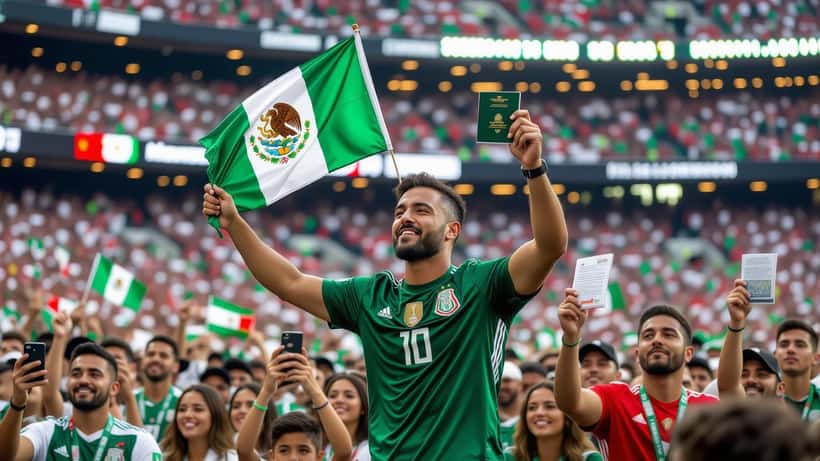
Tens of thousands of Mexican and Colombian fans packed M&T Bank Stadium in Baltimore on September 26, 2026, for the opening match of Mexico's fall MexTour — the first time in the event's 23-year history that it stopped in Baltimore. The match doubled as Rafa Márquez's coaching debut as El Tri's manager, and for most fans, it was pure celebration. But for a significant segment of the crowd — immigrants navigating complex legal situations in the United States — the event raised quieter, more pressing questions about their rights.
What the MexTour Match Reveals About a Legal Gap Many Immigrants Don't Know Exists
Mexico's MexTour is one of the most commercially successful touring series in international football. It draws hundreds of thousands of fans per season across cities with large Latin American diaspora communities — Los Angeles, Dallas, Chicago, New York, and now Baltimore. According to the U.S. Census Bureau, approximately 37 million people of Mexican origin live in the United States, and more than 1.2 million Colombians. Many drove hours to reach M&T Bank Stadium on Saturday — and not all of them have uncomplicated immigration status.
Some are naturalized U.S. citizens. Some hold green cards. Others are on valid work, student, or tourist visas. And a meaningful portion exist in more ambiguous territory: DACA recipients, asylum seekers with pending cases, Temporary Protected Status (TPS) holders, or individuals who have inadvertently overstayed a visa. For each of these groups, the excitement of a México vs. Colombia match — and the travel it involves — intersects with a legal framework they may not fully understand.
Immigration enforcement priorities in the United States have shifted significantly in 2026, with U.S. Immigration and Customs Enforcement (ICE) operating under expanded protocols. Large sporting events have not historically been enforcement targets. But getting to and from such events — particularly across state lines through areas with Border Patrol checkpoints, or via any situation involving local law enforcement — can expose undocumented or status-uncertain individuals to legal risk they weren't anticipating when they bought a ticket.
Expert Analysis: What Immigration Lawyers Say About Public Events and Legal Exposure
Immigration attorneys across the Mid-Atlantic region reported a noticeable uptick in consultations in the week before Saturday's match. The questions ranged from basic — "Can ICE check IDs at a stadium?" — to nuanced: "My work visa is valid but my I-94 shows a different authorized departure date. Is it safe to drive from New Jersey to Baltimore?"
The answer requires precision.
Attending a sporting event is not a triggering activity under immigration law. The act of buying a ticket and entering a stadium creates no additional legal risk for someone in valid status. ICE does not routinely conduct operations at sports venues, and the simple presence of Border Patrol agents in a given region does not mean the stadium itself is a targeted location.
The Fourth Amendment applies to everyone on U.S. soil, regardless of immigration status. Law enforcement officers generally cannot stop you solely because of your perceived national origin or ethnicity at a public event. You have the right to remain silent and the right to refuse a warrantless search — and invoking those rights politely is legally valid.
However, the route to the event can matter more than the event itself. Traffic stops, DUI checkpoints, accidents, or even a stadium altercation that involves local police can surface an underlying immigration issue that the match itself never would have. And for individuals with pending applications before USCIS — whether for adjustment of status, DACA renewal, or TPS extension — any law enforcement interaction, even one that results in no charges, can potentially complicate an open case if it isn't handled correctly.
Internal resource: if you're uncertain about how a pending immigration application interacts with travel or public events, immigration judges and asylum proceedings in the US are a related topic that may help frame your situation.
Concrete Case: When a B-2 Tourist Visa and a MexTour Ticket Collide
Take a scenario that realistically applies to dozens of fans at Saturday's match. A Colombian national, age 34, entered the United States at JFK in August 2026 on a B-2 tourist visa. His I-94 record — accessible at i94.cbp.dhs.gov — shows an authorized stay until November 14, 2026. He spent three weeks in New York with family, then drove to Baltimore for the match. His return flight is booked for October 20, well within his authorized period.
Is he at any legal risk at M&T Bank Stadium? No. He is in valid status, and attending a sporting event is entirely consistent with the terms of a B-2 tourist visa. His presence is lawful.
But here is where the if/then logic becomes critical — and where a single variable changes the entire picture:
If he were to overstay his November 14 authorized departure date — even by one day — then he would begin accruing unlawful presence under Section 212(a)(9)(B) of the Immigration and Nationality Act. Accumulating more than 180 days but less than 365 days of unlawful presence triggers a 3-year bar from re-entering the United States. More than 365 days triggers a 10-year bar.
If he were stopped by Maryland State Police for a minor traffic violation en route — and did not have his passport or I-94 printout available — then he could face a prolonged detention while officers verify his status, even though no immigration violation exists.
If he were in the United States on an expired Optional Practical Training (OPT) authorization, working without current Employment Authorization, then attending the match is irrelevant to the violation — but any law enforcement interaction that evening could surface the underlying issue.
The key number for every immigrant to know: 180 days. That is the threshold after which unlawful presence begins triggering multi-year bars on future re-entry. These bars apply cumulatively across multiple trips. Consulting an attorney before that threshold is crossed — not after — is the standard of care that experienced immigration lawyers consistently recommend.
What DACA Recipients and TPS Holders Should Know for the Next MexTour Stop
The fall MexTour continues after Baltimore, with additional U.S. matches scheduled through October and November. For DACA and TPS holders planning to attend:
DACA recipients are authorized to live and work in the United States, but their protection renews on a two-year cycle. Attending a domestic match does not affect DACA status. However, driving through states that have enacted laws deputizing local police for immigration enforcement could create complications if a traffic stop occurs — particularly for individuals whose Employment Authorization Document (EAD) is currently pending renewal. According to U.S. Citizenship and Immigration Services, DACA renewal processing times were averaging between 3.5 and 6 months as of mid-2026. Some recipients are currently in a gap period where their old card has expired and the renewal has not yet been approved, which does not terminate their protected status, but can make a routine law enforcement interaction considerably more stressful.
TPS holders can travel freely within the United States. Their authorization is tied to their designated country's status, not to their physical location within the country. However, any trip outside U.S. borders — including brief crossings into Canada or Mexico — without a valid TPS Travel Authorization document could jeopardize their status. The MexTour's Baltimore stop does not raise this concern, but fans driving from border states such as Texas or California should be aware of the legal distinction between domestic and international travel.
For immigrants with unresolved TPS or legal-status questions related to Central American and South American nationals, consulting a qualified attorney before traveling to major public events is increasingly standard practice in 2026.
Before the Next Match: A Four-Point Checklist From Immigration Attorneys
Immigration attorneys interviewed for this article recommend a simple pre-event protocol for anyone whose status involves any complexity:
- Verify your I-94 authorized stay at i94.cbp.dhs.gov before any interstate travel. The online portal is free and takes under two minutes. A mismatch between your visa stamp and your I-94 expiration date is one of the most common sources of inadvertent unlawful presence.
- Know your rights at any law enforcement interaction. "I am exercising my right to remain silent and I do not consent to a search" is a legally valid statement. You are not required to answer questions about your immigration status from local police officers in most jurisdictions.
- Carry a physical copy of your current status documentation — a visa stamp, I-797 approval notice, or valid EAD card. A photograph on your phone is acceptable but having the original or a printed copy is preferable.
- If your status is uncertain or pending, consult an immigration attorney before the event, not after. Most immigration law consultations take under an hour and can clarify your specific risk exposure at a cost far lower than resolving an enforcement issue later.
The México vs. Colombia match in Baltimore was a landmark moment for the MexTour and for Latino football culture in the Mid-Atlantic. For the overwhelming majority of the 60,000-plus fans in attendance, the evening ended with nothing more than a result on the scoreboard and a long drive home. But the event was a reminder that for millions of immigrants across the country, public life and legal life are never entirely separate — and that knowing your rights is as important as knowing the starting lineup.
This article provides general legal information and does not constitute legal advice. Immigration law is complex and situation-specific. Consult a licensed immigration attorney for guidance on your individual circumstances.
If you have questions about your immigration status or rights in the United States, Expert Zoom connects you with licensed immigration lawyers available for same-day consultations.
