 Elizabeth Chen
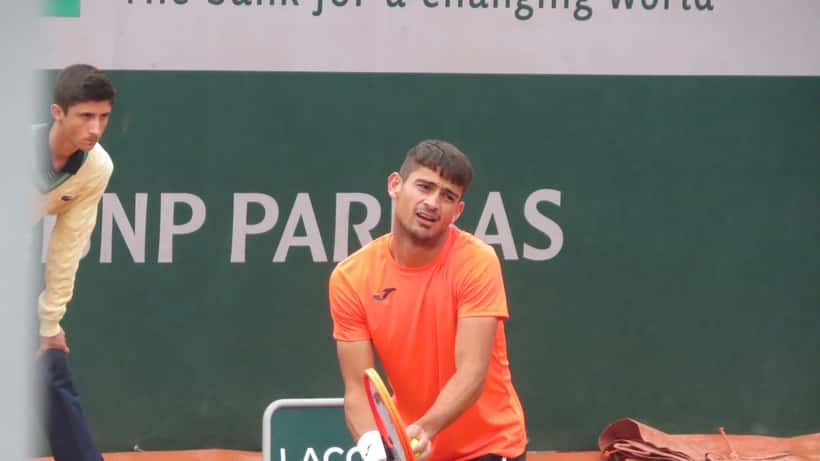
On the night of August 30, at Arthur Ashe Stadium in New York, 25-year-old Mariano Navone of Argentina completed one of the biggest upsets in US Open history. In a five-set, four-hour-and-36-minute thriller, the unseeded clay-court specialist dismantled Novak Djokovic — a four-time US Open champion and the tournament's fourth seed — 7-6(5), 5-7, 4-6, 6-2, 6-1. "This is the best day of my life," Navone told reporters afterward, his voice still unsteady. "It was a dream come true." What the scoreboard cannot show is why it happened: on a night when every statistical model predicted the wrong winner, Navone's mental architecture held while Djokovic's collapsed.
Down Two Sets, Still Standing
Navone entered the match with no expectations to protect. Djokovic had never lost in the opening round at Flushing Meadows — a streak stretching across more than two decades of competition at the tournament. He was the 79 percent betting favorite. He had won 24 Grand Slam titles. For most players, facing those credentials while trailing two sets to one would produce a familiar paralysis: the game within the game lost entirely to self-narration.
Navone's body language told a different story. After losing the second and third sets, he returned to the baseline with the same unhurried pace he had shown in the first set. His service routines remained identical. And when Djokovic — visibly struggling, vomiting between games, his lower back requiring a medical timeout between the fourth and fifth sets — began to come apart, Navone accelerated rather than cautiously managed. He took the fourth set 6-2 and raced through the fifth 6-1.
The match statistics underline the gap in mental composure that developed. Djokovic hit 70 unforced errors over five sets. Navone hit 34. On a night when Djokovic's physical condition deteriorated sharply, the decisive variable was not fitness but attentional control.
The Neuroscience Behind an Impossible Win
When an athlete perceives extreme threat — an opponent ranked far above them, a two-set deficit, a stadium crowd of 23,000 — the brain's amygdala triggers a cortisol and adrenaline response that sports scientists call choking: prefrontal cortex activity drops, rational decision-making slows, and habitual error patterns emerge. Elite athletes are not immune to this response. They are simply trained to manage it.
Navone's upset illustrates a phenomenon documented in the research literature on competitive performance. A 2022 meta-analysis published in the Journal of Applied Sport Psychology found that athletes who objectively occupy the underdog role consistently outperform statistical projections, partly because they are freed from the cognitive overhead of defending a reputation. Djokovic, having never lost in the US Open first round, was protecting an identity. Navone had nothing to lose — and everything to gain.
What allowed Navone to maintain process focus through five grueling sets? Pre-competition mental training: the deliberate cultivation of attention-control strategies, arousal regulation, and cognitive reframing that form the core toolkit of certified sports psychologists. These are not motivational abstractions. They are repeatable, measurable performance skills.
According to the American Psychological Association's sport psychology resources, athletes who work with licensed performance specialists show measurable improvements in concentration, resilience after errors, and competitive consistency — the exact variables that separated Navone from Djokovic on August 30.
The Gap Between Practice and Match Day
The connection between elite Grand Slam performance and recreational competitive sports is closer than most amateur athletes assume. Sports psychologists report seeing the same core patterns in club tennis players, amateur cyclists, recreational basketball leagues, and company soccer teams as in professional sports.
The indicators that you may benefit from working with a sports psychologist include:
- Inconsistency under match conditions: You perform well in practice but fall apart in competition. This gap is the hallmark of arousal mismanagement, not technical deficiency.
- Post-error spirals: One double-fault or missed penalty kick leads to three or four more in rapid succession — a pattern that cognitive restructuring can interrupt.
- Fear of a specific opponent or venue: Navone grew up idolizing Djokovic. That framing — this person is unreachable — is a trainable belief, not a fixed trait.
- Pre-competition anxiety that disrupts sleep or appetite: When anticipatory stress begins interfering with recovery, the mental side of preparation is as urgent as the physical.
An estimated 35 percent of competitive amateur athletes report performance-anxiety symptoms significant enough to impair their results, according to APA-affiliated research. Most of them attribute the problem to technique, fitness, or experience — and train the wrong variable for years.
Disclaimer: Performance anxiety that significantly affects daily life, not only athletic contexts, should be evaluated by a licensed mental health professional, as it may reflect a broader anxiety condition requiring clinical treatment.
The Scenario That Looks Like Yours
Consider Marcus, a 38-year-old club tennis player in Chicago competing in a USTA 4.5 league. Technically solid — consistent groundstrokes, reliable first serve at 63 percent — he has lost in the regional championship semifinals to the same opponent two seasons in a row. Seven consecutive losses to this player. Before each match, Marcus begins visualizing defeats during warm-up. His first-serve percentage drops to 47 percent in set one. His unforced errors spike past 30 per match. He is playing not to lose rather than to win.
Marcus begins an eight-session program with a sports psychologist in the pre-season, at $175 per session — a total of $1,400 over three months.
The program includes three core interventions: an attention-control routine (a five-breath reset between points, a physical trigger, a single tactical cue for the next game), cognitive reframing exercises that restructure the "nemesis" framing around his opponent into a neutral competitive stimulus, and vivid imagery training in which Marcus mentally rehearses winning the specific scenarios — tight third-set tiebreaks, return games when down 0-30 — that have historically triggered his collapse.
At the next regional championship, Marcus wins the match in three sets. His serve percentage for the match: 61 percent. His unforced errors: 19. The technical gap between Marcus and his opponent had never been the obstacle. The mental gap was — and it closed in eight sessions.
If Marcus had spent the same $1,400 on additional court time and a technique coach, nothing would have changed. The variable he had never trained was the only one that needed to change.
What Navone's Win Signals for Every Competitive Athlete
Djokovic himself, in his post-match press conference, offered an admission that underlines why this story matters beyond professional tennis. "I stopped believing," he said, according to multiple match reports. From a 24-time Grand Slam champion, that statement is not an excuse — it is an accurate description of a measurable neurological event.
Navone's response to the same question was equally precise: he described the years of deliberate preparation, physical and mental, that made the upset possible. He had stood across the net from his childhood idol, played four hours and 36 minutes of five-set tennis, and never stopped believing that the next ball could be the right one.
You can explore how mental performance coaching works — and whether it applies to your competitive context — through ExpertZoom's sports medicine and athlete mental health resources. Whether you compete at the club level, in a corporate league, or in regional amateur championships, the mental architecture that Navone demonstrated at Arthur Ashe on August 30 is teachable, trainable, and available — one expert consultation at a time.
