 Evelyn Carter
Elina Svitolina at Roland Garros 2026: What Her Mental Shift Reveals About Athlete Burnout
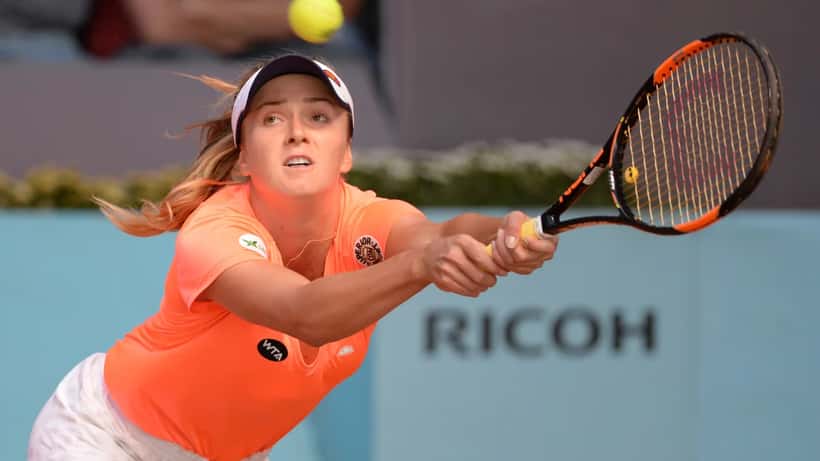
Elina Svitolina arrived at Roland Garros 2026 as one of the tournament's most compelling stories. The Ukrainian No. 7 seed just claimed the Rome Open title — dismantling three of the world's top four players including Iga Swiatek, Elena Rybakina, and Coco Gauff — and she did it with a composure that has surprised even close observers of her career. "I think now I'm more fine with the way my career is," she said after Rome. That statement, quietly delivered, carries more weight than any match statistic.
Her husband, Gael Monfils, is playing his farewell Roland Garros before retiring. Svitolina is simultaneously competing in her 13th campaign in Paris, supporting a partner ending his career, parenting a young daughter, and carrying the emotional burden of representing Ukraine on the world stage amid ongoing conflict at home. The fact that she is performing at the highest level — not despite this pressure but arguably because of how she has learned to manage it — offers a timely lesson about mental health in elite sport that extends well beyond tennis.
The Pressure Pyramid That Breaks Athletes
Most fans see the scoreboard. What they rarely see is the psychological architecture that either holds an athlete together or causes them to collapse.
Sports psychology research consistently identifies four compounding stressors in elite athletes: performance anxiety, identity fusion (being unable to separate personal worth from results), accumulated trauma, and social role pressure. Svitolina checks every box. Eight years ago, she described her mindset around Roland Garros as urgent — almost desperate — to win. Today, she describes calmness. That is not a small shift. It represents a fundamental restructuring of how she relates to competition.
The problem is that most athletes — and many working professionals — never make that transition. They either burn out completely or perform at a chronically suppressed level, never understanding why their results don't match their effort.
What Burnout Actually Looks Like in Athletes
Burnout is not tiredness. It is a distinct clinical state involving emotional exhaustion, depersonalization (detachment from one's sport or work), and a reduced sense of personal accomplishment. Research published by the American Psychological Association identifies sport burnout as a significant health concern, noting that it affects an estimated 10 to 15 percent of elite athletes at any given time — with far higher rates among those navigating compounding personal stressors.
Physical symptoms include chronic fatigue that does not resolve with rest, increased susceptibility to illness, and disrupted sleep. Psychological symptoms include loss of motivation, irritability, difficulty concentrating, and a creeping sense that effort is pointless. Many athletes, like many professionals, dismiss these warning signs because they have been conditioned to push through discomfort.
Svitolina's history is instructive. She stepped away from the tour after the birth of her daughter Skaï in 2022, returning gradually in 2023. Her initial comeback results were inconsistent. Observers questioned whether the former world No. 3 could recapture her level. What she was actually doing, though she may not have framed it this way, was rebuilding her psychological relationship with the sport — not just her physical conditioning.
When Should an Athlete — or Anyone — Seek Professional Help?
The short answer: sooner than they think they need to.
Most people wait until a crisis point — a career implosion, a health collapse, a relationship breakdown — before considering mental health consultation. But sports psychologists and performance health professionals are most useful as preventive tools, not rescue operations.
For athletes, the key warning signs that professional consultation is warranted include:
- Persistent dread before competition rather than productive anticipation
- Inability to separate a loss from a personal failure (identity fusion)
- Emotional numbness during or after events you previously loved
- Chronic physical complaints with no clear medical explanation
- Difficulty sleeping before or after major competitions
These signs apply equally to high-performing professionals in non-sporting fields — executives, performers, surgeons, lawyers — anyone who operates under sustained high-stakes pressure. The physiological stress response is identical whether the trigger is a Grand Slam semi-final or a high-profile court case.
A qualified sports psychologist or health professional can conduct a structured burnout assessment, introduce evidence-based interventions such as cognitive behavioral therapy (CBT) adapted for performance contexts, mindfulness-based stress reduction (MBSR), and periodization of psychological load — the mental equivalent of managing physical training volume.
The Monfils Dynamic: Navigating External Emotional Weight
Svitolina's situation has an additional layer that many athletes and working parents will recognize: supporting a partner through a significant life transition while managing your own peak performance window.
Monfils, 39, is playing his final Roland Garros. Svitolina has publicly stated she wants to be present for him — attending his matches, sharing the experience — while simultaneously competing for the title herself. This kind of emotional dual-tracking is cognitively demanding. Psychologists call it affective load: the effort of managing your own emotional state while attending to someone else's.
Research on elite athlete couples shows that shared competition environments can be both stabilizing (mutual understanding of demands) and destabilizing (synchronized stress peaks). The partners who navigate this best tend to have established clear communication protocols — designated "competition mode" periods where individual performance takes priority, versus "support mode" where the focus shifts.
Svitolina appears to have built exactly this kind of structure. Her public statements suggest she has defined what she can and cannot control, accepted the complexity, and stopped demanding that external circumstances cooperate with her ambitions.
What This Means for Your Own Mental Performance
You do not need to be competing at Roland Garros for Svitolina's approach to be relevant to your life.
If you are navigating high professional demand alongside significant personal complexity — a career change, a family member's health crisis, a major life transition — the mental performance principles are transferable. Compartmentalization (not suppression), identity diversification (having a sense of self that does not depend entirely on professional outcomes), and proactive mental health support are all evidence-based strategies.
The mistake most people make is believing that mental resilience is a fixed trait — something you either have or you don't. The research says otherwise. It is a skill, and like any skill, it can be developed with appropriate guidance.
A sports psychologist, therapist specializing in performance contexts, or general mental health professional can help you build the same architecture that allows Svitolina to walk onto the clay at Roland Garros and, for perhaps the first time in her career, feel genuinely calm.
When to Consult a Health Professional
According to the American Psychological Association's guidelines on athlete mental health, athletes and high-performers should seek professional consultation when stress symptoms persist for more than two weeks, interfere with sleep or daily functioning, or when self-management strategies are not producing relief.
You do not need to be in crisis to benefit from professional support. Svitolina's arc — from urgent and tense to calm and competitive — is a product of deliberate work, not accidental maturity.
If you are managing sustained high-pressure demands and wondering whether your mental load is sustainable, a qualified health professional can provide an objective assessment and practical tools. At ExpertZoom, licensed mental health professionals and sports medicine specialists are available for consultation. Reaching out before you reach a breaking point is, as Svitolina herself might say, the smarter play.
Disclaimer: This article is for informational purposes only and does not constitute medical advice. Consult a qualified healthcare professional for personalized guidance.
