 Laura Clark
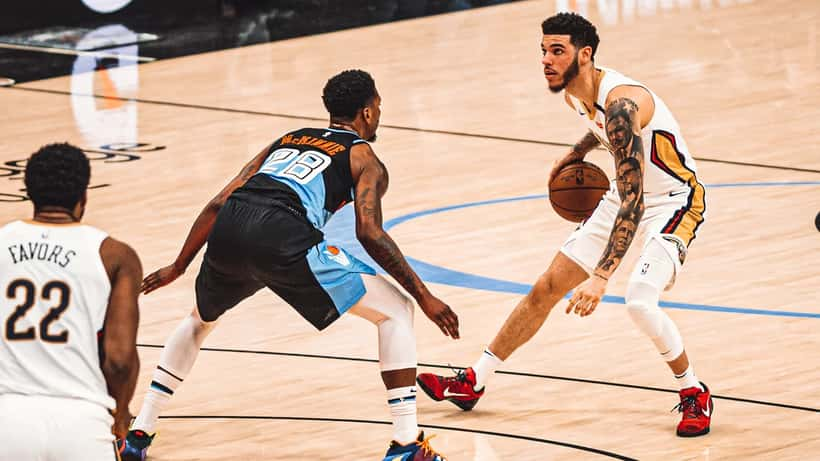
Lonzo Ball confirmed his retirement from professional basketball on September 23, 2026, during an appearance on the Ball in the Family podcast. The 28-year-old guard — the #2 overall pick in the 2017 NBA Draft — described his decision after four knee surgeries and nearly five years of interrupted recovery left him unable to secure a team for the 2025–26 season. "I'm grateful to have made it," Ball said. What followed was a social media moment that captured the ambiguity of his situation: hours later he posted, "I retired? News to me lol cuz I'm still waiting for a call." Whether that constitutes a formal retirement or simply an acknowledgment of reality, one thing is clear — a career built on elite athleticism has been dismantled, joint by joint, since Ball was a teenager.
That last detail is the one that matters most for the rest of us. In a 2025 interview, Ball revealed something that rarely gets said out loud by professional athletes: "I've been feeling my knee since I was in high school." He wasn't describing one traumatic event. He was describing years of chronic discomfort that accumulated quietly until it couldn't be ignored.
A Career Defined by One Joint
Ball played for the Los Angeles Lakers, New Orleans Pelicans, Chicago Bulls, and Cleveland Cavaliers across 322 career regular-season games. His per-game averages — 10.6 points, 5.6 assists, 5.3 rebounds, and 1.3 steals — suggest a player on an ascending curve. Then, in January 2022, he underwent left knee surgery that would define everything that followed. Three additional procedures came after that. Each time he returned to practice, the knee wouldn't cooperate at the level required for NBA competition.
The medical specifics were never fully public, but the pattern is consistent with chondral (cartilage) damage — a category of injury that responds poorly to repeated surgical intervention and that often worsens with high-impact athletic demand. Unlike ligament tears, which frequently heal with surgery and structured rehabilitation, cartilage does not regenerate reliably. Once the cushioning between bones is compromised, every explosive movement sends a signal.
That signal is what Ball says he felt since high school.
Why This Resonates Beyond the NBA
Most people will never play in the NBA, but roughly 15 million Americans seek medical care for knee pain each year, according to the American Academy of Orthopaedic Surgeons. A significant portion of them report that their symptoms began years — sometimes decades — before they reached a doctor's office.
The cultural script around joint pain, especially among athletes and active people, is one of tolerance. You tape it up, ice it down, play through it. That script is understandable — pain is often intermittent, teams and coaches expect performance, and the prospect of surgery feels worse than the discomfort itself. What Ball's career now illustrates, in very public detail, is the compounding cost of that script.
Knee cartilage does not have a blood supply, which means it heals slowly and incompletely when damaged. A minor cartilage lesion at 17 or 18, left untreated or managed only symptomatically, can progress to a grade III or grade IV chondral defect by a player's mid-twenties — the exact window when a professional career should be hitting its stride. At that point, the repair options become more complex, the recovery timelines longer, and the probability of returning to full elite function lower.
Ball's case appears to fit this trajectory almost exactly.
If You Have "Felt Your Knee Since High School" — A Concrete Case
Take this scenario: a 24-year-old recreational runner and weekend basketball player has had persistent right knee pain since age 17. The pain shows up after runs over 5 miles or during back-to-back days of activity. They've managed it with ibuprofen, compression sleeves, and occasional rest. They've never had imaging done because — and this is the critical phrase — "it's not bad enough to stop me."
If an MRI were taken today and revealed a grade II chondral lesion on the medial femoral condyle (a finding consistent with years of low-grade stress without treatment), the situation is this: a grade II lesion treated conservatively with physical therapy, load management, and platelet-rich plasma (PRP) injections has a 65–80% rate of stabilization — meaning the lesion does not progress to grades III or IV, according to outcomes data from the American Academy of Orthopaedic Surgeons. The same grade II lesion, if ignored for another 5–7 years of continued high-impact activity, reaches grade III or IV in a significant portion of cases — at which point the primary surgical option is cartilage transplantation or, eventually, knee replacement.
The cost difference between those two timelines is not just medical. It's professional and financial. For an NBA player, it's the difference between a $30 million contract and an early retirement announcement on a podcast at 28. For a recreational athlete or a construction worker, it's the difference between continuing a physically active job and transitioning to lighter duty in their thirties.
The intervention threshold — the point at which seeking a specialist produces better outcomes than waiting — is earlier than most people expect. Sports medicine physicians and orthopedic specialists typically recommend imaging and evaluation when knee pain has been present for more than 3–6 months, is recurring rather than isolated, or is changing in character (becoming more constant, more swollen, or triggered by lower levels of activity). Waiting for the knee to "give out completely" is not a clinical strategy. It is, however, a very human one.
What Chronic Knee Symptoms Actually Signal
Not every knee ache signals cartilage damage. The differential is wide: patellofemoral syndrome (runner's knee), IT band tightness, bursitis, early arthritis, and ligament laxity all produce persistent discomfort and are substantially more common than chondral lesions. Many of these conditions resolve fully with physical therapy and load management.
The point is not to generate alarm but to adjust the cultural default. The question to ask is not "is this bad enough to stop me?" but "is this changing, and have I had it evaluated?" Those are different questions with different implications.
Ball's revelation that his knee bothered him in high school — years before any professional pressure existed — suggests that the underlying condition was present long before it became career-defining. Earlier evaluation might not have preserved his NBA career, but it almost certainly would have changed the options available to him in his early twenties.
For the tens of millions of Americans who carry some version of that same quiet discomfort, the window for meaningful intervention is more open than most realize. According to MedlinePlus, the National Institutes of Health's patient health resource, patients who present early with knee pain — before significant cartilage loss — have substantially more treatment options and better long-term outcomes than those who wait for symptoms to become severe.
Internal links to related coverage: the Anthony Edwards knee bruise case from this NBA playoffs season and what NBA injury patterns reveal about sports medicine both show how knee events are reshaping professional basketball decisions in 2026.
What to Do If Your Joints Are Telling You Something
Ball's retirement is trending today because his name is famous and his career arc is dramatic. But the underlying story — years of untreated or under-treated joint pain leading to a preventable escalation — plays out far more quietly for millions of people who don't have team physicians or regular MRI access.
The steps are straightforward, even if the follow-through often isn't: document when the pain started and what makes it worse; note any swelling, clicking, or instability; and book an appointment with a sports medicine physician or orthopedic specialist if the symptoms have been present for more than three months, are worsening, or are affecting your ability to work or exercise consistently.
You don't need to be a professional athlete for your knee health to matter professionally. Warehouse workers, nurses, educators who stand all day, tradespeople, and parents chasing toddlers all depend on functional knees in ways that are as career-defining as anything on an NBA court.
The parallel to Ball isn't about basketball. It's about the moment someone says "I've been feeling this since I was young" — and the difference between saying it to a doctor at 22 versus saying it on a podcast at 28 as a way of explaining why it's over.
This article is for informational purposes only and does not constitute medical advice. Always consult a qualified healthcare professional for diagnosis and treatment of knee or joint conditions.
