 Ava Miller
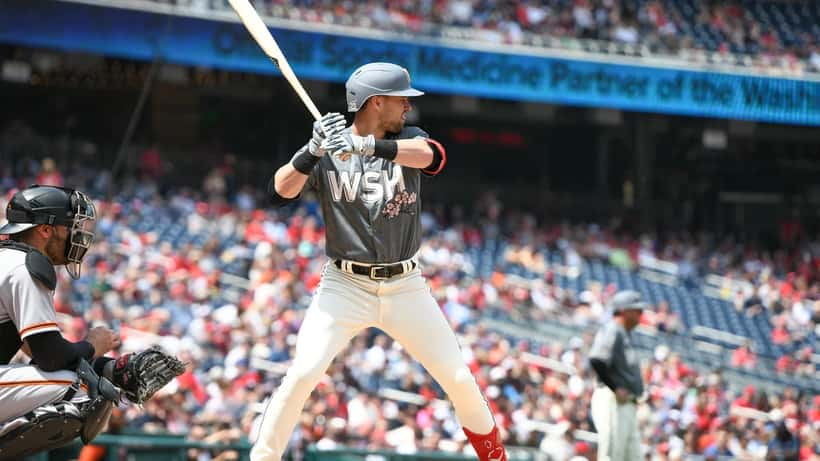
Lane Thomas was cleared for baseball activities four months after right foot surgery and proceeded to post one of the best hitting stretches in Major League Baseball. The Kansas City Royals outfielder, who had his plantar fascia surgically released in September 2025 following a season-ending battle with the condition, is slashing .333/.389/.652 with a 1.040 OPS since June 28, 2026 — placing him ninth among all qualified MLB hitters over that span, with a 183 wRC+ tied for tenth in baseball. With the trade deadline set for August 3, Thomas has become the most coveted rental target in the sport. His bounce-back also raises a question that roughly 2 million Americans ask every year: when does heel pain stop being a problem you manage at home and become one that requires a surgeon?
The Year That Made This Comeback Remarkable
Thomas entered the 2025 season with momentum from a memorable 2024 postseason that included a walk-off grand slam in the American League Division Series against the Detroit Tigers. What followed was one of the more physically punishing individual seasons in recent memory for a player with his profile.
In April 2025, a pitch struck his right wrist, producing a bone bruise that kept him sidelined for nearly a month. Upon returning, he developed plantar fasciitis in his right foot — a condition that initially appeared manageable with standard rest-and-stretch protocol. It was not. He returned to the injured list twice more over the summer, accumulating three separate IL stints tied to the foot, before the Cleveland Guardians shut him down in late September and scheduled a plantar fascia release surgery to address the root cause of the chronic inflammation.
The procedure involves cutting a portion of the thick band of connective tissue that runs along the bottom of the foot from heel to toes, relieving the tension at the point of attachment to the heel bone. It is typically considered a last resort after six to twelve months of conservative treatment have produced no sustained improvement. Thomas underwent the operation, followed the prescribed three-to-four month restricted recovery protocol, hit free agency, and signed a one-year, $5 million deal with Kansas City ahead of the 2026 season. His production this year — a solid .244/.343/.419 overall, turbo-charged by that recent hot streak — is the direct result of a fully executed recovery process. It also illustrates a clinical trajectory that unfolds for millions of non-athletes every year, usually with far less institutional support and far less clarity about when to escalate.
What Plantar Fasciitis Is — and Why It Routinely Fools People
Plantar fasciitis develops when the plantar fascia, the fibrous band running along the bottom of the foot, becomes inflamed from repetitive stress or biomechanical overload. The most recognizable symptom is sharp, stabbing heel pain with the first steps of the morning — caused by the fascia tightening overnight and then being abruptly stretched under weight-bearing.
According to the National Library of Medicine's MedlinePlus health database, plantar fasciitis is the most common cause of heel pain, with roughly 2 million Americans treated for it annually. Risk factors include high-impact activities like running or jumping, prolonged standing on hard surfaces, flat feet or high arches, and being between 40 and 60 years old.
The condition is deceptive because it responds well to conservative treatment for the majority of patients — approximately 90 percent of cases resolve within ten months with stretching, rest, anti-inflammatory medication, and proper footwear. That statistic creates a false sense of security for the other ten percent: patients tend to assume the condition is improving when pain temporarily eases, then continue loading the inflamed tissue until structural damage accumulates beneath the surface.
Thomas' 2025 season illustrates exactly what this failure mode looks like in real time: repeated attempts to return to play, recurring IL stints, progressive inflammation that cortisone injections alone were unable to resolve, and ultimately a season lost to a condition that likely reached the surgical threshold months before the procedure was scheduled. The delay was not negligence — it was the natural result of a condition that mimics recovery before revealing its deeper structural problem.
When Your Heel Pain Has Already Crossed the Line
Here is a concrete scenario that maps onto the clinical threshold sports medicine specialists and podiatrists use when evaluating chronic plantar fasciitis.
Consider a 47-year-old warehouse manager in Phoenix who develops sharp heel pain in February 2026 after increasing his daily step count. The pain is severe with the first steps in the morning — rating a seven out of ten — but fades within fifteen to twenty minutes. He buys motion-control running shoes, begins calf stretching twice daily, and takes ibuprofen as needed. By late March, the morning pain has eased noticeably and he continues his routine.
By mid-May — roughly three months in — the pain has not resolved. It is now a constant dull ache throughout the workday, no longer just a morning spike. He visits a clinic and receives a cortisone injection. Three weeks later, the pain has returned to its prior baseline level.
This is the inflection point. Cortisone relief lasting fewer than four weeks and returning to prior-level pain is a documented clinical indicator that the underlying structural problem is not resolving. At the six-month mark with no sustained improvement, orthopedic guidelines recommend imaging — typically ultrasound or MRI — to assess whether the plantar fascia has developed micro-tears or calcification at the heel attachment. If it has, two non-surgical interventions become relevant before considering a release procedure: extracorporeal shockwave therapy, which uses acoustic pulses to stimulate tissue healing, carries a clinical success rate of approximately 70 to 80 percent in chronic cases that have failed standard conservative management.
The warehouse manager's inflection point — cortisone providing only three weeks of relief before full return of symptoms — is the moment to stop self-managing and book a specialist consultation. Research indicates that patients who reach specialist evaluation before the nine-month mark have meaningfully shorter post-surgical recovery times than those who wait a year or longer, because less accumulated structural damage means a faster healing response after intervention.
Practical Steps If You Recognize This Pattern
Sports medicine physicians and podiatrists use a stepped clinical process that most patients can follow, regardless of whether they are amateur runners or professional outfielders.
Weeks one through eight: Structured plantar fascia stretching — specifically targeting the plantar fascia itself, not just general calf stretching, a distinction that matters clinically — combined with supportive footwear and activity modification to reduce impact load. Anti-inflammatory medications reduce acute pain but do not address the inflammation cycle on their own, and should not be treated as a standalone solution.
If no meaningful improvement by week eight: Clinical evaluation to confirm plantar fasciitis and rule out conditions that present similarly. Calcaneal stress fractures, tarsal tunnel syndrome, and Achilles insertional tendinopathy all produce heel pain but require different treatment approaches. Do not assume the diagnosis is correct without professional assessment if the pain pattern is not clearly responding.
Month three to six: Cortisone injection is reasonable if structured therapy has not produced adequate relief — but treat its duration of effect as a diagnostic signal. Relief lasting fewer than four weeks is informative. It suggests the condition has a structural component that conservative care alone is unlikely to resolve.
Past six months with no sustained resolution: Imaging and specialist referral. As documented across multiple professional athletes in recent seasons — including cases where playing through persistent pain compounded rather than resolved structural damage — continued loading of an already-damaged connective structure tends to worsen rather than improve outcomes.
Lane Thomas took the surgical path when conservative care reached its limit and returned to elite-level performance within a single offseason. For everyday patients without a dedicated medical staff, a consultation with a sports medicine physician or podiatrist through ExpertZoom provides access to a credentialed specialist who can review your specific history, evaluate imaging if available, and give you a direct answer on whether conservative management or surgical referral is the right next step for your situation.
Disclaimer: This article provides general health information for educational purposes only. It is not a substitute for professional medical advice, diagnosis, or treatment. Consult a qualified healthcare provider regarding your specific health condition.
