 Laura Clark
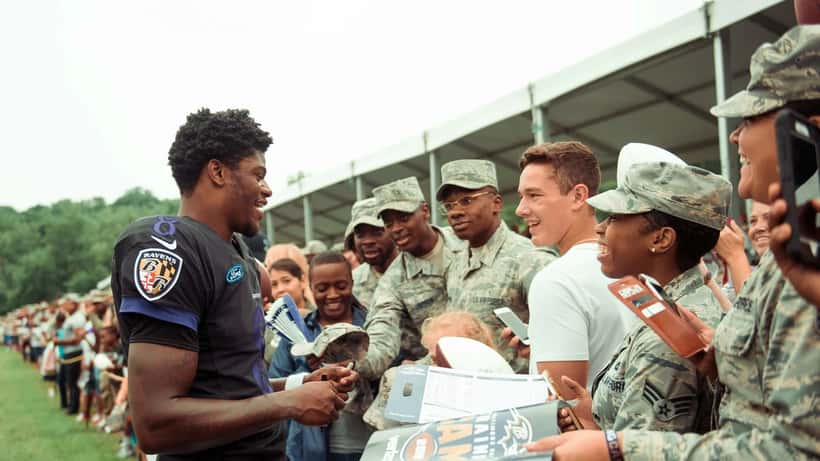
When Lamar Jackson limped off the field in Week 4 of the 2025 NFL season with a Grade 1 hamstring strain, millions of fantasy managers panicked. But the real story went beyond box scores. Jackson missed three games, returned before his hamstring had fully recovered, and spent the remainder of the 2025 campaign managing cascading knee and ankle issues that compromised one of the most electrifying quarterbacks in the league. He missed four games total and struggled to recapture his back-to-back MVP form until the offseason reset his body.
Now entering 2026 healthy — throwing five touchdowns in a Week 7 win under new offensive coordinator Doyle's revamped scheme — Jackson's story is a case study in what happens when competitive pressure outpaces biological healing. And it carries direct lessons for the 45 million Americans who play recreational sports without an NFL medical staff on call.
The Hidden Cost of a "Minor" Hamstring Strain
A Grade 1 hamstring strain — the mildest classification — sounds trivial. Pull a few muscle fibers, apply ice for 48 hours, return to action. That's how it's often handled in amateur leagues and even at the professional level when competitive stakes are high. But sports medicine specialists consistently flag hamstring injuries as among the most re-injury-prone in all of athletics.
Research published in the British Journal of Sports Medicine puts re-injury rates for hamstring strains at 12–34% in professional football players, with premature return cited as the primary driver. The National Athletic Trainers' Association recommends that return-to-play decisions incorporate not just pain levels, but functional testing: sprint capacity, eccentric strength, and neuromuscular control symmetry between both legs.
Jackson's 2025 season illustrates the cascade that follows a rushed recovery. A Grade 1 hamstring strain treated properly through a three-phase protocol — acute management (0–72 hours), progressive loading (days 3–21), and functional criteria testing before return to sport — typically heals in 21–28 days. Compress that timeline by even a week, and the body recruits compensatory movement patterns that shift load to adjacent structures: the knee, hip flexors, and lumbar spine. Jackson's late-season knee and ankle troubles were not coincidental.
Three Warning Signs Amateur Athletes Miss
The NFL's resources — team physicians, diagnostic imaging, contractual incentives to manage player health carefully — are simply unavailable to recreational athletes. High school players, weekend warriors, and fitness enthusiasts routinely downplay hamstring strains, applying the RICE protocol for 48 hours before returning to their Saturday soccer league or morning run.
That approach works sometimes. But three warning signs consistently indicate a hamstring injury that needs professional evaluation, and they are often ignored:
Recurrence within 12 months. Any hamstring injury that recurs after what felt like a full recovery suggests the original rehabilitation was incomplete. The underlying issue — an eccentric strength deficit or fascial adhesion — was never corrected.
Pain radiating below the knee. Classic hamstring strains cause localized pain at the muscle belly or the proximal attachment point (the "sit bone"). Pain that travels into the calf or foot suggests sciatic nerve involvement, which requires an entirely different treatment approach and warrants imaging.
Bruising appearing 48–72 hours after the initial injury. Delayed bruising signals a Grade 2 or Grade 3 tear rather than a Grade 1 strain. At that severity, self-managed recovery carries a 34% re-injury risk within 12 months without structured rehabilitation — more than three times the risk of a properly rehabilitated injury.
As noted in recent coverage of how NFL quarterbacks navigate health protocols and return-to-play decisions, the gap between professional and amateur injury management is significant — and that gap directly affects long-term athletic outcomes.
Concrete Case: The Recreational Runner's Eight-Week Setback
Consider this scenario: a 38-year-old recreational runner trains for her first half-marathon and finishes a 10K race in May 2026. In the final sprint, she feels a sharp pull in her left hamstring. She applies ice, takes ibuprofen, and is walking normally within two days. She skips one weekend long run and returns to training the following Saturday, feeling about 80% recovered.
Six weeks later, during a tempo run, she re-injures the same hamstring. This time the pull is more significant — confirmed as a Grade 2 strain by her physician. She misses eight weeks of training, forfeits $800 in non-refundable race registrations, and has to withdraw from the half-marathon she spent four months preparing for.
Here is the if/then logic: if she had sought a sports medicine evaluation after the first injury, a 25-minute functional assessment — single-leg bridge test, Nordic hamstring eccentric test, passive straight-leg raise — would likely have revealed a 25–30% eccentric strength deficit in the left hamstring compared to the right. A targeted four-week rehab protocol correcting that deficit reduces re-injury risk from 34% to approximately 8%.
The cost difference is stark. A sports medicine consultation runs $150–$350 out of pocket in the US (covered under most health plans with a referral). The second injury cost her nothing in medical fees — but it cost $800 in forfeited entries, eight weeks of lost fitness, and a half-marathon goal deferred by a full year.
The fitness cost alone is significant. Research from the American College of Sports Medicine estimates recreational runners lose approximately 6–8% of their aerobic capacity per week of inactivity. An eight-week layoff can reduce an athlete's aerobic base by 48–64%. A properly structured four-week rehab — maintaining cardiovascular fitness through swimming or cycling while the hamstring heals — preserves that base and gets the athlete back to race-ready condition faster.
The math is unambiguous: a $200 consultation in May saves $800 and two months in October.
When the Evidence Demands a Specialist
The clinical benchmark is clear. A hamstring injury that fails to meet three functional criteria within 21 days of the initial injury warrants professional evaluation. Those criteria, adapted from the Aspetar Hamstring Protocol used by elite sports medicine programs globally, are:
- Painless jogging at 70% of maximum speed
- Full passive range of motion in straight-leg raise (≥ 80 degrees)
- Symmetric eccentric hamstring strength (tested with a Nordic curl or resistance machine, within 10% of the uninjured leg)
Failing any one of these at day 21 means biological healing is not keeping pace with rehabilitation expectations. A sports medicine physician can order an MRI to rule out proximal hamstring tendinopathy or sciatic nerve involvement, prescribe targeted eccentric loading progressions, and provide a grounded return-to-sport timeline based on objective assessment rather than subjective pain levels.
For reference on hamstring injury classification and return-to-play standards, the American Academy of Orthopaedic Surgeons maintains comprehensive clinical guidance that athletes and coaches can use to better understand injury severity before deciding on a care pathway.
Jackson's 2026 Comeback and the Protocol Behind It
The evidence that proper injury management works is visible in Jackson's 2026 performance. Entering the season, he reportedly overhauled his offseason protocol to include dedicated eccentric hamstring loading and adjusted his rushing mechanics under Doyle's scheme, shifting to a more under-center alignment that reduces direct defensive contact compared to previous spread-option designs.
The early results speak for themselves: Jackson is healthy, productive, and reportedly feels 100% heading into the back half of the 2026 season. The difference between his 2025 and 2026 campaigns is not genetic luck — it is evidence-based protocol, applied consistently.
What to Do After a Hamstring Strain
First 48–72 hours: RICE — rest, ice (20 minutes on, 20 minutes off), compression wrap, elevation. Avoid heat, alcohol, and any activity that reproduces pain. This is the acute inflammatory window; the goal is damage control, not recovery.
Days 3–7: Gentle pain-free range-of-motion work. Walking at a comfortable pace is appropriate; running, jumping, or pivoting at speed is not. Monitor for delayed bruising.
Days 7–21: Progressive loading — bodyweight bridges, lying leg curls, light eccentric exercises. Pain should be absent or minimal. If bruising appeared in the first week, seek evaluation before advancing.
Day 21, functional test: Can you jog at 70% speed without pain? Do you have full straight-leg raise? Is your eccentric strength symmetric? If yes to all three, a phased return to sport is appropriate. If you fail any test — or if you're not confident in your self-assessment — a sports medicine specialist can complete the evaluation and guide your return program.
This article is for informational purposes only and does not constitute medical advice. Always consult a qualified healthcare professional for diagnosis and treatment of sports injuries.
Lamar Jackson's 2025 setback cost his team playoff momentum and his fantasy owners points. Your hamstring doesn't have to cost you your season — but it will if you treat it the same way his medical team initially did before the protocol was corrected.
