 Cora Nelson
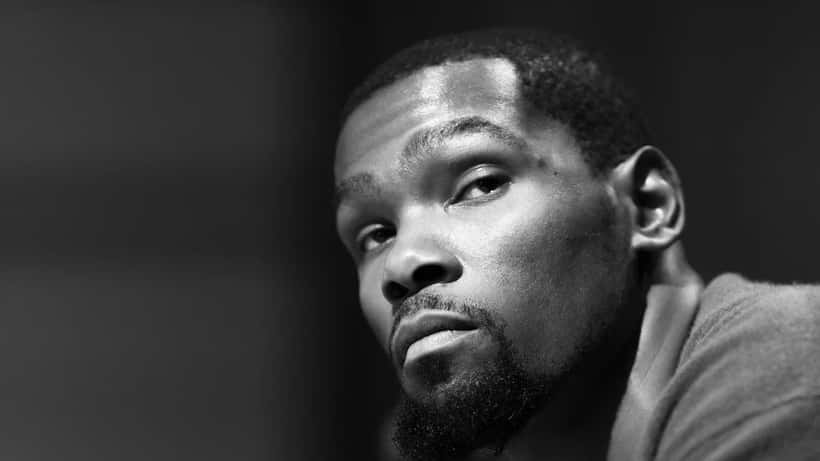
Kevin Durant, 37, entered the 2026 NBA Playoffs listed as questionable for Game 1 due to a right knee contusion — and the basketball world held its breath. The Houston Rockets star, who just became the oldest player in NBA history to score 2,000+ points in a single season and passed Michael Jordan for fifth on the all-time scoring list, was suddenly at risk of missing the most important games of his new chapter.
For casual fans, it was a storyline. For sports medicine professionals, it was a textbook example of a phenomenon worth understanding: how elite athletes manage pain at the edge of their physical prime — and what that means for the rest of us.
What Happened With Durant's Knee
Durant suffered a right knee contusion during the Rockets' regular season run, a bruising injury that typically involves direct impact to the knee joint, causing swelling, pain, and reduced range of motion. Unlike ligament tears or meniscus damage, contusions often heal faster — but in the context of playoff basketball, "faster" is relative.
The Rockets' medical team cleared him to play, but the injury report status — "questionable" — signals that discomfort remained. Durant, averaging 26 points per game across 78 games in 2025-26, was coming off a season where he averaged more minutes per game than most players his age would attempt.
"Questionable" in NBA terms means the team has weighed risk versus reward. In sports medicine, that calculation is more nuanced — and for non-professional athletes, it's often made without the expertise to make it correctly.
The Older Athlete's Dilemma
Durant's situation reflects a wider issue in sports science: the aging athlete who continues performing at a high level is not immune to injury — they are often more vulnerable to slow-healing soft tissue damage, even when surface metrics look strong.
According to the American Academy of Orthopaedic Surgeons (AAOS), knee contusions in athletes over 35 warrant careful management because cartilage resilience decreases with age. A bruise that heals in 10 days for a 22-year-old may take three weeks for a 37-year-old — and playing through it increases the risk of a more serious secondary injury.
The AAOS recommends:
- RICE protocol (Rest, Ice, Compression, Elevation) in the acute phase
- Avoiding weight-bearing until swelling subsides
- Gradual return to activity under professional guidance — not self-assessment
For recreational athletes — the weekend basketball player, the cycling enthusiast, the amateur marathon runner — the temptation to self-manage is strong. The problem is that distinguishing a contusion from a more serious injury (meniscus tear, bone bruise, bursitis) requires imaging and clinical evaluation.
Signs You Should See a Sports Medicine Specialist
Durant's team had an entire medical staff making that decision. For everyone else, here are the warning signs that a knee injury needs professional attention — not just ice and hope:
1. Pain that persists beyond 48 hours without improvement. A mild contusion typically shows some improvement within two days. If the pain is plateauing or worsening, that is a red flag.
2. Swelling that doesn't respond to elevation and compression. Significant fluid accumulation may indicate internal bleeding or joint involvement.
3. Clicking, locking, or instability. These symptoms suggest structural damage — meniscus, ligament, or cartilage — that no amount of rest will resolve.
4. Pain that shifts its location. Contusion pain is localized. Migrating pain can indicate referred symptoms from a different structure.
5. Inability to fully extend or flex the knee. Range-of-motion limitation is a clinical sign, not a temporary stiffness that "loosens up."
The key insight from sports medicine is this: athletes, especially older ones, have a high tolerance for pain that can mask serious injury. The question is not "can I play through this?" — it's "should I?"
See also: Lakers Injury Crisis: What Chronic Sports Injuries Mean for Everyday Athletes
What the Playoffs Teach Us About Recovery Priorities
Durant's ability to play in the 2026 playoffs — even with a contusion — reflects years of elite recovery management: body composition, sleep optimization, contrast therapy, and immediate access to specialists. When something hurts, the Rockets' training staff doesn't wait.
For the 45 million Americans who participate in recreational sports, that access doesn't exist by default. A sports medicine physician, physical therapist, or orthopedic specialist consultation is often seen as a last resort rather than a first response.
That approach costs more in the long run. Minor injuries that don't heal correctly become chronic conditions. A knee contusion that becomes bursitis, or a meniscus that develops a small tear from continued play, can sideline someone for months — compared to a week or two of properly managed rest.
When to Act
You don't have to be Kevin Durant to benefit from professional guidance. If you are an active adult — whether you run, play recreational tennis, swim, or cycle — and you experience joint pain that doesn't follow a clear arc of improvement within 48 to 72 hours, a sports medicine consultation is warranted.
Expert Zoom connects you with qualified sports medicine doctors and physical therapists who can assess your injury, recommend the right treatment protocol, and help you return to activity safely — without the guesswork.
The same rigor that keeps a 37-year-old NBA star on the court through a contusion is available to everyone. The first step is not playing through pain — it's understanding what the pain is telling you.
This article is for informational purposes only and does not constitute medical advice. Always consult a qualified healthcare professional for any injury or health concern.
