 Isabella Torres
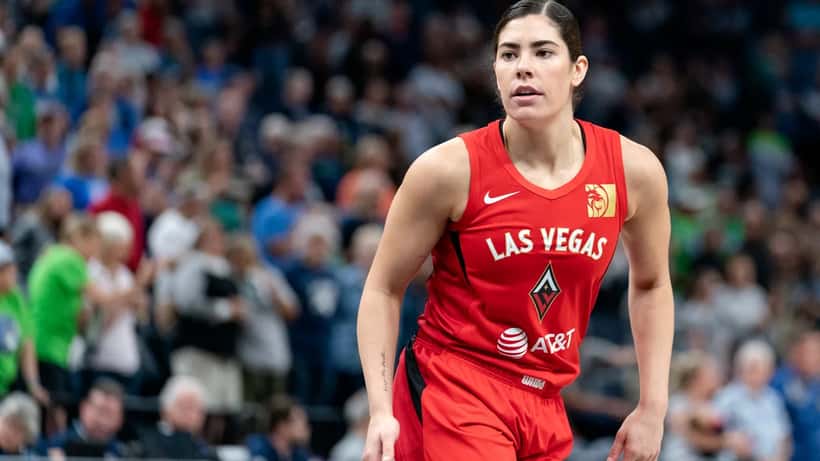
Kelsey Plum is averaging 23.9 points per game in 2026 — a career high — and earning the WNBA's maximum salary of $999,999 with the Los Angeles Sparks. Despite those accomplishments, she has become the trade deadline's biggest question mark, with league sources telling The Athletic she does not intend to re-sign in Los Angeles. That leaves the Sparks (10-17) holding significant leverage before Sunday's trade deadline: they can move her to another city, for draft picks and younger players, without ever asking whether she agrees.
The Trade Deadline Reality for Elite WNBA Players
The 2026 WNBA trade deadline has turned Plum into a live case study in something the league's new Collective Bargaining Agreement didn't fully resolve: the absence of standard contractual protections for non-pregnant athletes against involuntary trades.
The WNBA and WNBPA ratified a landmark CBA in March 2026, a deal projected to deliver more than $1 billion in player salaries and benefits across its seven-year term through 2032, according to the official WNBA announcement. The salary cap reached $7.0 million for the current season, and for the first time in women's professional sports history, a comprehensive revenue-sharing model now gives players a stake in the league's financial growth.
Those are historic wins. But the CBA — celebrated as a breakthrough — introduced a no-trade protection for only one subset of players: pregnant athletes. Teams must now obtain consent before trading a player who is pregnant. For everyone else, including a five-time All-Star at the peak of her career, the decision of where to play next belongs to the front office.
What Sports Attorneys Say About the CBA's Contractual Floor
Legal professionals who work in athlete representation draw a critical distinction: a CBA establishes the minimum protections all players receive collectively, but it doesn't prevent individual contracts from going further.
A no-trade clause — the provision that lets a player refuse a trade to specific teams or to any team — is not prohibited by the WNBA's new agreement. What it isn't is automatic. A player who wants that protection has to negotiate it personally, before signing, with the team's front office. In practice, that means working with a sports attorney or agent who understands both the legal language involved and which teams are historically willing to include such provisions.
The window for that conversation is small, and it closes the moment a contract is signed. Once a player is on the roster, the team's trade rights are locked in. No amendment, petition, or public campaign changes the underlying agreement unless both sides voluntarily agree to modify it — something teams pursuing rebuild strategies rarely do mid-season.
The Sparks, sitting well below .500 with a young roster they're actively developing, have every financial incentive to move Plum now rather than watch her walk in free agency this winter for nothing in return.
A CBA Win That Doesn't Cover Every Athlete — Yet
Starting in 2027, players with seven or more years of service in the WNBA will no longer be eligible for Core Player designation — a mechanism teams have used to retain veterans on below-market terms. That change gives long-tenured athletes considerably more freedom. But the timeline matters: it doesn't protect Plum during this trade deadline. At 31, she would benefit from those provisions next offseason, not now.
The gap between what the CBA promises collectively and what an individual contract can deliver is exactly where legal expertise becomes most valuable to professional athletes. Most players entering a new deal focus almost entirely on the dollar figure. That's understandable. But experienced sports attorneys consistently note that structural protections — where you can be sent, how much notice you receive, what your housing situation becomes in a new city — can be worth considerably more than marginal salary differences at the maximum pay scale.
The experiences of athletes like Jessica Shepard navigating a $2M contract and Sophie Cunningham's financial planning at the $665K level both show how different contractual contexts — even at the top of the salary structure — produce vastly different outcomes for athletes with similar earnings.
What a Forced Trade Actually Costs: A Concrete Scenario
Imagine a professional basketball player — 29 years old, nine seasons in the league, earning $975,000 this year — who receives a call at 7 a.m. on August 4, 2026. Her team has traded her. She has 72 hours to report to a city 1,900 miles away.
Here is what unfolds in the following weeks.
Housing. The 2026 CBA guarantees housing for all players — a genuine gain. But that housing is arranged by the new team, in a new city. If she signed a 10-month apartment lease in Los Angeles at $2,800 per month in October 2025, she now owes roughly $5,600 in remaining rent through the end of that lease term, or faces early-termination penalties of up to two months' rent — another $5,600. Her new housing is covered. Her old financial commitment is not automatically dissolved.
Endorsement income. Local sponsorship deals — with gyms, regional brands, sports retailers, community organizations — are typically market-specific. If 30% of her $120,000 in annual endorsement income is tied to Los Angeles-based sponsors, roughly $36,000 of that may not survive the trade. Contracts that include a "primary market" clause will likely lapse or require renegotiation.
State income taxes. California taxes WNBA players on income earned while playing in-state. Washington D.C. — one reported trade destination for Plum — has its own income tax structure with no reciprocal agreement with California. A mid-season move shifts the "duty days" calculation. If she earns 40% of her season salary after the trade in D.C., she may owe taxes in two states simultaneously on portions of the same income, with no offsetting credit.
None of these scenarios are catastrophic for a max-contract athlete. But each is a direct financial consequence of lacking a single clause that, inserted before she signed, would have changed the math: a 5-team no-trade list. Sports attorneys estimate that kind of limited protection adds no monetary cost to the contract itself. It costs nothing to the player in salary, nothing to the team in cap space, and it transfers a meaningful amount of control back to the athlete before a trade deadline ever arrives.
What Athletes Should Negotiate — and When
The pre-signature negotiation window is the only moment an athlete holds full leverage over her contract's structural terms. Once signed, the team controls most variables. Sports attorneys who work in professional athlete representation recommend raising several specific provisions before any contract is finalized.
A partial no-trade clause. A list of five to ten teams a player will not be sent to provides meaningful control without requiring teams to accept a blanket prohibition. Most teams are far more willing to negotiate a limited list than a full no-trade agreement. NBA veteran contracts include these provisions routinely; individual WNBA player contracts can include them too.
Advance notice requirements. Requiring the team to notify a player 48 to 72 hours before any trade announcement — even one she cannot legally block — allows her time to consult with legal counsel, prepare her financial situation, and make personal arrangements without acting under crisis conditions at 7 a.m.
Consent provisions tied to personal circumstances. The WNBA's new CBA established the pregnant-player consent precedent, recognizing that certain personal circumstances make a trade particularly disruptive. Athletes with dependents, locally enrolled school-age children, or closely tied business interests can attempt to negotiate consent requirements around those specific situations. Not every team will agree, but the request is legally permissible under the CBA structure and worth raising.
These are not exotic demands for a player earning near the league maximum. They are, in many cases, simply overlooked because no one raised them at the right moment.
The Legal Window Opens Before the Ink Dries
The Kelsey Plum trade deadline story will resolve within days — she'll either be moved or she'll enter free agency. But the underlying legal gap her situation illustrates will recur every August, for athletes at every level of professional sport.
The new WNBA CBA is a genuine milestone. The revenue-sharing structure, the salary cap increases, the housing provisions, the elimination of Core Player designations for veterans — these are real changes that improve player welfare across the board. What they don't do is substitute for individual legal counsel at the moment of signing. A collective agreement sets the floor. A personal contract, negotiated with the help of a qualified sports or employment attorney, can go considerably higher.
For any professional athlete, or for anyone advising one, the most important legal consultation isn't after a trade happens. It's before the contract that makes the trade possible is signed.
This article addresses general legal and financial concepts related to professional sports contracts. It does not constitute legal advice. Athletes and their representatives should consult a licensed attorney for guidance specific to their contracts and personal circumstances.
