 Ava Miller
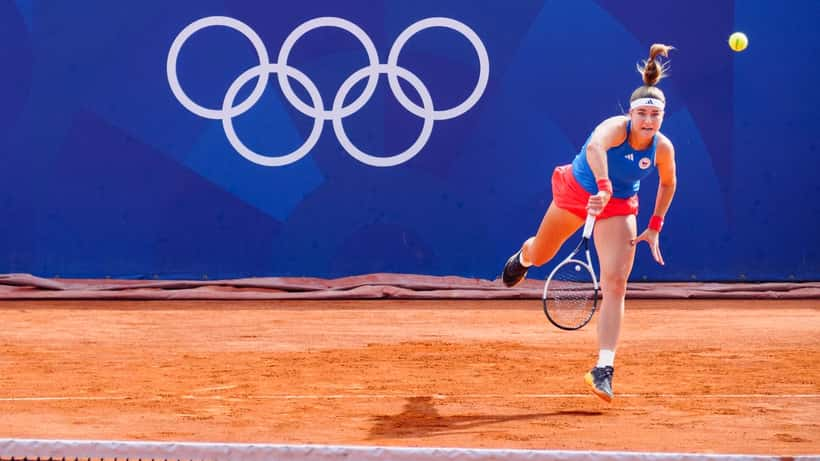
Days after losing the 2026 Wimbledon final to Linda Noskova, Karolina Muchová quietly revealed she had undergone a planned surgical procedure. The Czech star, ranked in the WTA Top 10, withdrew from the Canadian Open in Toronto as a result, turning what should have been a celebration of a historic finalist run into a race to recover in time for the rest of the hardcourt season. Her story is familiar to millions of recreational tennis players who have played through wrist pain, wondering whether ice and ibuprofen are enough — or whether they're making a serious mistake.
The Surgery Behind the Headlines
Muchová's procedure was, by her own account, minor and pre-planned — not an emergency triggered by the Wimbledon final itself, according to her comments to TennisActu in late July 2026. She described a "small surgery" and expressed confidence about returning to compete on the hardcourt swing, including the possibility of the US Open.
This is not her first brush with the operating room. In 2023, a wrist injury suffered during the US Open semifinals kept her off the tour for 10 months, a career disruption she described as one of the most difficult periods of her life. The 2026 surgery appears unrelated to that earlier episode, but the pattern underscores a reality of professional tennis: the wrist is among the most abused joints in the game, and decisions about when to intervene surgically can define careers.
According to the National Institute of Arthritis and Musculoskeletal and Skin Diseases (NIAMS), wrist sports injuries are among the most common in racket sports, with overuse and repetitive strain accounting for a significant share of the cases that eventually require surgical intervention.
What Wrist Injuries Really Mean for Amateur Players
Muchová's situation highlights a decision point that is far less glamorous but just as real for the estimated 17 million Americans who play recreational tennis: when does a wrist problem stop being a nuisance and start being a medical issue?
Sports medicine physicians divide wrist injuries in tennis players into two broad categories. Acute injuries happen during a specific movement — a bad fall, a mis-hit, a sudden hyperextension. Chronic injuries develop gradually from thousands of repetitions. The vast majority of recreational players who report to doctors with wrist pain fall into the second category: they cannot identify the moment things went wrong, only that the soreness grew until it was impossible to ignore.
The troubling reality, according to sports health experts, is that the gap between "annoyance" and "permanent damage" in the wrist is far narrower than most patients expect. Tendons, ligaments, and the triangular fibrocartilage complex — the shock-absorbing tissue on the ulnar side of the wrist — do not heal well on their own once they are significantly compromised. Playing through that pain is not toughness; it is a decision that may change the timeline from "a few weeks off" to "months of rehabilitation or surgery."
Certain symptoms should function as hard stops: pain that persists during normal daily activities (not just serving), clicking or snapping sensations during wrist rotation, weakness when gripping the racket, or swelling that returns after rest. These are not signs of overtraining. They are signals that tissue is being damaged faster than it can repair.
If you've been managing wrist discomfort with compression sleeves and rest days for more than four to six weeks without improvement, the evidence increasingly points in one direction: an imaging evaluation and a consultation with an orthopedic specialist or sports medicine physician.
When a Pro's Surgery Becomes Your Decision: A Concrete Scenario
Consider a realistic situation that plays out in tennis clubs across the United States every fall. Sarah is 41 years old, plays three times a week at a suburban club in suburban Columbus, Ohio. Sometime in mid-August 2026, she notices that her backhand — always her weaker shot — has become genuinely painful. She assumes it's a slight sprain, skips a week, and returns to the court.
By September, the pain has migrated from "during the backhand swing" to "when I carry groceries." She buys a wrist brace online for $18 and takes naproxen before matches. She continues playing for another six weeks.
When she finally sees a sports medicine physician in October, the diagnosis is a partial tear of the extensor carpi ulnaris (ECU) tendon — exactly the kind of injury that responds well to conservative treatment (immobilization, physical therapy, possibly a corticosteroid injection) in its early stages, but has a significantly higher chance of requiring surgical repair once the tear has progressed past 50 percent of the tendon diameter.
The if/then logic here is blunt: if Sarah had sought evaluation in late August, she would likely have faced 6–8 weeks of PT at $80–$150 per session with a co-pay, totaling $500–$1,500 out of pocket on a typical insurance plan. If the tear has progressed to require surgical repair — an arthroscopic procedure with a national average cost of $6,000–$15,000 including anesthesia and facility fees — her out-of-pocket exposure on a mid-tier PPO plan is $3,000–$5,000, plus four to six months of competitive abstinence.
The same injury. A very different outcome, determined largely by a six-week delay. Muchová, with access to a full medical team, had the advantage of making a planned decision. Most recreational players do not.
The Rome Open 2026 season, which saw 13 professional withdrawals due to injuries, illustrated this pattern at the elite level: professionals delay consultation to stay competitive, then require more invasive intervention than if they had acted earlier.
The Four Signs That Change the Calculus
Sports medicine physicians use several clinical thresholds to guide the conversation from "conservative management" to "further evaluation." Understanding these thresholds helps patients arrive at consultations better prepared, not in crisis.
Pain during daily activities, not just sport: if the wrist hurts when typing, opening jars, or holding a coffee mug, the structural load on the tissue exceeds what the body is repairing overnight.
The four-to-six-week rule: minor soft-tissue injuries in healthy adults typically show measurable improvement within this window. No improvement — or deterioration — is a clinical flag.
Mechanical symptoms (clicking, locking, instability): these suggest structural damage to cartilage or ligament rather than simple inflammation and almost always warrant imaging.
Night pain: pain that wakes you from sleep is a red flag in any musculoskeletal context, associated with more serious tissue involvement.
None of these symptoms can be properly evaluated without an examination. An emergency room visit is not required — and is generally the wrong first step for a chronic sports injury. The appropriate path is a primary care sports medicine physician or an orthopedic sports specialist. Many practices can schedule an initial evaluation within one to two weeks, and some telehealth platforms offer preliminary triage for patients in areas with limited access to orthopedic specialists.
What Muchová's Return Timeline Teaches Us About Recovery Expectations
Muchová stated after her July 2026 procedure that she expected to be sidelined for "a few weeks." For a professional athlete with a medical team managing every aspect of her recovery, that timeline reflects careful surgical planning and comprehensive rehabilitation infrastructure.
For a recreational player without daily physiotherapy access, the same procedure typically requires a more conservative approach: two to four weeks of immobilization, followed by four to eight weeks of progressive physical therapy before returning to hitting balls. Returning too early — even at reduced intensity — increases re-injury risk substantially.
Muchová is preparing for the autumn hardcourt season. The stakes for a club player are different, but the principle is identical: the fastest return is the one guided by professional evaluation, not by optimism.
Disclaimer: This article is for informational purposes only and does not constitute medical advice. If you are experiencing wrist pain or any musculoskeletal symptoms, consult a qualified healthcare professional.
Get an Expert Assessment Before the Next Match
Wrist injuries in tennis exist on a spectrum from minor to career-altering. The dividing line is rarely visible to the player experiencing the pain — it requires clinical evaluation, imaging, and professional judgment. Karolína Muchová had the resources to make that call quickly and properly. You do too.
Expert Zoom connects patients in the United States with sports medicine physicians and orthopedic consultants who can assess, diagnose, and help you build a recovery plan — before the "manageable discomfort" becomes a surgical question.
