 Elizabeth Chen
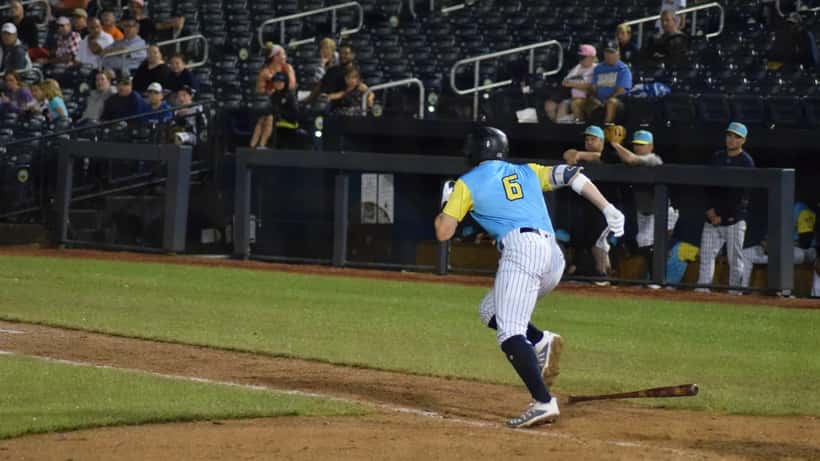
Kaelen Culpepper earned his second consecutive spot on the MLB All-Star Futures Game roster in July 2026 — a distinction that places the 23-year-old Minnesota Twins shortstop among the most closely watched prospects in professional baseball. His numbers at Triple-A St. Paul were genuinely impressive: a .272 batting average, a .376 on-base percentage, and a .492 slugging percentage across 63 games, with 14 home runs and 15 stolen bases in just 250 at-bats, according to MiLB.com. For a first-round pick out of Kansas State, it was exactly the kind of season that pushes front offices toward a midseason call-up decision. But behind those numbers lay something that sports medicine professionals recognize immediately: three separate injury events compressed into a single season — a left hip strain in June, a glute strain that raised doubts about his 2026 MLB debut, and a hit-by-pitch to his left hand that forced him out of yet another game.
For the thousands of young athletes and their families watching Culpepper's career unfold, the question is not whether he will eventually reach the majors. It is what his injury story teaches about the point at which a pattern of physical setbacks stops being bad luck and starts being a clinical signal.
The Season That Raised the Right Questions
Culpepper was the Twins' No. 1 pick in 2024 and entered 2026 as their No. 2 organizational prospect. His defensive profile at shortstop — quick lateral instincts, a strong arm, elite athleticism — made him the kind of player who generates real excitement in a farm system that has been rebuilding patiently. The Futures Game selection for a second straight year confirmed that scouts across the league agreed.
But the season's medical timeline told a different story alongside the production. The hip strain came first. Culpepper missed roughly two weeks in June with a left hip strain, a setback that was managed conservatively and followed by a return to play. Then, after reassuming his starting role, he exited a game after being struck by a pitch on his left hand — the hand that controls grip, bat speed, and swing precision. Imaging revealed bruising and tenderness rather than a fracture, but his absence from the lineup was nonetheless significant. By midsummer, questions about whether he could contribute at the major league level in 2026 had shifted from impatient optimism to genuine uncertainty.
The pattern — hip strain, return, secondary event, hand injury, ongoing uncertainty — is exactly what sports medicine specialists are trained to read as a unit rather than a series of disconnected incidents.
What the Pattern Signals: An Expert Reaction
Sports medicine is not simply the treatment of individual injuries; it is the interpretation of what multiple injuries in proximity mean when placed side by side. A single hip strain in a power-hitting shortstop who pivots explosively on every defensive play is not alarming on its own. A single bruised hand from a hit-by-pitch is part of the statistical reality of competitive baseball. But when two distinct injuries occur within weeks of each other — particularly when they involve anatomically linked systems — orthopedic and sports medicine specialists look for what they call injury clustering.
The mechanism is well-documented: when a muscle group is strained and the athlete returns before full tissue recovery, the body compensates by shifting load to adjacent structures. A hip that was not fully rehabilitated changes how a player pivots, transfers weight, and grounds his stance. That altered movement pattern creates disproportionate stress on the glute, the lower back, and even the shoulder on the dominant side — all while the athlete may feel functional enough to play.
The National Institute of Arthritis and Musculoskeletal and Skin Diseases (NIH NIAMS) notes that recurring sports injuries in the same season are frequently linked to inadequate recovery timelines, return-to-play protocols that prioritize availability over tissue readiness, and movement inefficiencies that go unaddressed between events. In competitive minor league baseball — where roster spots are evaluated weekly and the pressure to contribute is constant — those pressures are amplified.
The lesson is not that three injuries in one season indicate a systemic problem. It is that three injuries in one season are a diagnostic prompt, and the appropriate response is a comprehensive sports medicine evaluation rather than event-by-event triage.
For context on how double-injury recovery situations unfold for athletes in other sports, the pattern Culpepper is navigating closely parallels what basketball players face when managing simultaneous lower-body setbacks — a dynamic explored in this piece on Jalen Reed's ACL and Achilles recovery.
The Scenario That Applies to Thousands of Young Athletes
Consider a 22-year-old college baseball shortstop — let's call him Daniel — playing for a Division I program under a full athletic scholarship in the 2026 spring season. In late March, Daniel strains his left hip flexor diving for a ground ball during a weekend series. The athletic trainer clears him in ten days with ice, rest, and light stretching, because the conference tournament is approaching. Three weeks later, Daniel begins complaining of lower back tightness, which he attributes to the travel schedule. A month after that, a fastball clips his left forearm during live batting practice, leaving him with substantial bruising and noticeably reduced grip strength in the hand that controls his contact.
Each event, evaluated alone, looks manageable. Together, they tell a different story. A sports medicine physician reviewing Daniel's full history over those twelve weeks would recognize a probable causal chain: an incompletely rehabilitated hip altered his weight transfer and rotational mechanics; that mechanical change placed new chronic stress on his lower back; and because his swing mechanics had become slightly defensive under fatigue, he failed to pull his forearm back in time when the pitch came inside.
The financial consequence is direct and quantifiable. A Division I player in Daniel's draft-eligible class typically projects between the third and sixth round depending on scouting evaluations. The difference in MLB signing bonuses between a third-round selection and a fifth-round selection in 2026 is approximately $400,000 — money that disappears if a scout observes him favoring his back during pre-draft workouts, or if his swing looks mechanically short in a tryout because his forearm hasn't fully healed. If Daniel continues treating each injury as isolated and forgoes a sports medicine consultation, that draft-position risk compounds every week he plays without addressing the root cause. If he schedules a comprehensive evaluation after the second event — the back tightness — a specialist can assess whether his hip rehabilitation was complete, prescribe corrective movement work, and potentially break the compensation chain before it reaches his showcase appearances.
The if/then matters: if three injuries in a single season share a connected physical mechanism, then addressing only the most recent injury leaves the underlying cause in place — and the next injury waiting.
Three Signals That a Sports Medicine Consultation Is Overdue
Sports medicine professionals commonly point to three patterns that should convert a rest-and-return approach into a formal specialist evaluation:
Two or more injuries to the same region or linked kinetic chain within one season. A hip strain followed by a glute strain in the same season, even with different diagnoses, suggests shared anatomy under unresolved stress.
Any injury to the dominant hand, wrist, or elbow in a striking or throwing athlete. These structures carry chronic repetitive load across hundreds of swings and throws per week. A superimposed acute event like an HBP can accelerate underlying wear that a routine training room exam will not detect.
A return to play that produces re-injury or a secondary event within three weeks. Culpepper returned from his June hip strain and then exited another game shortly after — a timeline that orthopedic specialists treat as strong evidence that the initial issue was not fully resolved before full competitive load resumed.
If any of these patterns are present in your own athletic career or in that of a young athlete you support, a sports medicine consultation is the clinically appropriate next step. Similar injury timelines in baseball players — including how shoulder labrum injuries interact with ongoing play — are explored in detail in this piece on Alan Roden's return from a labrum tear.
What Comes Next
For Culpepper, the 2026 MLB debut window may be narrowing, with the Twins' medical staff navigating a genuinely complex set of decisions about his readiness and risk. For everyone else, his season is a useful model: elite talent and consistent performance can coexist with injury patterns that require more than event-by-event triage to resolve.
Finding the right sports medicine professional means looking beyond a general practitioner. Fellowship-trained sports medicine physicians, athletic rehabilitation specialists, and — for younger athletes — pediatric sports medicine professionals all bring the systemic view that isolated injury management cannot provide.
This article is informational in nature. Medical decisions about injury treatment and return-to-play should always be made in consultation with a qualified healthcare professional.
If you believe your injury history warrants a comprehensive sports medicine evaluation, connecting with a specialist through ExpertZoom gives you access to professionals who assess the full picture — not just the most recent event.
