 Cora Nelson
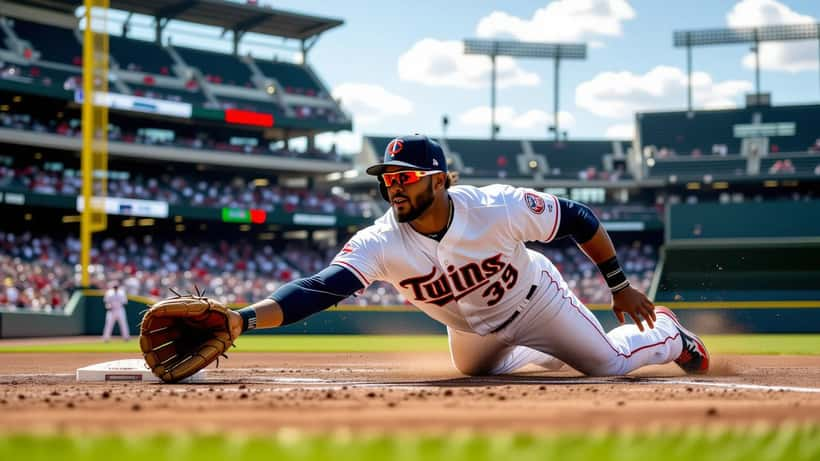
The Minnesota Twins recalled outfielder Alan Roden from Triple-A St. Paul on July 7, 2026, capping a three-month comeback from a right shoulder labrum tear that had threatened to derail his season. The move arrives as the Twins reshuffle their outfield while Byron Buxton recovers from a hip issue, and it highlights how modern sports medicine is helping athletes return from complex shoulder injuries faster than many fans expect.
Roden was diagnosed with the labrum tear in late April after an encouraging start at St. Paul, where he had posted a .275/.425/.464 slash line with more walks than strikeouts in 19 games. Twins general manager Jeremy Zoll described the injury as nonsurgical at the time, estimating a shutdown of roughly four weeks before a gradual return to activity. What followed was a carefully managed rehab: rest, physical therapy, a throwing program, and eventually minor-league rehab assignments with the Florida Complex League Twins and Fort Myers Mighty Mussels in early June.
By mid-June, Roden was back in Triple-A and quickly showed why Minnesota traded for him at the 2025 deadline. Across 33 games with St. Paul, he hit .272/.397/.512 with eight home runs and a 24-to-25 walk-to-strikeout ratio, demonstrating the plate discipline and on-base skills that have defined his minor-league career. The Twins now hope that production can translate to the major-league level as Roden fills in across all three outfield spots.
From a medical perspective, Roden's case illustrates both the promise and the patience required with labrum injuries. The labrum is a ring of cartilage that deepens the shoulder socket and stabilizes the ball-and-socket joint. Tears can occur from acute trauma, such as a diving catch or a collision, or from repetitive overhead throwing and hitting motions. Symptoms often include deep shoulder pain, a catching sensation, decreased velocity on throws, and difficulty maintaining arm strength through a full game.
Not every labrum tear requires surgery. When the tear is partial and the shoulder remains stable, orthopedic specialists frequently recommend a nonsurgical approach that begins with activity modification and anti-inflammatory measures, followed by structured physical therapy. The goal is to restore range of motion, rebuild rotator-cuff strength, and retrain the shoulder's neuromuscular control before introducing sport-specific stresses. For position players, that progression typically includes long toss, defensive drills, batting practice, and simulated game action before a formal rehab assignment.
Athletes at every level can learn from the timeline Roden followed. Rushing back too soon after a labrum injury increases the risk of compensatory mechanics, which can strain the rotator cuff or irritate the biceps tendon. Conversely, returning with a well-conditioned shoulder often allows a player to regain prior performance without the extended downtime associated with surgery. The decision between operative and nonoperative care should be made with a sports-medicine physician or orthopedic shoulder specialist who can evaluate tear type, instability, and the athlete's positional demands.
For the Twins, Roden's recall is more than a roster patch. It is a test of whether the organization's patient rehab strategy can deliver a usable contributor during a postseason push. Because Roden can handle left field, right field, and some center field, manager Rocco Baldelli has flexibility to rest veterans, match up against left-handed pitching, and protect Buxton's workload. Fantasy managers have also taken notice, with Roden's on-base ability and emerging power making him a potential waiver-wire target in deeper leagues.
The broader takeaway for readers, however, is that shoulder injuries are not one-size-fits-all. A recreational softball player, a warehouse worker who lifts overhead, or a tennis enthusiast experiencing persistent shoulder pain should not assume rest alone will solve the problem. Early evaluation by a physical therapist, sports-medicine doctor, or orthopedic specialist can clarify whether the issue is a labral tear, impingement, rotator-cuff strain, or something else entirely. Imaging, targeted strengthening, and movement analysis can prevent a manageable injury from becoming a chronic limitation.
Getting the right diagnosis often starts with asking the right expert. In complex cases, patients benefit from a second opinion from a shoulder specialist who has experience with overhead athletes or labor-intensive occupations. Telehealth consultations and expert-appointment platforms now make it easier to connect with orthopedic surgeons, sports-medicine physicians, and certified physical therapists without waiting weeks for an in-person referral. For anyone whose livelihood depends on shoulder function, that speed can be the difference between a brief setback and a season-ending problem.
As Roden steps back into the majors, his comeback will be measured not only by batting average and home runs, but by how well his shoulder holds up through the second half of the 2026 season. If his Triple-A performance is any indication, the Twins may have gained a valuable outfield option just when they needed one most. For anyone tracking shoulder-injury recovery, his journey is a useful case study in patience, expert-guided rehab, and the value of a well-timed return to play.
