 Jessica Johnson
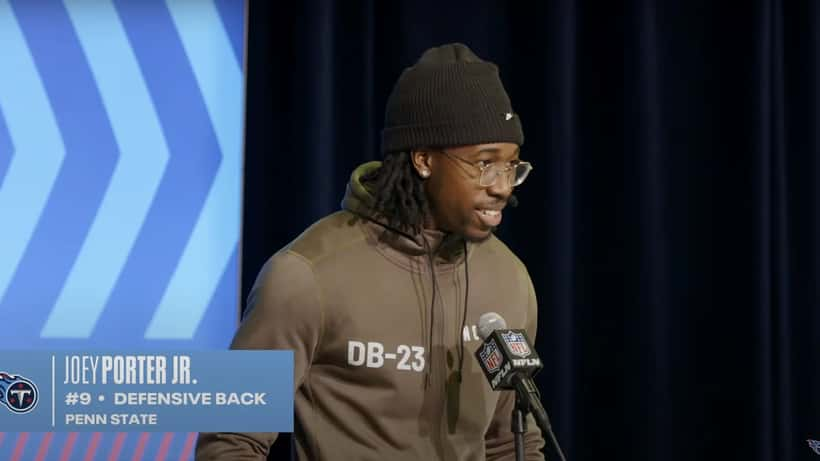
The breaking news hit NFL circles fast: Pittsburgh officially traded cornerback Joey Porter Jr. to the Dallas Cowboys on September 30, 2026, ending a months-long contract standoff that left one of the league's most promising young defenders playing out the final year of his rookie deal far from where he was drafted. But buried beneath the headlines about picks exchanged and fantasy football shakeups was a question that matters well beyond professional sports: when contract negotiations collapse between a worker and an employer, what rights does that worker actually have?
Porter's saga offers one of the clearest real-world case studies in recent memory of what happens when talent valuation, injury complications, and contractual leverage collide — and why understanding those dynamics matters whether you're an NFL cornerback or a professional in any other field.
The News: A $27 Million Rejection and a $4.9 Million Ceiling
Joey Porter Jr. entered the 2026 season on the final year of his 2023 second-round rookie contract, carrying a cap hit of just $4.9 million. That figure looked increasingly misaligned with the market after Christian Gonzalez signed a 4-year, $135 million extension and Devon Witherspoon locked in at 4 years and $132 million earlier this offseason — establishing elite cornerbacks as one of the NFL's most expensive position groups.
The Steelers presented Porter with an extension offer of slightly over $27 million for the 2026 season alone, according to Bleacher Report. Porter rejected it, believing his market value — validated by those landmark deals — was substantially higher. Pittsburgh, citing Porter's back injury and his designation on the Physically Unable to Perform (PUP) list since early August, declined to push the offer further. By Week 1, coach Mike McCarthy confirmed the two sides were at an "impasse."
For weeks, the Steelers made no new formal offer. That silence sent a clear message: the team preferred Porter play out his rookie deal at $4.9 million rather than commit to an expensive long-term extension. When the Dallas Cowboys and Detroit Lions emerged as trade suitors, Pittsburgh moved quickly. Porter was gone.
Expert Analysis: What the Law Actually Says About Contract Standoffs
Porter's situation is extreme in dollar amounts, but the underlying legal mechanics apply to any worker navigating a contract impasse. Sports law attorneys who specialize in player representation point to three dynamics that determined Porter's options — all of which have direct parallels in standard employment law.
The "play or don't play" ultimatum. In the NFL, a player under a rookie contract has no legal right to demand a renegotiation. The team holds the option to enforce the existing terms for the full duration of the agreement. Porter was obligated to report and perform — or sit out and lose income without any legal remedy. In non-sports employment, this mirrors the situation of workers on fixed-term contracts who want to renegotiate salary mid-term: the employer is under no obligation to do so unless the contract contains an explicit renegotiation clause.
Injury as a legal complication. Porter's back injury added a second layer of complexity. Under the NFL Collective Bargaining Agreement, negotiated and enforced by the National Football League Players Association, teams may place injured players on the PUP list under specific conditions that affect playing time and compensation. From a legal standpoint, injury can either strengthen or weaken a worker's negotiating position depending on how the underlying contract handles disability provisions, rehabilitation timelines, and definitions of "work-related" incapacity. Employment attorneys reviewing long-term services agreements always examine what happens to compensation and obligations when the employee cannot perform due to health circumstances.
The trade right — and its absence. Porter could not demand a trade. Under the NFL's labor framework, players have virtually no unilateral right to force a trade — that power rests entirely with the team. What Porter could do was signal openness to a trade, creating reputational pressure on Pittsburgh to move him rather than damage their locker room. That's a soft lever, not a legal one. Outside the NFL, employees generally cannot compel an employer to reassign them — but they can resign, which carries its own financial and professional costs.
What Porter's Departure Reveals About Market Timing
The market context is essential to understanding Porter's calculation. Gonzalez's $135 million deal and Witherspoon's $132 million deal established a clear ceiling for elite cornerbacks. If Porter believed he was in that tier — and his performance in 2024 and 2025 gave him a credible argument — his one-year offer of $27 million represented roughly 20% of what comparable players received over four years. No agent in the league would recommend signing a short-term bridge deal when multi-year security is on the table.
But Pittsburgh's leverage was real: a nagging back injury made a multi-year commitment riskier for the team, and the Steelers traditionally refuse to negotiate contract extensions during the season. Porter was caught between market value and medical uncertainty — a collision that sports lawyers identify as one of the most complex scenarios in any contract negotiation.
The core lesson: the party that controls the timeline controls the negotiation. Pittsburgh set the deadlines. Porter had no legal mechanism to override them. When teams make no formal offer for weeks, that silence is a strategy — and workers who don't recognize it as one often find themselves negotiating from a weakened position.
For workers in other industries navigating similar rookie-to-second-contract transitions, the insights from articles like what young athletes should know about their first NFL contract are directly applicable: understanding your leverage window is as important as understanding your market value.
When the Numbers Break Down: A Concrete Scenario
Consider this scenario, grounded directly in the Porter situation: a senior project manager at a Dallas-based consulting firm is in the final year of a three-year employment contract earning $195,000 per year. The market has shifted — comparable professionals at peer firms are now earning between $265,000 and $285,000, based on publicly available salary surveys from the Bureau of Labor Statistics and industry compensation reports.
She requests a renegotiation eight months before her contract expires. Her employer does the equivalent of what Pittsburgh did: they make no counteroffer for two months, then propose a one-year extension at $210,000 — a 7.7% raise that dramatically undercuts the market rate she documented.
If she rejects the offer, here is exactly what happens under a standard fixed-term employment contract with a 12-month non-compete clause:
- She is entitled to complete her existing contract at $195,000 through the expiration date — approximately $130,000 in remaining compensation (8 months × $16,250/month)
- She cannot join a direct competitor for 12 months after her departure date without risking a breach of contract lawsuit
- If her employer can demonstrate she violated the non-compete, courts in Texas have awarded injunctive relief AND damages averaging $40,000–$80,000 in comparable cases
- Her effective "switching cost" — the period during which her $265,000+ market rate is inaccessible — could represent $75,000 or more in foregone income
The critical variable: if she had hired an employment attorney six months before this impasse, they would have identified whether the non-compete clause was enforceable under Texas law (Texas courts apply strict requirements for geographic and time limitations), potentially negotiating a carve-out that let her join a competitor immediately upon expiration. That legal review, costing $1,500–$3,500 in attorney fees, could protect six figures in future earnings.
Porter's equivalent was the trade demand — a soft lever that ultimately worked, getting him to Dallas where a new contract at market rate remains possible. But that outcome required his team having leverage intelligence months in advance.
Practical Steps Before a Contract Impasse Becomes Permanent
Sports attorneys and employment lawyers consistently identify four actions professionals should take before a contract standoff escalates:
1. Build your market case before the negotiation window opens. Porter's representation had Gonzalez's and Witherspoon's deals as benchmarks — but those comparables needed to be in front of Pittsburgh three months before any offer was made, not after the Steelers had mentally closed the door on a major extension. Document your market value proactively, using verifiable data sources, well ahead of your renewal date.
2. Read your contract's assignment and portability clauses now. NFL players cannot veto trades; many employment contracts give employers broad assignment rights during mergers, acquisitions, or restructurings. Knowing whether you can be "traded" — reassigned to a subsidiary, relocated, or transferred post-acquisition — is fundamental to any negotiation strategy.
3. Understand what disability and injury provisions mean for your deal. Porter's back injury transformed a straightforward contract dispute into a multi-variable legal situation. In any long-term professional services or employment contract, the disability clauses should be reviewed by an attorney when the contract is signed — not when a health issue has already complicated the situation.
4. Use professional counsel during renewal, not just litigation. Porter had an agent; most professionals don't have the equivalent. An employment attorney isn't just for when things go wrong — they're most valuable as a negotiating partner during renewal discussions, when the cost of a bad deal compounds across years of employment. As explored in recent coverage of rookie contract rights for early-career professionals, the moment before a contract is signed or renewed is when professional guidance delivers the highest return.
Legal note: This article addresses general legal and employment concepts for informational purposes only. Contract law varies significantly by state and jurisdiction. If you are involved in a contract dispute, renegotiation, or approaching a renewal deadline, consult a licensed attorney in your state.
When to Consult a Lawyer
If you're approaching the end of a multi-year employment or professional services contract and facing an offer you believe is below market, the time to consult a lawyer is before you reject — not after. An attorney can review whether your contract contains renegotiation rights or escalation clauses, the enforceability of any non-compete provisions under your state's law, how injury or disability provisions interact with your compensation obligations, and what a mutual release or negotiated exit would require to protect your interests.
Joey Porter Jr.'s story has a sequel — his chapter in Dallas is just beginning, and a new contract could still place him in the $130 million range he was seeking. But the legal architecture that governed his departure from Pittsburgh is the same architecture governing millions of professional contracts across every industry. Understanding it before the deadline hits is the difference between negotiating from strength and reacting under pressure.
ExpertZoom connects professionals with licensed attorneys specializing in employment contracts, professional services agreements, and dispute resolution. Whether you're preparing for a renewal negotiation or already navigating an impasse, a professional consultation can protect far more than a single year's income.
