 Cora Nelson
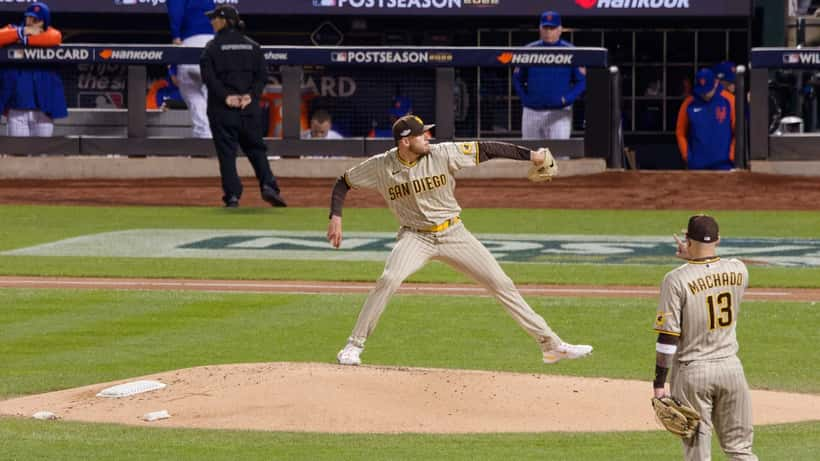
San Diego Padres pitcher Joe Musgrove has spent nearly two full years away from baseball following an October 2024 operation that combined four separate elbow procedures into a single surgery. As of late September 2026, his return timeline remains uncertain — and sports medicine specialists say his case illustrates a pattern that affects far more than professional athletes.
The Scale of What Musgrove Underwent
When Musgrove finally disclosed the full scope of his surgery in July 2026, the details surprised even seasoned baseball observers. His operation combined Tommy John ligament reconstruction, flexor tendon repair, bone spur removal, and microfracture cartilage work — all performed in the same session. In his own words, the procedures "changed the structure of the elbow itself."
Tommy John surgery alone carries a standard recovery window of 12 to 18 months. Each additional procedure compounds that timeline, adding tissue healing demands that compete with one another inside a joint that has very limited blood supply. The ulnar collateral ligament (UCL), the target of classic Tommy John repair, relies on gradual tensioning to heal correctly. Flexor tendon repair places similar demands on connective tissue. Microfracture — a technique used to stimulate cartilage regrowth — requires sustained low-stress periods that are difficult to achieve when other structures are also healing.
According to Dr. Neal ElAttrache, an orthopedic surgeon who has operated on numerous MLB pitchers, combination elbow procedures represent a small but growing share of sports surgeries as athletes and doctors try to address multiple problems in a single operating room session rather than staging procedures years apart. The tradeoff: a single longer recovery versus multiple shorter ones. For a 33-year-old pitcher already past his mid-career peak, a combined approach can make financial and physical sense — but the recovery math is unforgiving.
Why Setbacks Like Musgrove's Are Not Failures
Musgrove's 2026 spring training was disrupted when a setback during an exhibition game forced him off the field before he could begin his first formal rehab assignment. He eventually completed four minor-league starts in August but was pulled when he struggled to recover adequately between outings. As of late September, he has been playing catch — progress, but not yet competitive readiness. A brief back issue added another complication to a recovery already stretched well beyond the original estimates.
Sports medicine specialists note that setbacks in complex elbow recoveries are not unusual — they are expected. The recovery process is not linear. When four structures are repaired simultaneously, the weakest link at any given moment dictates what the arm can tolerate. A pitcher who moves through one milestone (returning to throwing) may be surprised to find that the cartilage repair, which heals more slowly, becomes the limiting factor at the next stage.
This mirrors what patients across all activity levels experience after complex joint surgeries. The medical community has a term for the phenomenon: staged recovery desynchronization — when different tissues in the same repair heal at different rates, creating periods where one structure is ready to advance while another is not yet safe to stress.
The possibility that Musgrove might need a second surgery, as reported by Sports Illustrated in September 2026, is an outcome that sports medicine doctors say patients undergoing complex repairs should be counseled about from the outset — not as a likely scenario, but as a real possibility that warrants transparent discussion before any operation.
What Musgrove's Case Tells Everyday Athletes
You don't need to be a 33-year-old professional pitcher earning $100 million to face complex elbow problems. Elbow injuries are among the most common complaints seen by orthopedic specialists across recreational sports — tennis, pickleball, CrossFit, recreational softball, and even golf all produce significant elbow stress. The UCL, in particular, is vulnerable in any overhead throwing or racket-swinging sport.
The relevant medical literature, published in the American Journal of Sports Medicine in 2024, found that among adult patients undergoing elbow surgery (not just Tommy John), approximately 22% required at least one additional procedure within five years — and that patients who had combined procedures at the initial surgery were more likely to have longer but ultimately comparable outcomes to those who staged their procedures separately. The key variable was not the number of procedures but the experience of the surgical team and the quality of post-operative rehabilitation.
For amateur athletes, the lesson from Musgrove's case is not discouragement — it is calibration. If your surgeon recommends addressing multiple elbow issues in a single procedure, the right questions to ask include: What is the realistic recovery timeline for the most complex procedure involved? How will conflict between healing timelines be managed? What is the trigger point for considering staged procedures instead?
Concrete Case: When a Recreational Pitcher Faces a Combined Repair
Consider a 42-year-old recreational pitcher in an adult baseball league who has been diagnosed with partial UCL tear, a small bone spur near the medial epicondyle, and early-stage cartilage wear on the radial head — three separate findings discovered during a single MRI following a season of persistent elbow pain.
His orthopedic surgeon has two options: address all three in one session (combined repair, 18–24 months recovery) or prioritize the UCL now and revisit the bone spur and cartilage issues in 12 months once the ligament heals (staged approach, shorter per-surgery recovery but two total).
If he chooses the combined repair: He should expect to be off any throwing activity for a minimum of 12 months, with return-to-sport testing (grip strength ≥ 90% of the non-dominant arm, range of motion ≥ 130 degrees flexion) typically required before clearance. Statistical data from the Hospital for Special Surgery indicates that athletes over 40 average 20–25% longer recovery timelines than the standard benchmarks developed from younger patient populations.
If he develops the same kind of between-start fatigue that Musgrove described: That is a clinical signal requiring evaluation, not something to push through. Persistent arm fatigue during a throwing rehab program — specifically, failure to recover to baseline pain scores within 48 hours of a throwing session — is a red flag that one or more of the repaired structures is being overloaded. In that scenario, continuing on the same schedule risks the same setback Musgrove experienced in spring 2026.
The financial implication: Even without a professional contract, the cost of a second elbow surgery — typically ranging from $25,000 to $40,000 fully out-of-pocket, or $8,000–$15,000 for the patient share with standard insurance — makes the decision about surgical strategy at the outset a financially significant one, not just a medical one. A sports law or health insurance specialist can review what a patient's plan covers for staged versus combined procedures before the first incision is made.
What to Do If You Are Facing Similar Decisions
Musgrove's case is a visible reminder of how difficult complex elbow recoveries can be even with world-class medical support. For anyone navigating a similar situation at the recreational or semi-professional level, the standard of care has become clear: second opinions are not a sign of distrust toward a surgeon — they are part of the recommended process for any procedure likely to involve more than one structural repair.
The American Academy of Orthopaedic Surgeons notes that UCL reconstruction recovery can take six to nine months or more to return to competitive throwing — and that timeline applies to a standard single-procedure repair. Patients considering UCL reconstruction should discuss the full scope of any concurrent findings — bone spurs, cartilage damage, flexor tendon involvement — and document the rationale for combined versus staged procedures in their pre-surgical consultation.
Beyond the surgical decision, rehabilitation planning matters as much as the operation itself. Asking specifically about the timeline for each repaired structure — not just the most prominent diagnosis — gives patients realistic expectations and clearer benchmarks for when a setback warrants calling the surgeon versus when it is within the expected variation of a complex recovery.
Musgrove is still playing catch. He may pitch again this season, or he may not. Whatever happens, his two-year journey through one of the most complex elbow repairs in recent MLB history is now a documented case that sports medicine professionals and patients alike can learn from — one recovery decision at a time.
This article is for informational purposes only and does not constitute medical or legal advice. Consult a qualified health professional before making any decisions about surgery or rehabilitation.
