 Ava Miller
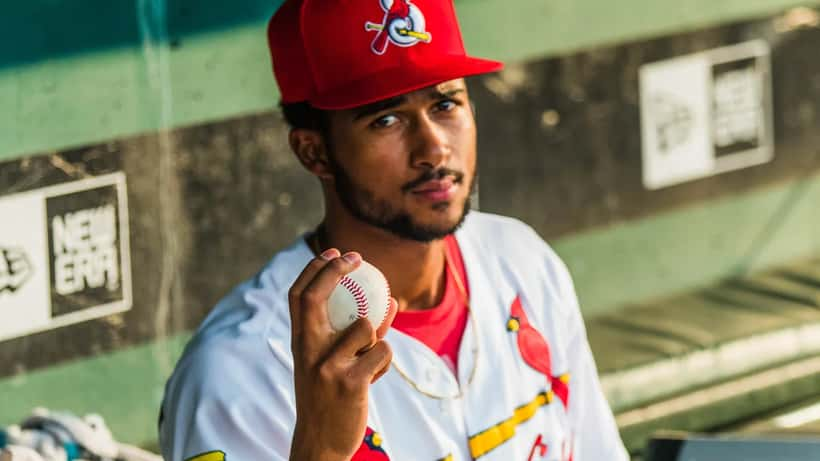
Sandy Alcántara, the Miami Marlins' ace right-hander and 2022 NL Cy Young Award winner, returned to the mound in 2026 carrying one of the most closely watched surgical recovery arcs in recent baseball history. Three years after undergoing Tommy John surgery in September 2023, the Dominican right-hander is posting a 13-win season with a 3.86 ERA entering late September — his first full, healthy campaign since before his elbow failed. His story is not just about baseball.
Alcántara's Return: A Case Study in Post-Surgical Patience
Alcántara missed the entire 2024 season and spent most of 2025 rebuilding arm strength and mechanics. In the final stretch of 2025, the results looked closer to the pitcher who won the Cy Young: a 2.68 ERA over his final eight starts, 52 strikeouts against just 10 walks across 53.2 innings, and an 0.86 WHIP that recalled his 2022 dominance. That delayed improvement pattern is not a coincidence.
According to research published by the American Journal of Sports Medicine, most pitchers who undergo ulnar collateral ligament reconstruction — the procedure commonly called Tommy John surgery — do not return to peak performance until 18 to 24 months post-operation. For elite-level throwers, full recovery of strength, proprioception, and mechanics can extend to 30 months. Alcántara's measured approach — refusing to force a second-half push in 2025 even when the Marlins needed starters — appears to have paid off. In 2026, he has made 29 starts without a return to the injured list, logging 149 strikeouts by mid-September.
What separated his recovery from pitchers who struggle in their first year back was not just physical conditioning. Sports medicine specialists consistently point to the ligament maturation phase — a period from roughly months 12 to 20 post-surgery when the reconstructed tendon integrates with the surrounding tissue — as the period where athletes are most vulnerable to re-injury if they push too hard. Alcántara waited until the ligament was ready. That decision may have extended his career.
The Tommy John Timeline: Longer Than the Headlines Suggest
The ulnar collateral ligament runs along the inner elbow and absorbs the rotational stress generated during overhead throwing. When it fails — either through gradual micro-tearing or a sudden acute rupture — the result is loss of control, velocity, and eventually the ability to pitch at all. Tommy John surgery replaces the damaged ligament with a tendon harvested from the patient's forearm, hamstring, or a cadaver donor.
The American Orthopaedic Society for Sports Medicine reports an overall success rate of approximately 83 to 85 percent for professional pitchers returning to competitive play following the procedure. The average return-to-play timeline for MLB pitchers is 14 to 17 months. But the data on peak performance recovery tells a more important story: a landmark study following 179 MLB pitchers found that ERA, innings pitched, and WHIP did not return to pre-injury baselines until the second full season after surgery — precisely the pattern Alcántara followed in 2025 and 2026.
What rarely makes the sports pages is the scale of the same procedure outside professional athletics. The American Academy of Orthopaedic Surgeons estimates that approximately 25,000 Tommy John surgeries are performed in the United States annually. A growing share — now exceeding 40 percent in some estimates — are performed on patients between the ages of 15 and 35, including recreational baseball and softball players, tennis athletes, and overhead workers. The elbow doesn't know whether the arm belongs to a Cy Young winner or a weekend league shortstop.
UCL Injuries Don't Only Happen to Professionals
The stresses that led Alcántara to surgery are biomechanically similar to those faced by any athlete who throws repeatedly or performs overhead motions under load. Years of high-velocity pitching, early sport specialization in youth players, and incremental micro-tears that never fully heal between seasons — these are not conditions unique to $50 million arms.
Sports medicine specialists identify a pattern common to both professional and recreational athletes: the UCL rarely fails without warning. It typically sends signals weeks or months in advance. The problem is that many of those signals — medial elbow soreness, slight decreases in velocity or grip strength, stiffness at the beginning of a game — are easy to attribute to fatigue or aging and easy to play through. Alcántara was shut down in August 2023 with what the Marlins initially characterized as a manageable issue. Six weeks later, the ligament tore completely during a start.
From Weekend League to an Orthopedic Consultation: A Concrete Case
Consider a 34-year-old recreational softball pitcher in the Phoenix metro area who began experiencing medial elbow discomfort early in the 2025 spring season. He attributed the pain — located precisely on the inner side of his throwing elbow — to the usual first-month soreness of returning to competition after a winter layoff. He was pitching in two adult leagues simultaneously, roughly 60 to 80 pitches per week.
By June 2025, the pain had escalated. It appeared during daily activity — lifting a coffee mug, gripping a steering wheel — not just during games. His catcher noted his velocity had dropped perceptibly. He finally scheduled an evaluation with a sports medicine specialist in August 2025 after a start where the elbow pain prevented him from finishing the fourth inning.
An MRI with contrast revealed a partial UCL tear: approximately 40 percent of the ligament's cross-sectional area compromised. His specialist laid out the arithmetic clearly. UCL tears below the 50 percent threshold have a roughly 60 percent success rate with conservative management — structured rest, a platelet-rich plasma (PRP) injection, and a 12-week progressive return-to-throwing protocol. Above 50 percent, the odds flip: most patients eventually require surgical reconstruction, with an 18-month minimum recovery afterward.
He chose the conservative route. By February 2026, after completing the full rehab protocol, he had returned to pitching in spring warmups with no recurrence. The critical variable in his outcome: he sought evaluation when the tear was still at 40 percent. His specialist estimated that continuing to pitch for an additional 6 to 8 weeks — the typical delay in this patient profile — would likely have pushed the tear past the surgical threshold. At that point, the recovery would not have been 12 weeks. It would have been the same 14 to 17 months Alcántara endured.
Three Signs That Mean Your Elbow Needs Professional Evaluation
Sports medicine physicians point to three warning signals that distinguish UCL stress from ordinary soreness:
- Medial elbow pain during the acceleration phase of throwing — discomfort on the inner forearm side of the elbow that occurs specifically as the arm accelerates toward release, not during warm-up or cool-down
- A sudden "pop" followed by immediate loss of velocity or grip strength — this pattern suggests an acute tear rather than gradual attrition and typically requires imaging within days
- Pain that persists beyond three weeks despite rest and anti-inflammatory treatment — when symptoms don't resolve with standard recovery, the ligament itself is the more likely source
The distinction between UCL damage and tendinopathy, bursitis, or medial epicondylitis — all of which produce similar elbow pain — requires imaging and physical examination. An MRI with arthrogram contrast is the standard diagnostic tool. General practitioners can order it, but interpreting the results in the context of a throwing athlete's mechanics requires a sports medicine specialist or orthopedic surgeon with overhead-athlete experience.
What to Do Before It Becomes a Surgery
Alcántara's three-year arc from surgery to full comeback is a best-case scenario for professional Tommy John recovery. For most people, 18 months off work and income is not an option, and repeat surgery — which carries lower success rates — is a meaningful risk.
If you participate in any overhead sport and have experienced medial elbow pain lasting more than two to three weeks, the evidence-based recommendation from the American Orthopaedic Society for Sports Medicine is early evaluation — not continued play through symptoms, and not waiting for a definitive rupture.
At Expert Zoom, board-certified sports medicine specialists are available for online consultations to help evaluate elbow symptoms, interpret imaging, and advise on conservative versus surgical options before a partial tear progresses. For current clinical guidance on musculoskeletal injuries, the National Institute of Arthritis and Musculoskeletal and Skin Diseases maintains a patient-facing resource library updated by NIH researchers. Sandy Alcántara got three years of his career back. With timely evaluation, you may avoid losing any.
Disclaimer: This article is for informational purposes only and does not constitute medical advice. UCL and elbow injuries vary significantly by individual. Consult a licensed sports medicine physician or orthopedic surgeon for diagnosis and treatment recommendations tailored to your specific situation.
