 Michael Campbell
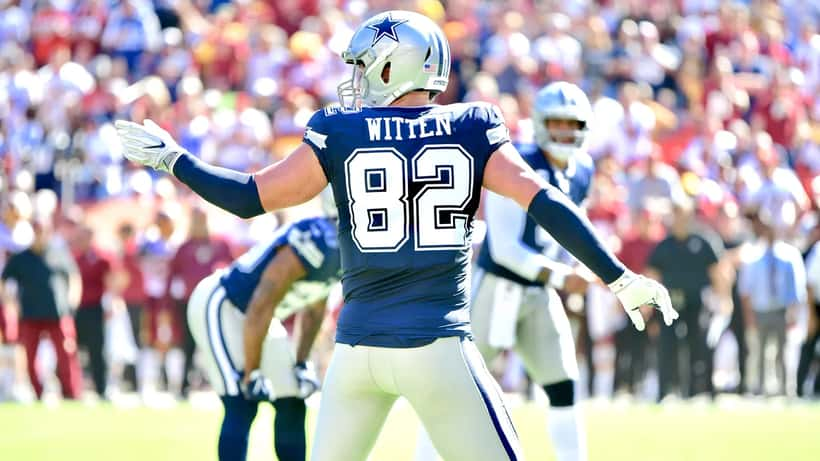
Jason Witten jogged onto the sideline at Gaylord Family Stadium in Norman, Oklahoma on Friday night, September 5, 2026, as a college football coach — not yet as the Hall of Famer he was nominated to become. At 44, the legendary Dallas Cowboys tight end made his college coaching debut at the University of Oklahoma just months after learning he would not be inducted into the Pro Football Hall of Fame's 2026 class alongside first-ballot inductees Drew Brees and Larry Fitzgerald. For Witten, the pivot was clear-eyed: a second career doesn't wait for the perfect credential. For wealth management experts watching from the outside, his situation raised a more urgent question — how many retired NFL players are financially prepared for the recognition gap Witten is now navigating?
The Two Headlines Nobody Put Together
When Oklahoma announced in January 2026 that Witten would join the Sooners' staff as tight ends coach, it marked a significant step up from his five-year run as head coach at Liberty Christian School in Argyle, Texas. Witten spent 17 seasons with the Dallas Cowboys, retired as one of the most decorated tight ends in NFL history with 1,228 career receptions, and then quietly rebuilt his football identity at the high school level before arriving on a Power Four sideline.
But the February 2026 Hall of Fame announcement brought a different signal. Despite being a modern-era nominee in his first year of eligibility, Witten was not selected for the 2026 induction class. He took the omission publicly with characteristic composure — "I didn't leave there feeling like I lost," he told the Cowboys' official media — but the financial implications of that delay are something most fans never consider.
For retired athletes, Hall of Fame induction is not just an honor. It is a revenue event.
Why HOF Timing Is a Wealth Planning Variable
Formal recognition cycles — Hall of Fame inductions, jersey retirements, championship anniversaries — trigger measurable spikes in an athlete's commercial value. Signed memorabilia valuations often jump 20 to 40 percent following induction. Speaking fees rise. Licensing agreements for trading cards, video games, and branded merchandise become easier to negotiate and command higher royalty rates. Documentary and broadcasting deals that studios were hesitant to greenlight before induction become viable projects afterward.
When that induction is delayed — even by one year — these revenue opportunities shift in timing and sometimes in scale. The athlete who built a post-career financial plan around expected recognition income in Year 1 of eligibility now faces a different cash flow profile than projected.
"Athletes consistently underestimate how much their personal brand valuation is tied to formal recognition cycles," explains the type of advisor who specializes in professional athlete portfolio management through platforms like Expert Zoom. "The Hall of Fame announcement, a jersey retirement ceremony, a franchise milestone — each one creates a monetization window. Missing one doesn't destroy the income stream. But it does shift the timing, and timing is everything in post-career financial planning."
For athletes whose financial plans were built around expected recognition milestones, that timing gap can expose real vulnerabilities in portfolio structure.
Concrete Case: The Delayed Induction Scenario
Consider a scenario modeled on a typical retiring NFL tight end's financial profile. A player retires at 38 after 15 seasons with career earnings of $42 million before taxes and agent fees. After federal and state tax obligations, agent commissions averaging 3 percent, and lifestyle expenses accumulated over a 10-year retirement, his liquid investable wealth sits at approximately $8 million — a figure requiring disciplined management to sustain a family at the standard of living established during active years.
His financial plan assumes Hall of Fame induction in Year 2 of eligibility, projecting an estimated $1.1 million in incremental endorsement and licensing income over the three years following induction. A signed jersey selling for $175 pre-induction may command $240 post-induction. A corporate speaking engagement that earns $15,000 pre-induction may rise to $25,000 afterward. Memorabilia licensing royalties that generate $80,000 annually pre-induction may reach $120,000 in the two years following the announcement.
If induction is delayed by 12 to 24 months, that $1.1 million in projected income does not disappear — but it defers. The financial plan built on that timeline now shows a gap of approximately $350,000 to $400,000 in Years 3 and 4 of retirement. If liquid reserves were not structured to absorb an 18-to-24-month delay in brand-driven income, that gap forces decisions: draw down investments earlier than planned, reduce family distributions, or take on income-generating commitments — like a college coaching salary — to bridge the shortfall.
According to investor.gov, the foundation of any sound financial plan is modeling income variability before it arrives, not after. For retired professional athletes, building scenario models that account for recognition timing is one of the highest-leverage planning decisions they can make.
Witten's Pivot as a Financial Positioning Move
Witten's decision to coach at Oklahoma is not just a football story. It is a financial positioning move with real logic behind it. College coaching salaries at Power Four programs are substantive — assistant coaches at schools like Oklahoma routinely earn between $300,000 and $600,000 annually in base compensation, with additional income from endorsements, camps, and media appearances.
More importantly, earned income from coaching reduces the draw on investment portfolios during the period when brand-driven passive income may be lower than originally projected. This is the same financial logic behind the broadcasting careers of players like Tony Romo. Regular income from a structured professional role allows investment portfolios to compound rather than being drawn down to fund lifestyle expenses.
Coaching also keeps the brand visible. For a player who remains Hall of Fame eligible, continued national media exposure — through Oklahoma's games on ESPN and Big 12 Network broadcasts — maintains the cultural relevance that drives endorsement and licensing demand. Witten staying in football is, among other things, a brand maintenance strategy.
As we examined in our coverage of Dirk Nowitzki's FIBA Hall of Fame induction and the wealth lessons for retired athletes in 2026, formal recognition events create distinct financial phases that require their own planning frameworks. Athletes in team sports with multi-decade careers often face the most complex brand valuation timelines — and the longest gaps between retirement and formal recognition.
What Retired NFL Players Should Plan Before the HOF Call Arrives
Build recognition-contingent models, not recognition-dependent ones. A wealth plan that requires HOF induction to remain cash-flow positive is structurally fragile. Financial advisors who specialize in athlete portfolios build scenario trees: What does Year 3 look like if induction happens on schedule? What if it's delayed 24 months? What if the first-ballot window closes and induction takes a decade? Each scenario should produce an acceptable financial outcome.
Establish diversified earned income during the recognition window. Broadcasting, coaching, consulting, and equity stakes in businesses are structural components of a resilient post-career income plan — not fallback options. Years 1 through 5 of retirement are when diversification matters most, because the income swing from playing salary to mixed sources is dramatic and the risk of over-drawing liquid assets is highest.
Treat memorabilia and licensing as managed revenue categories. Signed merchandise and licensing agreements generate more predictable income when managed through a professional sports asset advisory relationship. Treating these as occasional one-time transactions leaves significant value on the table over a 10-to-15-year post-career window.
Model portfolio distributions on conservative recognition timelines. Assuming best-case scenarios for HOF timing and brand monetization leads to over-spending in the early post-career years. A wealth management professional can set draw rates that protect liquid assets while recognition-driven income is still developing.
The Planning Moment That Most Athletes Miss
Jason Witten's path — Hall of Fame nominee, college coaching pioneer, sustained public figure — represents a best-case scenario for post-career wealth management. He is generating earned income, maintaining brand visibility, and making the HOF delay an asset rather than a liability. The coaching move at Oklahoma is not a consolation prize. It is a financially intelligent bridge.
Not every retiring NFL player has the same opportunities or the same planning infrastructure to make that kind of move deliberately. The moment to model recognition-timing risk is before retirement — not after the February announcement arrives with a name that isn't yours on the list.
This article discusses general financial planning concepts for informational purposes. It does not constitute personalized financial, investment, or legal advice. Consult a qualified wealth management professional for guidance specific to your situation.
