 Harper Brooks
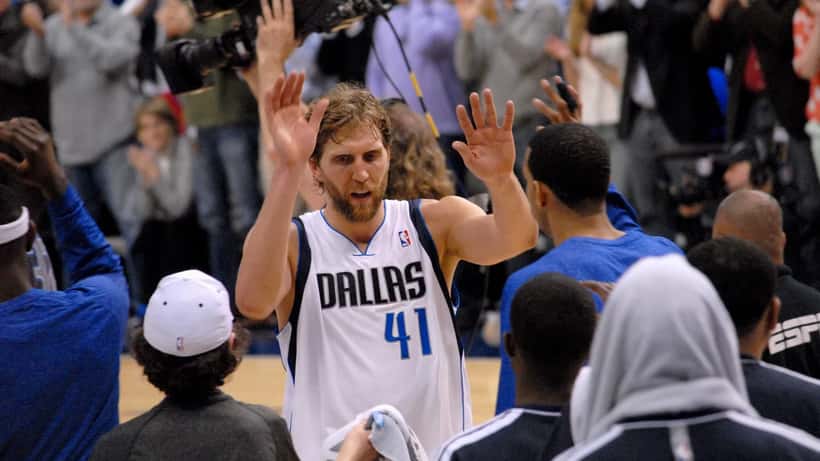
When Dirk Nowitzki appeared via video message during the 2026 NBA Draft in June — cheering on Hannes Steinbach, the first German first-round pick in years — a generation of basketball fans was reminded once again of Germany's greatest sporting export. But Nowitzki's presence in 2026 carries more than nostalgia. In April, the Dallas Mavericks legend was inducted into the FIBA Hall of Fame in Berlin alongside Sue Bird, cementing a legacy that is as much financial as it is athletic. Over 21 seasons in the NBA, Nowitzki earned $255 million in salary alone — and kept an estimated $140 million of it. That retention rate is extraordinary in a league where up to 60% of players reportedly face financial difficulties within five years of retirement.
The Hall of Fame Story Nobody Tells
The FIBA ceremony in Berlin on April 21, 2026 focused on Nowitzki's on-court résumé: 2002 FIBA World Cup MVP, 2005 EuroBasket MVP, 2007 NBA MVP, 2011 NBA Finals MVP, 21 seasons with a single franchise. But another stat deserves a spotlight: Nowitzki retired with roughly 55 cents on every dollar he ever earned in salary. For context, the average American household saves just 3–5% of income. Even high earners in top professions — lawyers, physicians, senior executives — rarely retain 20% of lifetime earnings after taxes, spending, and investment mistakes.
So what did Nowitzki do right?
Strategy 1: He Made Texas His Tax Shelter
Nowitzki spent his entire 21-year NBA career in Dallas, Texas — a state with no individual income tax. Analysts estimate this decision alone saved him approximately $33 million compared to peers who earned similar salaries in high-tax states like California, New York, or New Jersey. At the top federal marginal rate, that $33 million in preserved income is money that went directly into building long-term wealth.
State income tax is rarely the first thing an athlete — or any high earner — considers when evaluating a job or relocation. It should be. For someone earning $10 million, $15 million, or $20 million per year, even a 5–10% state tax differential can translate to hundreds of thousands of dollars annually. A wealth manager who specializes in high-net-worth tax planning can model these scenarios before you sign the contract, not after.
Strategy 2: He Chose Loyalty Over Maximum Dollars — And It Still Paid Off
In 2006, Nowitzki signed a 3-year, $59 million extension with the Mavericks. Under NBA collective bargaining rules at the time, he would have been eligible for a $158 million, six-year deal in 2008 had he waited. That's a gap of nearly $100 million on paper.
And yet: Nowitzki emerged from his career wealthier than the vast majority of players who chased maximum contracts. Why? Because the Mavericks rewarded his loyalty with repeated renewals, consistent team-building around him, and ultimately a championship in 2011. Stability — in career, in relationships, in geography — is a wealth-compounding variable that raw salary comparisons ignore.
This principle applies far beyond professional sports. Whether you're negotiating a partnership stake, evaluating competing job offers, or structuring a business exit, the highest nominal number is rarely the optimal financial outcome when you account for taxes, risk, and time horizon. High-earning athletes like Anthony Davis face similar long-term wealth decisions — and the stakes are just as real.
Strategy 3: He Refused the Status Game
"Six cars and all kinds of jewelry, the way the other guys do it here — that's not something I need." That quote, from a 2007 interview at the height of his NBA stardom, became something of a legend in basketball circles. He drove a modest car to practice. He famously stayed in the same Dallas neighborhood for decades.
Lifestyle inflation — the tendency to spend proportionally more as income rises — is one of the primary wealth destroyers for high earners. According to FINRA's investor education research, income is a poor predictor of net worth; spending discipline is the dominant variable. The behavioral gap between what someone earns and what they accumulate is almost always explained by lifestyle choices, not by investment returns.
Nowitzki's restraint was not deprivation. His $5.75 million mansion in Preston Hollow, purchased in 2019, sits in one of Dallas's most prestigious neighborhoods — the same one home to former President George W. Bush and former Mavericks owner Mark Cuban. But the purchase came at retirement, from accumulated capital, not from an in-career cash splurge.
Strategy 4: He Made the Transition into Investing
Since retiring in 2019, Nowitzki has become an active presence in the venture capital world. He appeared at Venture Dallas — a tech investor conference — where he discussed his entrepreneurial journey and the post-basketball chapter of his financial life. This pattern — using athletic earnings as the capital base for an investment portfolio — is the wealth playbook that financial advisors recommend but that relatively few athletes execute successfully.
The reason most fail the transition is timing and access. By the time many athletes retire, they've spent peak earning years without a long-term investment thesis. Starting the investing journey during your highest-income years — even with modest allocations — is significantly more powerful than trying to catch up afterward.
What Dirk's Playbook Means for You
You don't need $255 million in career earnings to apply Nowitzki's financial framework. The principles that kept his net worth intact scale downward:
Tax residency awareness: If you're a remote worker, contractor, or business owner with geographic flexibility, a state tax audit with a wealth manager can uncover five- or six-figure annual savings.
Loyalty versus maximum offer: A slightly lower salary at a stable employer with equity, pension, or long-term incentives often outperforms a higher nominal offer at a volatile one.
Lifestyle discipline from day one: The time to establish spending habits is when income first rises, not when it plateaus. Every dollar not spent on depreciating assets in your early high-earning years can compound for decades.
Early-stage investing: Dirk's venture involvement post-retirement is instructive, but starting sooner — with diversified index exposure, real estate, or private equity access — compounds further over time.
The 2026 NBA Draft moment illustrated something important: Nowitzki is still connected, still invested, still relevant seven years after his last professional game. That is what financial longevity looks like — not just what you earned, but the capital base that sustained income creates when managed thoughtfully.
When to Talk to a Wealth Manager
If any of these patterns resonate — a high-income period you're not sure how to optimize, an upcoming transition (career change, inheritance, business sale, divorce), or simply the sense that you've earned more than you've kept — the moment to consult a wealth manager is before the next major financial decision, not after.
On ExpertZoom, you can connect in minutes with certified wealth management advisors who specialize in high-income planning, tax-efficient investment strategies, and long-term financial architecture — private, direct, and tailored to your situation.
Dirk Nowitzki built a $140 million legacy on skill, discipline, and smart money decisions. The expert support is a click away.
For informational purposes only. Consult a licensed wealth management professional before making investment or financial planning decisions.
