 Cora Nelson
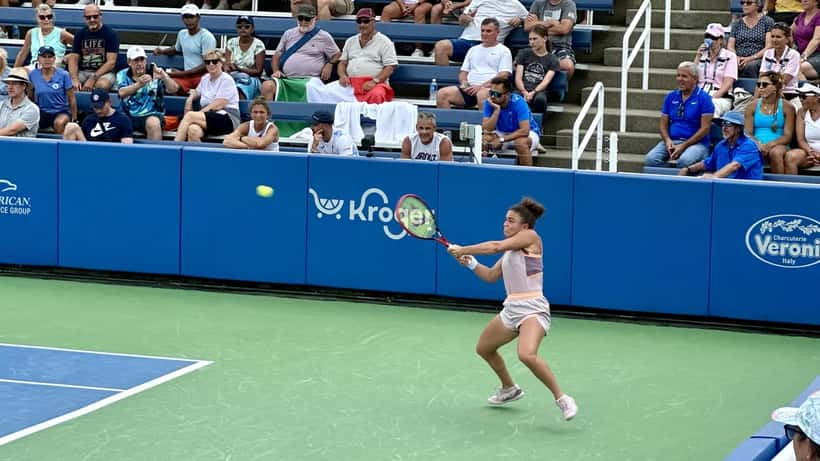
Jasmine Paolini stepped back onto the court at the 2026 China Open in Beijing this week, facing Daria Snigur in the second round after a season defined as much by absence as by achievement. The Italian world No. 20 — who reached two Grand Slam finals in 2024 — spent much of 2026 watching tournaments from the sidelines, sidelined by a persistent left-foot injury that forced her to withdraw from Washington, Toronto, and Cincinnati. Her story is more than a sports headline: it's a lesson millions of recreational tennis players in the United States need to hear.
A Season Derailed: Paolini's Foot Problem in Numbers
The scale of Paolini's disruption became clear in July 2026, when she publicly announced another break from the tour. "I need to give my foot more rest time," she said, withdrawing from two more events after already missing Wimbledon follow-up tournaments. She hadn't competed since the Wimbledon quarter-finals. When she finally returned at the US Open in August, she beat Veronika Erjavec 6-3, 3-6, 6-4 — a win earned not just through skill, but through months of rehabilitation with a specialist team.
The toll was visible in the rankings: a player positioned inside the top 5 in the world found herself sliding to No. 20 by October. In professional tennis, every missed week costs ranking points, and points mean seedings, prize money, and sponsorships. For amateurs, the calculus is different — but the physical lesson is exactly the same.
The 2026 season has highlighted just how many professional players are struggling with foot and ankle problems. As the Rome Open saw thirteen withdrawals earlier this year due to similar overuse injuries, the pattern is unmistakable: players at all levels are pushing through pain that deserves professional attention.
What the Experts See That You Don't
Foot and ankle injuries are the most underreported problem in recreational tennis in the United States. According to the American College of Sports Medicine, overuse injuries account for nearly 54% of all sports injuries treated in outpatient orthopedic clinics — and the foot ranks among the top three affected areas in racket sports.
The challenge is that many foot injuries don't announce themselves with a dramatic snap. They creep in: a slight ache after a long session, stiffness that clears up after warming up, minor swelling that subsides by morning. That deceptive pattern is exactly what sports medicine specialists know to be dangerous. A foot that "feels fine after 20 minutes" may be masking early-stage plantar fasciitis, a developing stress fracture in the metatarsal bones, or peroneal tendinopathy — conditions that become significantly harder and more expensive to treat the longer they go unaddressed.
Paolini's case illustrates how even a world-class athlete with access to an elite medical team can underestimate a foot problem until it cascades into months of enforced rest.
The Player Who Waited Too Long: A Real-World Scenario
Consider a 38-year-old recreational player — call her Sarah — who plays doubles three times a week at a club in suburban Atlanta. In March 2026, she starts noticing a nagging soreness along the outer edge of her left foot, typically fading within 30 minutes of play. She ignores it for eight weeks, assuming it's normal post-match fatigue. By May, the soreness lingers for a full day after each session. By June, she's subconsciously modifying her footwork to avoid certain movements.
A sports medicine specialist she finally consults in late June orders an MRI, which reveals a Grade 1 peroneal tendon strain — caught just before it would have advanced to a partial tear. With a structured 6-week rehabilitation protocol (two weeks of relative rest, followed by progressive strengthening and a footwear adjustment), Sarah is back playing competitive doubles by mid-August: a total recovery window of approximately eight weeks.
Here's the critical if/then: if Sarah had sought a specialist consultation when symptoms first appeared (weeks 1-2), the rehabilitation timeline would have been 3-4 weeks, not eight. If she had continued for another month before seeking help, a Grade 2 or Grade 3 tear would have required 4-6 months of recovery — or surgical intervention costing between $8,000 and $15,000 out-of-pocket depending on insurance coverage.
The deciding number isn't pain intensity. It's duration: any foot pain persisting beyond 10-14 days in a recreational athlete who hasn't changed footwear or playing surface warrants professional evaluation — not just ibuprofen and a rest day.
Five Warning Signs That Demand Professional Attention
Sports medicine specialists consistently flag these five presentations in tennis players as requiring a professional consultation rather than self-management:
1. Pain that alters your movement pattern. If you find yourself subconsciously modifying your serve, split step, or pivoting to avoid discomfort, the injury is already affecting biomechanics. Compensatory movement patterns create secondary injuries — often in the knee or hip — that become a separate problem requiring separate treatment.
2. Swelling that returns after activity. Occasional mild swelling is normal after intense play. Swelling that reappears within hours of finishing a session, even after icing, signals active inflammatory or structural damage that rest alone will not resolve.
3. Morning stiffness exceeding 15 minutes. The first five to ten minutes of stiffness after waking is typical for active athletes. Stiffness that persists beyond 15 minutes, particularly in the heel or arch, is a classic early marker of plantar fasciitis or Achilles tendinopathy.
4. Pain rated 4/10 or higher during play. Recreational athletes often normalize elevated pain levels because they're not professionals. A 4-out-of-10 pain rating at any point during or after sport — even briefly — should prompt a specialist evaluation within two weeks.
5. No improvement after 7 days of relative rest. If reducing activity for a full week produces no measurable improvement in symptoms, you've moved beyond the typical acute inflammation window. That's a structural signal requiring professional assessment.
What a Sports Medicine Specialist Does Differently
Many recreational players assume a general practitioner or urgent care visit is sufficient for a sports injury. The difference matters considerably. A sports medicine specialist brings three capabilities a general practitioner typically cannot offer in a routine appointment.
First, functional movement testing: evaluating not just the site of pain but the entire kinetic chain, identifying whether a hip weakness or altered gait pattern is overloading the foot. Second, sport-specific imaging — dynamic ultrasound, weight-bearing X-rays, or MRI with athletic protocols — that provides a more accurate picture of injury severity than standard imaging. Third, coordinated rehabilitation with physiotherapy from the outset, rather than a physiotherapy referral weeks later after conservative management fails.
Paolini's return at the China Open this week — competitive, healthy, and ranked back inside the top 20 — is a direct result of exactly this kind of coordinated professional approach. Her ability to return from a multi-month absence without re-injury is not accidental.
Taking Action Before the Season Ends
For recreational tennis players in the United States experiencing persistent foot discomfort, the path forward is straightforward. A consultation with a licensed sports medicine physician typically takes 45-60 minutes and costs between $150 and $300 depending on your insurance plan. That's a small investment against a potential $8,000-plus surgical bill — or simply against losing the rest of your playing season.
The American College of Sports Medicine, the world's largest sports medicine and exercise science organization, provides evidence-based guidance for recreational athletes at acsm.org.
If you're unsure where to start, connecting with a sports medicine specialist through ExpertZoom puts you in contact with licensed professionals who understand the specific demands of racket sports. Paolini's 2026 season is a reminder that waiting costs more than the appointment. Your foot is the foundation of your game — protect it before the problem forces you to.
Medical disclaimer: This article provides general educational information about sports injury awareness and is not a substitute for professional medical advice, diagnosis, or treatment. Always consult a licensed sports medicine specialist or qualified healthcare provider regarding any injury symptoms.
