 Emily Wang
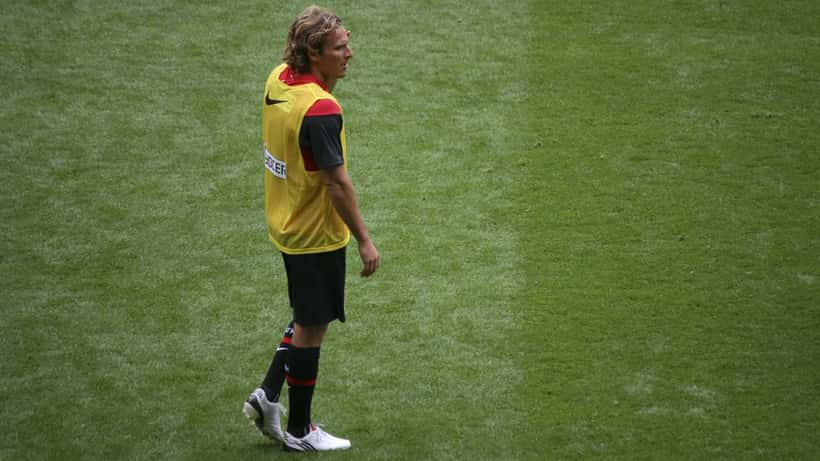
Diego Forlán walked into Miyagi Stadium on September 24, 2026, as one of Uruguay's most celebrated footballing legends. He left as a head coach who had just watched his team concede three goals in a 3-1 friendly defeat to Japan — on his very first day in charge. For Forlán, this result raises immediate pressure questions. But for US-based sports coaches, agents, and athletes watching the game, it raises a more practical one: if a high-profile hire like Forlán were dismissed after a single bad result, what legal protections would he have?
The Defeat That Shocked La Celeste
Japan controlled much of the September 24 contest at Miyagi Stadium. Kuryu Matsuki opened the scoring for Japan in the 11th minute, giving the host nation an early psychological edge. Uruguay responded through Maxi Araújo, who equalized with a clinical finish in the 42nd minute. That parity held through halftime — but Japan's greater depth showed after the break. Kento Shiogai came off the bench to restore the Japanese lead, and Ayase Ueda buried any hope of a Uruguayan comeback by scoring in the sixth minute of stoppage time. Final score: Japan 3, Uruguay 1.
For the Japanese Football Association, the result underlines the rapid evolution of Japan's squad following the 2026 FIFA World Cup campaign. For Uruguay, the loss marks a sobering opening chapter for their new era — one that begins under the watch of a man who scored 36 international goals for the Celeste as a player, but who now faces his first managerial crisis before a competitive fixture has even been played.
The Forlán Factor: When a Legend Becomes the Boss
Diego Forlán is the highest-scoring Uruguayan in World Cup history. His appointment as Uruguay's head coach was announced with fanfare precisely because of his pedigree, his tactical education under elite European clubs, and his global reputation. That makes his 3-1 home friendly loss all the more emblematic of one of sport's enduring paradoxes: legendary players rarely receive more patience than other coaches when results turn.
According to FIFA's Regulations on the Status and Transfer of Players — which extend governing principles to coaching arrangements at national federation level — a head coach's employment relationship is typically governed by a fixed-term contract. The duration, compensation structure, dismissal clauses, and performance triggers within that contract determine everything. A loss in a September friendly may not be a dismissal trigger today, but it sets the narrative tone. And in professional sport, that narrative can move faster than any legal clause.
For US-based coaches in Major League Soccer, the National Women's Soccer League, or those pursuing international opportunities, this is not an abstract concern. The legal architecture governing coaching dismissals is genuinely complex — and frequently misunderstood.
What International Coaching Contracts Actually Cover
Under US employment law, most professional sports coaches are classified as independent contractors or employees under fixed-term agreements. This distinction matters enormously in a dismissal scenario. A coach employed under a fixed-term contract who is dismissed "without cause" is generally entitled to the full remaining salary unless the contract contains specific performance-linked termination clauses.
At the international level, FIFA's Regulations on the Status and Transfer of Players (specifically Annex 1) provide a framework for resolving disputes between coaches and national associations when contracts break down. FIFA's Players' Status Chamber handles coach-related disputes, and its compensation methodology — while not directly binding in US domestic courts — can inform settlement calculations and arbitration proceedings involving international contracts.
Key elements that should appear in any international coaching contract include:
- Fixed compensation: Base salary per year, paid regardless of results, unless a specific performance trigger is cited
- Dismissal for cause (just cause): Typically defined as serious misconduct, not poor results alone
- Dismissal without cause: Usually entitles the coach to compensation equal to the remaining contract value, sometimes capped or subject to mitigation
- Notice periods: Standard international coaching contracts include 30 to 90-day notice requirements
- Jurisdiction clause: Determines whether disputes are resolved under US law, the federation's national law, or FIFA arbitration
Missing any of these clauses creates ambiguity — and ambiguity in sports contracts almost always benefits the paying party, not the coach.
A Concrete Scenario: If Forlán Were Fired Mid-Contract
Consider a representative scenario, grounded in the kind of contract typically awarded to a high-profile national team appointment in 2026.
Suppose a federation hires a celebrated former international player as head coach on a three-year contract worth $4.5 million total ($1.5 million per year). The contract includes a standard 60-day notice clause but contains no explicit performance triggers defining what constitutes "just cause" for early termination.
Eighteen months into the contract — after a string of disappointing results, including a 3-1 friendly loss to a highly ranked opponent — the federation's board votes to dismiss the coach. They cite "poor results" as the reason.
Here is where the legal reality diverges from media narrative:
If the dismissal is "without cause" (and poor friendly results alone rarely constitute legal just cause under FIFA standards or comparable US contract principles), the coach is typically owed the full remaining salary of $2.25 million (18 months × $1.5M/year ÷ 12 × 18), minus any amounts earned through mitigation (new employment) during that period.
If the contract contained a performance clause — for example, requiring the team to reach the knockout stage of a specified tournament within two years — and the team failed that defined trigger, the federation may have "just cause" grounds. In that case, the coach could receive as little as three months' salary as severance, totaling approximately $375,000.
The difference between those two scenarios is $1.875 million. That gap exists entirely in the contract language. A US-based sports attorney reviewing the agreement at signing — before the first friendly is ever played — can identify these risk points and negotiate protective provisions.
This is not a hypothetical that only applies to global stars. MLS head coaches, college athletic directors, and youth academy directors in the United States face structurally identical questions on contracts ranging from $80,000 to $3 million annually. The stakes differ; the legal principles do not.
What US Sports Professionals Should Do Before Signing
The Forlán scenario is a reminder that high-profile appointments attract high-profile scrutiny — and that the legal underpinning of those appointments often receives far less attention than the press release announcing them.
If you are a US-based coach, athletic director, or sports professional negotiating an employment contract — domestic or international — several steps are non-negotiable:
Define "just cause" explicitly. Vague language like "poor performance" opens the door to arbitrary termination. A qualified sports employment lawyer can ensure the clause links to specific, measurable conditions: failure to qualify for a named tournament, win-rate thresholds over a defined season, or conduct-related criteria.
Negotiate a mutual termination provision. If you may want to exit before the contract ends (perhaps for a better offer), ensure you have symmetric rights. Many standard coaching contracts impose heavy departure penalties on the coach while leaving federations free to dismiss with limited notice.
Clarify jurisdiction. For international appointments, insist on a clause specifying which legal framework governs disputes. FIFA arbitration, while available, can take 18–24 months to resolve — during which your compensation may be frozen.
Document performance context. If results deteriorate due to factors outside your control — injuries, federation decisions on player selection, transfer bans — ensure your contract allows you to present contextual defense in any dismissal proceedings.
For legal guidance on sports employment contracts in the United States, the US Department of Labor's employment law resources provide a foundational overview, though specialized sports employment attorneys are essential for high-value or cross-border agreements.
For athletes and professionals navigating complex situations — from contract disputes to wrongful termination scenarios — consulting an expert lawyer early, before the signing ceremony rather than after the first bad result, is consistently the most cost-effective approach. You can consult a sports law specialist through Expert Zoom to understand your rights before a single whistle is blown.
This article discusses general legal principles and international sports employment frameworks for informational purposes. It does not constitute legal advice. Employment law varies by state and jurisdiction. Consult a qualified attorney for guidance specific to your situation.
