 Elizabeth Chen
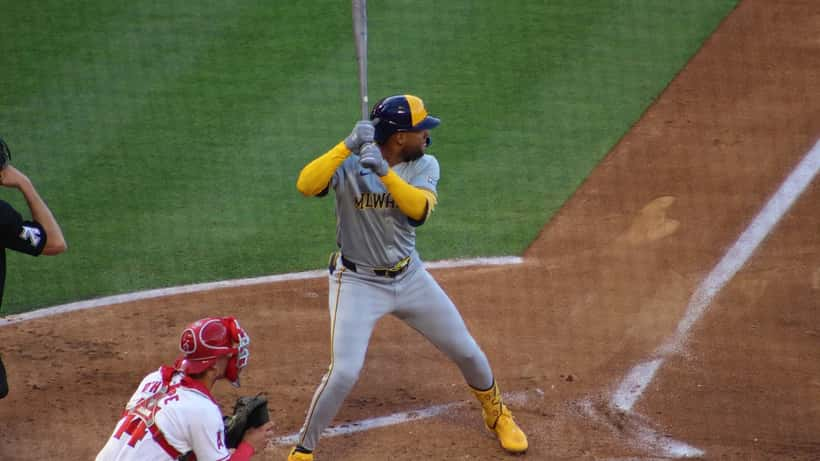
Milwaukee Brewers outfielder Jackson Chourio opened Game 3 of the National League Championship Series on October 15, 2026 with a first-pitch home run off Los Angeles Dodgers starter Blake Snell. According to reports from RotoWire, he later aggravated a hamstring injury that had already sent him to the injured list earlier this season.
What happened to Chourio's hamstring
Chourio, 22, has had a rough injury year. In March, the Brewers opened the season with him on the injured list after a fractured left hand, according to the Associated Press. Later, ESPN reported that a strained right hamstring revealed more significant problems than first expected, and manager Pat Murphy said he would likely need more than a minimum stay on the injured list. At that point he was hitting .276 with 17 home runs, 67 RBI and 18 steals.
Now the same leg is back in the story. Per RotoWire, Chourio aggravated the hamstring during the seventh inning of Game 3, yet he was expected to start Game 4 and bat second. Sports Illustrated noted that his leadoff blast tied Derek Jeter, Jimmy Rollins and Shohei Ohtani with three postseason leadoff homers. Several outlets also reported that he and teammate Brice Turang were named Gold Glove finalists.
The mix of a star performance and a lingering leg problem is exactly what makes this a useful story for anyone who has ever pulled a muscle chasing a bus, a toddler or a softball.
Why a hamstring strain keeps coming back
The hamstring is a group of three muscles running down the back of the thigh. They fire hard when you sprint, and they work as a brake when your leg swings forward. That braking job is where most strains happen.
The American Academy of Orthopaedic Surgeons describes hamstring injuries as ranging from mild pulls to complete tears, and says rest, ice, compression and a structured rehabilitation program are the usual starting point for most partial strains. The sporting reality is that the muscle often feels fine long before the tissue has fully remodeled.
That gap is the trap. A player, or a recreational athlete, feels no pain at walking speed, returns to sprinting, and loads a muscle that is still weaker than its partner on the other leg. Studies of athletes commonly report that a meaningful share of hamstring strains, in some samples around one in three, happen again within the first year.
Three factors raise the odds of a repeat:
- A previous strain on the same leg
- Returning to full-speed running before strength has been restored
- Fatigue late in a game or workout, when the muscle stops absorbing force well
Chourio's seventh-inning moment in Game 3 fits the third pattern. Late-game fatigue is a classic setup for a flare-up.
What a specialist actually checks
A sports medicine physician or physical therapist does more than ask whether it still hurts. A good return-to-play assessment usually looks at several things:
- Strength symmetry. The injured leg should produce close to the same force as the healthy one, often judged against a target near 90 percent or better.
- Eccentric strength. This is the muscle's ability to control a lengthening motion, the exact action that fails in sprinting.
- Flexibility and range of motion on both sides.
- Sprint mechanics. Trunk position, stride length and how the pelvis moves can overload the hamstring.
- Imaging when needed. Ultrasound or MRI can show whether scar tissue or a partial tear is still present.
None of this requires a major league training staff. Many clinics offer the same screening to weekend players.
A concrete case: the recreational player who plays through it
Consider a 38-year-old accountant in a Tuesday-night adult softball league. On September 2, he pulls his right hamstring running out a ground ball. It is a mild strain, a grade 1 injury, and by September 12 it no longer hurts when he walks or climbs stairs.
Here is where the if/then logic matters.
If he returns to the league on September 16, about two weeks after the injury, and his hamstring strength is still 75 percent of his healthy leg, then he is loading the muscle at three-quarters capacity with a full-speed sprint. A mild strain of this kind commonly needs somewhere between one and three weeks of recovery, and a moderate grade 2 tear is often closer to four to eight weeks. He sits at the short end of that range with no testing to confirm he is ready.
If he instead spends those two weeks on a progressive plan, adding gentle strengthening at about day 7, jogging at day 14 and sprint drills at day 21, and a physical therapist confirms strength at 90 percent or better before he plays, then he returns around September 23. That costs him one extra week and one or two league games.
The trade-off is lopsided. A re-tear in week three could mean four to eight more weeks away from the field, plus the cost of repeat visits. One extra week of patience is cheap by comparison.
Professional teams manage this with staff. Everyone else usually manages it by feel, and feel is unreliable.
Warning signs that need a professional
Not every tight hamstring is an emergency, but some symptoms deserve a prompt evaluation:
- A sudden pop or tearing sensation at the back of the thigh
- Significant bruising that spreads toward the knee in the first two days
- Being unable to walk without a limp or bear weight
- Pain that gets worse rather than better after a week
- Numbness or tingling down the leg
A second strain in the same spot is also a reason to see a specialist, even if it feels minor. Repeat injuries can point to a weakness, a movement problem or a lower back contribution that rest alone will not fix.
How to protect yourself this fall
If you play in an adult league, run a 5K, or just chase kids around the yard, a few habits lower your risk:
- Warm up with dynamic movement, such as leg swings and light jogging, before any sprint.
- Build hamstring strength with exercises like Nordic curls, bridges and Romanian deadlifts, ideally under guidance if you have had a prior strain.
- Do not skip the rehab phase just because walking no longer hurts.
- Pull yourself out of a game when you feel late-inning fatigue, instead of pushing through one more sprint.
- Retest your strength against the healthy leg before returning to full intensity.
The Brewers will decide how to manage Chourio's availability with medical staff, and the public does not have access to his exam results. What fans can take from this series is a reminder that a strong performance does not mean the tissue underneath is healed.
What to do next
If you are coming back from a hamstring strain, or you keep feeling the same tightness every time you speed up, a sports medicine doctor or physical therapist can test your strength, review your movement and build a return plan that fits your sport. You can find a health expert on ExpertZoom to book a consultation.
This article is for general information only and is not medical advice. Consult a qualified healthcare professional about your own injury. For more on how these injuries are classified and treated, see the American Academy of Orthopaedic Surgeons guide to hamstring muscle injuries. You may also like our look at Cooper Pratt's hamstring strain and what most people miss about recovery.
