 Marcus Samuel
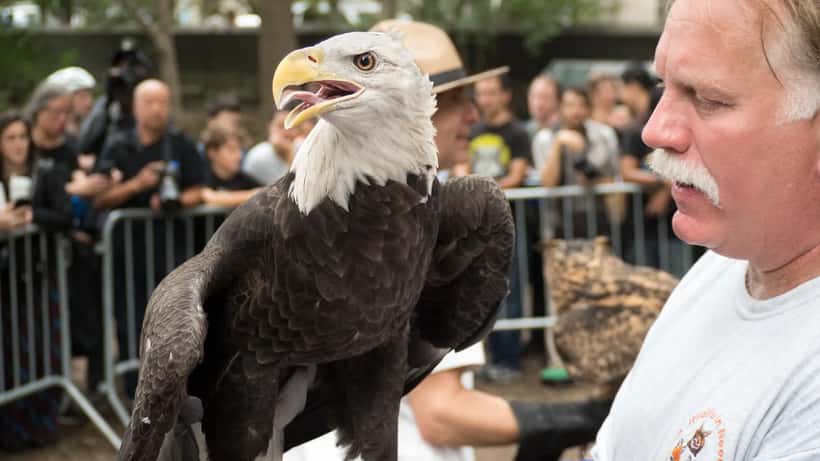
Jackie, the beloved bald eagle who captured millions of hearts through the Big Bear Lake live nest cam, is fighting for her life at the Ojai Raptor Center in California as of August 2026. Her packed cell volume — the critical measure of red blood cell concentration — has fallen below 10%, a threshold that wildlife veterinarians consider life-threatening for raptors. The cause of her severe anemia remains unknown, and she is receiving oxygen therapy, intensive supportive care, and advanced diagnostic testing including a bone marrow biopsy.
The Eagle America Watched Grow Up
Jackie and her mate Shadow became a viral sensation through their round-the-clock nest cam, broadcast by Friends of Big Bear Valley. Millions of viewers followed their nesting cycles across multiple seasons — watching eggs hatch, eaglets fledge, and the pair weather California's harsh mountain winters together.
In early 2026, the pair faced a devastating setback when ravens attacked and destroyed their first clutch of eggs. They persevered, laying a second clutch, but tragedy struck again when Jackie was found on the ground near Big Bear Lake, unable to fly, following a confrontation with two intruding bald eagles. Wildlife officials transported her to the Ojai Raptor Center, a licensed wildlife rehabilitation facility in Ventura County.
Initial bloodwork revealed severe anemia. A packed cell volume of 13% — when the healthy range for a bald eagle is typically between 35% and 55% — signaled a body struggling to carry oxygen to vital tissues. As of early August 2026, her PCV has dropped below 10%, and the Ojai Raptor Center has described her condition as critical.
What a PCV Below 10% Actually Means for a Bird
For a raptor of Jackie's size — a mature female bald eagle can weigh 10 to 14 pounds with a wingspan reaching seven feet — a packed cell volume below 10% is an acute emergency. Wildlife veterinarians explain the stakes in stark terms: at this level, the blood can no longer efficiently transport oxygen to the heart, brain, and muscles. The bird becomes progressively weaker, loses the ability to thermoregulate, and can go into cardiovascular collapse.
Anemia in raptors can result from several causes: internal bleeding from trauma (especially after territorial battles like the one Jackie experienced), toxicosis from lead poisoning (a significant threat to eagles that feed on hunter-harvested carcasses containing lead fragments), infectious disease, or primary bone marrow disorders. The bone marrow biopsy Jackie underwent this week is intended to rule out the most serious of these: a disease process attacking her blood-producing cells at the source.
The contrast CT scan performed alongside the biopsy is helping veterinarians map internal damage without surgery. These are not routine procedures even at specialized wildlife centers — they require general anesthesia in a critically ill bird, which itself carries risk. The decision to pursue them reflects how serious her team considers the situation.
Lead toxicosis deserves particular attention. According to the U.S. Fish and Wildlife Service, lead poisoning is one of the leading causes of death in bald eagles. When eagles feed on deer, elk, or other animals killed with lead ammunition, they can ingest bullet fragments. In areas like Big Bear, where hunting is permitted in surrounding national forest lands, the risk is real and ongoing. A single high-lead-exposure event can suppress bone marrow function and cause the kind of severe, refractory anemia Jackie is experiencing.
When an Eagle's Crisis Becomes a Teaching Moment for Pet and Wildlife Owners
Jackie's case is extraordinary, but the warning signs her caretakers observed before she was rescued are the same ones any bird owner or wildlife witness might notice — and too often dismisses until it is too late.
Birds are prey species by evolution. They hide illness instinctively, because showing weakness in the wild invites attack. By the time a bird is found on the ground, unable to fly, or visibly lethargic, its condition is almost always already serious. Jackie was found grounded after what appeared to be a fight — but the anemia that grounded her had likely been developing for days or weeks beforehand.
For domestic bird owners, the same biology applies. A parrot, chicken, or backyard duck that sits fluffed on the cage floor, stops eating, or breathes with its beak open is almost certainly sicker than it looks. Pale or white coloration in the cere (the fleshy area above the beak), cold feet, and extreme lethargy are all signs that warrant immediate veterinary attention. Raptors in the wild show the equivalent pattern: found on the ground in daylight, allowing humans to approach, or unable to sustain flight.
A Concrete Case: The Backyard Hawk That Needed Emergency Help
Consider a scenario that plays out thousands of times each year across the United States. A homeowner in suburban Southern California spots a red-tailed hawk sitting motionless on their back fence at midday. The bird was there the afternoon before, too. A well-meaning neighbor offers it chicken from the fridge; it doesn't eat. The homeowner calls animal control, who says hawks are "not their jurisdiction." Two days pass.
If that hawk has ingested lead fragments from a nearby shooting range or a poisoned rodent (secondary toxicosis from rodenticide is a growing problem in suburban areas), its PCV may already be dropping toward the critical 20% threshold. Every 24-hour delay costs ground that may be unrecoverable.
The if/then calculus a wildlife vet would apply: If the bird has been grounded for more than 12 hours in daylight and does not fly when approached, assume a medical emergency. If a licensed wildlife rehabilitator can see it within four hours, survival odds for lead toxicosis caught at a PCV of 25-30% exceed 60%. If PCV has fallen below 15% before treatment begins, outcomes drop sharply — some species do not survive even aggressive chelation therapy and blood transfusion support.
The cost of a wildlife rehabilitation intake for an injured raptor varies: California's licensed centers typically do not charge the public directly, as they operate under USFWS permits and donor funding. However, if the bird is a personal pet — a licensed falconry bird, a permitted educational ambassador bird — emergency avian veterinary care in California can run $800 to $3,500 for the diagnostic workup Jackie received, and substantially more if intensive care hospitalization is needed.
According to U.S. Fish and Wildlife Service raptor injury data, bald eagles represent some of the most frequently admitted raptors to rehabilitation centers in the western United States, with lead toxicosis and collision trauma as the top two causes. Knowing the difference — and acting on it fast — is what saves lives like Jackie's.
How Wildlife Vets and Avian Specialists Can Help
The response to Jackie's crisis has involved a coordinated chain of expertise: field observers who recognized she was grounded, a wildlife transport network, licensed rehabilitators, radiologists with avian CT experience, and clinical pathologists who can read bone marrow slides from raptors. Most people do not have immediate access to that chain — but they can.
In the United States, the National Wildlife Rehabilitators Association maintains a searchable directory of licensed centers. Most states have at least one raptor-specific center. California's network includes the Ojai Raptor Center, the Lindsay Wildlife Experience in Walnut Creek, and the Humane Society of Silicon Valley's wildlife program, among others.
For domestic bird owners, an avian-specialist veterinarian — distinct from a general small animal vet — is the right first call when a bird shows signs of serious illness. These specialists are trained in the unique physiology of birds, including the way raptors and parrots differ metabolically from mammals, and how to interpret bloodwork like the PCV reading at the center of Jackie's crisis.
Internal link: Expert-Zoom connects you with certified veterinary specialists who can advise on avian health emergencies, wildlife reporting obligations, and when to seek emergency care.
Early intervention is not just good medicine — for a bald eagle, a protected species under the Bald and Golden Eagle Protection Act (16 U.S.C. § 668), it is also a legal matter. Interfering with or improperly handling a bald eagle — even with good intentions — can carry federal penalties of up to $10,000 and one year imprisonment. The correct step is always to call a licensed rehabilitator, not to attempt rescue yourself.
What Comes Next for Jackie
The Ojai Raptor Center has committed to daily updates via social media as Jackie's diagnostics progress. Shadow, her mate, has been observed returning repeatedly to the Big Bear nest. Whether Jackie can recover and return to the wild depends heavily on what the bone marrow biopsy reveals. If the cause is lead toxicosis, chelation therapy offers a realistic path to recovery. If it is a primary bone marrow disorder, the prognosis is more guarded.
What her case has already done is rare: it has turned a public wildlife story into a real-time lesson in raptor medicine, the stakes of lead ammunition in eagle habitat, and the difference between a bird that is tired and a bird that is dying.
If you encounter a raptor in distress, don't wait. Contact your state's wildlife rehabilitator network within the hour. If your own bird is showing signs of lethargy, pale mucous membranes, or respiratory distress, an avian veterinary specialist can assess the situation and give you a concrete path forward — before a 13% PCV becomes the number that defines the conversation.
