 Sarah Miller
Jackie and Shadow, the celebrity bald eagle couple at Big Bear Lake, California, welcomed their first eaglet of 2026 on the evening of 6 April — hatching on camera before more than 20,000 viewers watching the live nest feed. The moment has captivated millions. A veterinarian explains what the public health spectacle of an eagle nest reveals about avian care.
The Hatching That Stopped the Internet
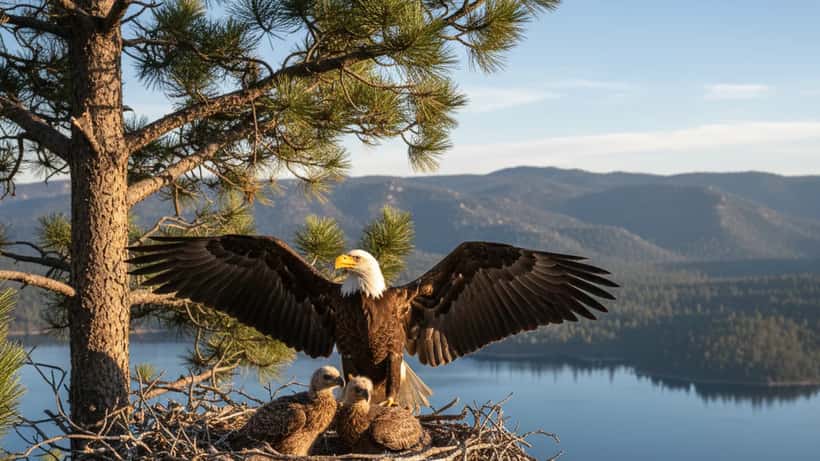
At 9:33 PM on 6 April 2026, the first eaglet of Jackie and Shadow's 2026 clutch cracked through its shell at Big Bear Lake, California. A second followed the next day. The pair, who have nested together since 2018, previously overcame a setback when ravens destroyed their first clutch in January 2026 — forcing them to lay a second set of eggs in February.
According to Friends of Big Bear Valley, the nest has been livestreamed continuously, drawing over 20,000 simultaneous viewers during the April 6 hatch. The event has become a annual moment of collective wildlife engagement, reviving public interest in raptor conservation just as migration season peaks.
What the Nest Cam Shows About Avian Health
Watching Jackie and Shadow care for their eaglets teaches amateur bird owners and wildlife enthusiasts more than they might expect. The behaviours captured on screen — feeding rhythms, warmth regulation, response to noise — are clinically relevant to any bird kept in a domestic setting.
Thermoregulation is critical in the first weeks of life. Eagle chicks cannot maintain their own body temperature until they are fully feathered, at around six weeks. Jackie and Shadow spread their wings over the nest to shade chicks in heat and huddle them in cold. For pet bird owners, ambient temperature instability is one of the most common causes of avian illness that a vet sees.
Feeding frequency and weight gain are key health markers. Eagle chicks are fed several times daily with fresh prey. In captive birds — parrots, finches, cockatiels — irregular feeding schedules or abrupt dietary changes cause feather stress lines (stress bars) that are visible under magnification, indicating chronic nutritional deficiency.
Stress behaviours are visible on camera. When a helicopter or drone passes, Jackie's body stiffens and she shifts to cover the chicks immediately. Chronic acoustic stress in domestic birds — from loud music, renovation work, or unpredictable household noise — suppresses immune function and triggers feather-destructive behaviour. It is one of the least-discussed causes of avian disease.
When Wild Birds Cross Into Domestic Concerns
Bald eagle nesting season overlaps with the period when wildlife rehabilitators and veterinary clinics receive the highest volume of wild bird cases. Fledglings that fall from nests, birds stunned by window collisions, and migrating species grounded by exhaustion all require specialist handling.
It is illegal in the United States to keep a wild bald eagle, handle eggs, or disturb an active nest. The Migratory Bird Treaty Act protects all migratory birds including bald eagles — a federal law enforced by the US Fish and Wildlife Service. A person who finds an injured eagle must contact a licensed wildlife rehabilitator, not attempt home treatment.
For pet bird owners, the nesting season is a useful reminder that avian health is specialist territory. Birds mask illness instinctively — a survival adaptation inherited from wild ancestors like Jackie and Shadow. By the time a pet parrot shows obvious signs of distress, the illness is often advanced.
Signs Your Bird Needs a Vet Now
Veterinarians recommend scheduling annual wellness exams for all captive birds. But these signs indicate an urgent appointment is needed:
- Fluffed feathers for more than a few hours: Indicates the bird is conserving heat due to illness or infection
- Changes in droppings: Colour, consistency, or volume shifts outside the normal range are early disease indicators
- Loss of appetite beyond 12 hours: Birds have high metabolic rates; going off food quickly leads to dangerous hypoglycaemia
- Laboured breathing or tail bobbing: Respiratory infection can progress to pneumonia within days
- Sudden balance loss or seizures: May indicate heavy metal toxicity, a serious emergency
The Big Bear Effect: Conservation Starts With Curiosity
The 20,000+ viewers watching Jackie and Shadow's eaglet hatch on 6 April 2026 represent something significant — a public that cares about wild animals and their health. That curiosity is exactly what drives better care for domestic birds too.
A consultation with an avian veterinarian is the single best investment a bird owner can make. Unlike dogs and cats, birds require specialists familiar with their unique physiology, and general practice vets often lack the training. Whether you keep a budgerigar or a macaw, specialist care extends life expectancy and prevents the silent deterioration that kills most captive birds before their time.
Notice: Wildlife encounters should always be reported to licensed rehabilitators. Never attempt to handle injured wild birds. The information above is for general educational purposes and does not replace professional veterinary advice.
