 Ava Sterling
Some 57 million American households maintain backyard bird feeders, according to the U.S. Fish & Wildlife Service. But on July 6, 2026, millions of word-puzzle fans were introduced to a fictional bird food that no real bird should ever encounter: ACME's Iron Bird Seed, the absurd Looney Tunes invention that went viral as the answer to Monday's NYT Connections game #1121.
The puzzle's blue category — "ACME Products Used by Wile E. Coyote" — grouped Iron Bird Seed alongside Rocket Skates, Earthquake Pills, and TNT. The laugh is in the premise: scatter magnetic iron pellets disguised as seed, lure Road Runner to the electromagnet, and catch dinner. It never works. But the puzzle sent thousands of Americans to Google with a genuinely useful question: what should you actually be feeding wild birds, and what's more dangerous than cartoon iron pellets?
Why the Wrong Bird Food Is a Bigger Problem Than You Think
Wildlife veterinarians hear variations of this question every summer. Bird feeding season peaks when gardens are busy, and well-intentioned homeowners frequently offer foods that do real harm.
Bread, crackers, and cereal top the danger list. These fill birds' stomachs quickly but carry almost no nutritional value. Young birds raised primarily on bread can develop "angel wing," a permanent wing deformity caused by protein and calcium deficiency during growth. The USDA's wildlife nutrition guidance documents this condition as one of the most common feeding-related injuries in urban bird populations.
Salted or seasoned snack foods are another common mistake. A handful of chips or salted nuts scattered on a patio rail may look harmless. For a house sparrow or goldfinch, the sodium load relative to body weight is significant enough to cause dehydration and kidney stress.
Chocolate and avocado are outright toxic. Chocolate contains theobromine, which birds cannot metabolize. Avocado flesh and skin contain persin, a fungicidal compound toxic to most bird species. Both have caused confirmed bird deaths in domestic and wild cases reviewed by veterinary toxicologists.
Expired or moldy seed is the silent hazard most feeder owners overlook. Damp seed left in a feeder grows mold that produces aflatoxins — compounds that can cause liver failure even in small doses. Any seed that smells off, clumps, or shows visible discoloration should be discarded immediately.
The Iron Question: Is Metal Actually Dangerous for Birds?
The ACME gag raises a real point in avian veterinary medicine. Heavy metal toxicity is one of the most common poisoning presentations in wild and captive birds. Lead and zinc are the main culprits — ingested when birds swallow fishing sinkers, fragments of galvanized wire, or flakes of old lead paint.
Iron is a more nuanced case. Iron storage disease (hemochromatosis) is well-documented in captive exotic species — toucans, mynahs, and birds of paradise are genetically prone to absorbing excess dietary iron. For the common backyard species most Americans see at their feeders — cardinals, chickadees, finches, sparrows — iron at the concentrations found in quality commercial seed blends poses no known risk.
The practical takeaway: buy seed from reputable brands that publish ingredient content, and avoid storing seed in rusting metal containers. The University of Illinois College of Veterinary Medicine advises that "when in doubt about what's in your bird feed, choose brands that publish their iron content," particularly if you keep toucans or other exotic species alongside wild bird feeders.
The 2026 Avian Flu Reality Check
There is one reason 2026 calls for extra vigilance beyond food choices. Avian influenza A(H5N1) continued circulating in wild bird populations across the United States through mid-2026, with confirmed detections in parts of Texas and Colorado, according to the CDC's bird flu situation summary.
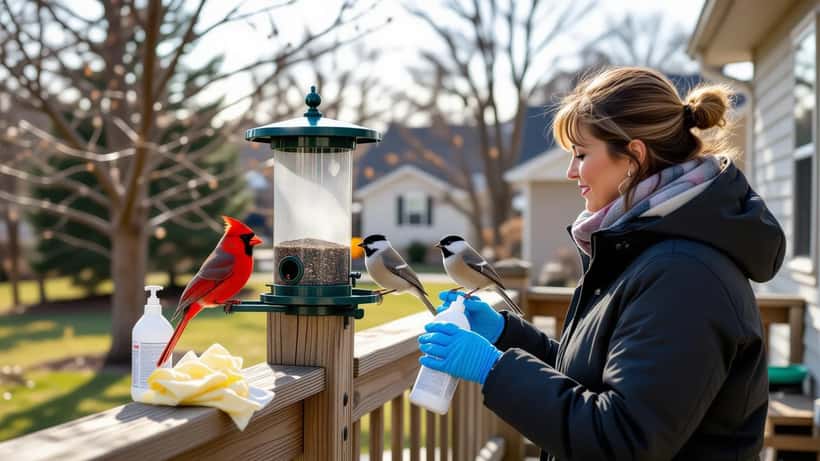
The reassuring news: neither the CDC nor the National Wildlife Disease Program recommends removing backyard feeders for households that do not keep poultry. The risk to common songbirds remains low. However, both agencies recommend cleaning feeders weekly with a 1:9 bleach-to-water solution, wearing disposable gloves during cleaning, and removing standing water near feeders. If you keep domestic chickens, ducks, or turkeys, temporarily discontinuing bird feeders is the sensible precaution.
If you find a dead or clearly ill bird near your feeder, do not handle it with bare hands. Contact your state wildlife agency or a licensed wildlife rehabilitator.
Five Foods Wildlife Vets Actually Recommend
Wildlife veterinarians consistently recommend these safe options for North American backyard feeders:
- Black oil sunflower seeds — High in fat and protein; the most broadly attractive seed for cardinals, chickadees, nuthatches, and woodpeckers.
- Nyjer (thistle) seed — Finches love it. Best offered in a tube feeder to minimize waste and spoilage.
- Unsalted dry-roasted peanuts — Rich in protein for blue jays, woodpeckers, and crows. Never use salted or flavored varieties.
- Dried or live mealworms — Ideal protein supplement during breeding season, particularly for bluebirds, robins, and wrens.
- Fresh fruit scraps (apple, grape, berry) — Good for orioles and waxwings; remove any fruit that has been out more than 24 hours to prevent fermentation.
When Should You Call a Wildlife Veterinarian?
Most backyard birders never need professional help — but some situations genuinely require it. Signs that a bird visiting your feeder is in distress include: sitting on the ground without flying away; fluffed feathers with closed eyes; visible discharge from eyes or beak; tremors or loss of coordination (possible heavy-metal toxicity); or oily, matted feathers suggesting environmental contamination.
In most US states, keeping an injured wild bird without a federal rehabilitation permit is illegal. The correct step is always to call a licensed wildlife veterinarian or wildlife rehabilitator rather than attempt home treatment.
If you're unsure whether your backyard feeding setup is safe for your local species — or if you've found a bird that looks unwell — an expert consultation can provide guidance specific to your region and the species you're seeing. Read more about wild bird health and what happened when eaglets faced similar risks →
Note: This article provides general wildlife feeding guidance only. For a sick or injured wild bird, always contact a licensed wildlife veterinarian or state-certified rehabilitator.
