 Emily Wang
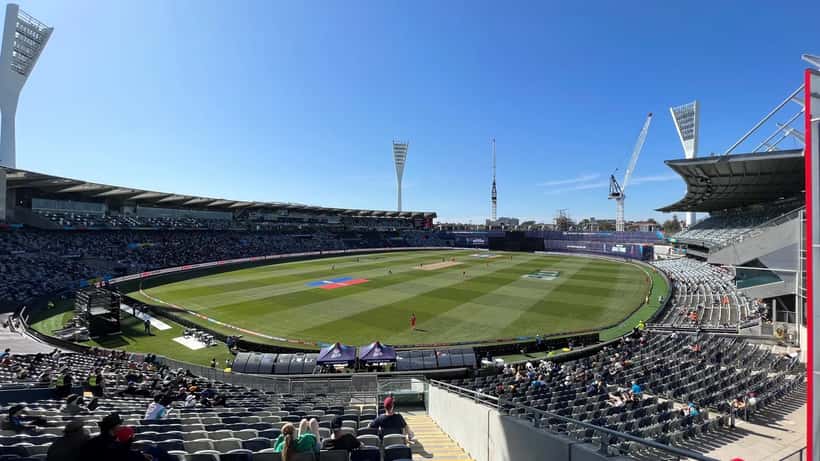
With India sealing a 2-0 series lead over Afghanistan in just the first two T20Is of the September 2026 Friendship Cup — Abhishek Sharma smashing 82 off 32 balls in Delhi on September 13 and Sanju Samson powering a second dominant chase two days later — the third and final match is set for September 17 at Arun Jaitley Stadium. Millions of Indian-American cricket fans across the US are watching closely, and many are betting on it. But US sports betting law is a legal patchwork that has left countless fans with unexpected tax bills, frozen accounts, and in some cases, federal exposure they never anticipated.
Cricket Betting in the US: A Legal Patchwork by State
Since the Supreme Court's 2018 ruling in Murphy v. NCAA overturned the federal ban on state-level sports betting, 38 states plus Washington D.C. have legalized regulated wagering. But legal doesn't mean universal, and it certainly doesn't mean effortless.
Not every licensed sportsbook in the US offers markets for cricket, and availability of IND vs AFG betting lines varies by platform and state. DraftKings, FanDuel, and BetMGM have expanded their cricket offerings significantly in 2025–26 to serve the growing South Asian-American demographic. In states with licensed platforms, placing a wager on the 3rd T20I is entirely lawful — provided you use a regulated, state-licensed operator.
In the 12 states where sports betting remains illegal — including Texas, California, and Georgia — no licensed option exists. This is precisely where bettors most commonly cross a legal line they don't realize is there.
The Federal Risk Most Cricket Bettors Don't Know About
The most common mistake is using offshore sportsbooks: websites licensed in Curaçao, Malta, or Antigua that are freely accessible online, accept US customers, and operate as though legality were someone else's problem.
Under the Unlawful Internet Gambling Enforcement Act of 2006 (UIGEA), US financial institutions are prohibited from knowingly processing transfers to offshore gambling operators. The law primarily targets banks and payment processors rather than individual bettors, but the practical consequences fall squarely on the consumer. Banks routinely block transactions to known offshore gambling platforms. Credit card chargebacks are declined. Account freezes are common. And crucially, any winnings held on an offshore platform can be nearly impossible to recover through US courts — you are owed money by a company with no US legal presence and no regulatory obligation to pay.
A 2024 report from the American Gaming Association estimated that approximately 40 million Americans still use illegal or unregulated sportsbooks, generating an annual handle exceeding $63 billion. Most have no idea they are operating in a federally contested space.
Daily Fantasy Sports: Legal in Most States — But Still Taxable
For cricket fans in states without licensed sportsbooks, daily fantasy sports platforms like DraftKings and FanDuel offer a regulated alternative. DFS contests are legal in 43 states under a carve-out that classifies them as games of skill rather than gambling. Both platforms now feature cricket lobbies with markets for the ongoing IND vs AFG series, making them the most accessible legal option for most US fans. For a broader look at how DFS law applies to the South Asian cricket audience, this breakdown of India vs Thailand DFS legal rules covers the same regulatory framework.
The legal pathway is clear — but the tax treatment is identical to traditional gambling. Under IRS Publication 525, all gambling winnings, including DFS prize money, must be reported as gross income on your federal return. Operators are required to issue Form 1099-MISC for net calendar-year winnings above $600, and a W-2G when a single prize exceeds $5,000. Most casual players are unaware that even a $50 cricket contest win is technically reportable.
State rules compound the complexity. New Jersey taxes gambling winnings at 3% on amounts under $10,000. Pennsylvania applies a flat 3.07% state income tax. California — which still has no legal sports betting — nonetheless taxes DFS winnings as ordinary income at rates reaching 13.3%.
What $500 on the 3rd T20I Actually Costs You: A Concrete Scenario
Consider a typical situation that plays out on match day. A New Jersey resident signs up for a DraftKings fantasy cricket contest on the morning of September 17, 2026 — day of the 3rd IND vs AFG T20I. They enter a $500 contest. Their lineup, anchored by Abhishek Sharma and Hardik Pandya, scores high as India coasts to another win. They finish in the money: a prize of $3,800.
Here is what the math actually looks like before they spend a dollar:
- Federal income tax: $3,800 reported as ordinary income. In the 22% federal bracket, that's $836 owed to the IRS.
- New Jersey state tax: At 3% on the first $10,000, that's an additional $114.
- Platform rake: DraftKings retains roughly 10% of the entry pool. The effective prize-to-entry ratio is closer to 7.6:1, not the headline 8:1.
- Net gain after tax: $3,800 − $836 − $114 = $2,850 — not the $3,800 they celebrate on the leaderboard.
Now consider what happens if they don't report it. DraftKings files a 1099-MISC automatically. The IRS receives that form. If the player omits the income, the agency flags the discrepancy. The result: a 20% accuracy-related penalty on the unpaid tax ($167) plus interest accruing from the April filing deadline — roughly $30–40 by the time the IRS notice arrives. A brief consultation with a tax or gambling attorney at the start of the cricket season would have made this entirely avoidable.
Offshore Bets: When a $100 Wager Becomes a $10,000 Problem
The financial stakes are higher for bettors using offshore platforms in states like Texas or Florida. A common scenario: a cricket fan in Houston places $1,000 in bets across the three IND vs AFG T20Is through a Curaçao-licensed sportsbook. They win, finishing with a $2,500 balance.
When they attempt to withdraw, the bank blocks the transfer under UIGEA compliance protocols. They try a cryptocurrency withdrawal; the offshore site freezes the account for "verification" — a tactic used to defer or avoid payouts. US courts offer no recourse: offshore operators are not subject to US jurisdiction, and there is no equivalent of FDIC protection for offshore gambling balances.
Legal fees to pursue international arbitration start at $10,000–$15,000 and rarely succeed against unregulated operators. The fan loses both their $1,000 deposit and their $1,500 in winnings — a $2,500 outcome that a sports attorney's $200 consultation fee would have prevented.
For more on the sports law dimensions affecting South Asian cricket fans in the US, the India vs Afghanistan ODI sports law overview covers related legal considerations around the bilateral series.
When to Consult a Sports Lawyer Before the Next Match
Not every cricket bet requires legal counsel, but certain situations clearly warrant a consultation with a licensed gambling or sports attorney:
- You wager more than $1,000 per year on sports, including cricket
- You live in a state without licensed sportsbooks and have used offshore sites
- You've won DFS prizes above $600 without reporting them as income
- You've had a bank transaction blocked or a sportsbook account frozen
- You participate in cash-prize fantasy leagues with friends or coworkers that lack formal state licensing
A gambling law attorney can review your situation, advise on federal and state reporting obligations, and help you transition to fully compliant platforms before the next series begins. ExpertZoom connects you with licensed attorneys experienced in US sports betting and gambling law who can answer specific questions about your exposure.
Disclaimer: This article is for informational purposes only and does not constitute legal or financial advice. Consult a licensed attorney or financial advisor for guidance specific to your situation.
