 Michael Campbell
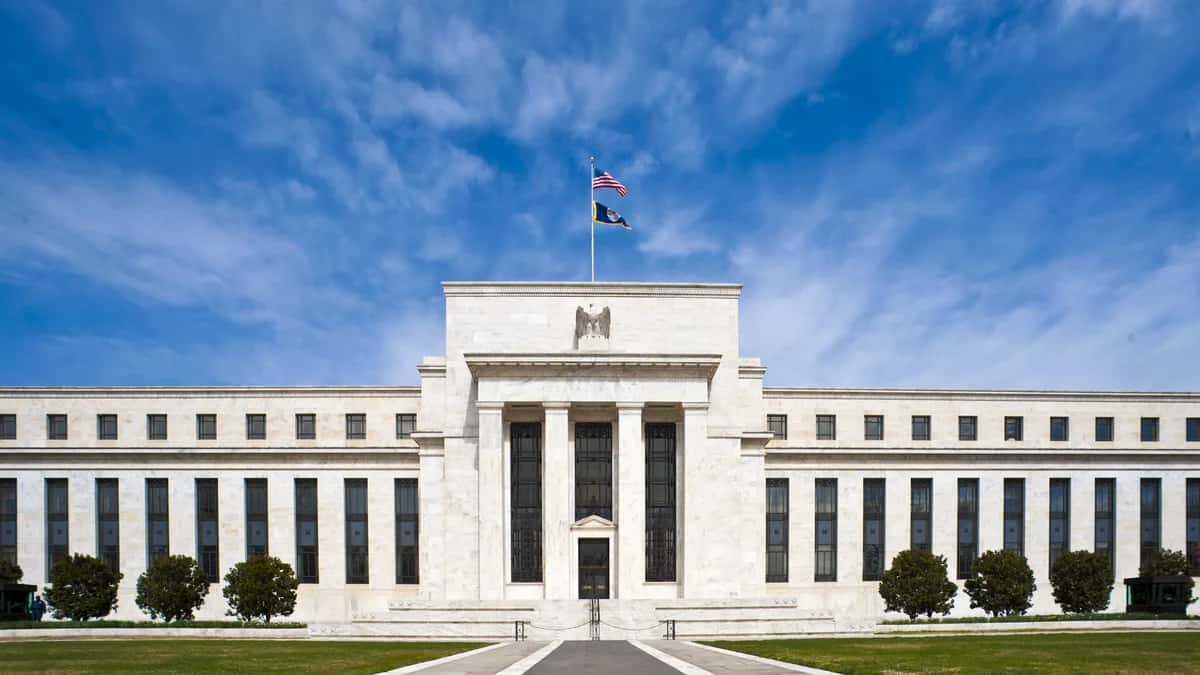
The Federal Reserve just made its most consequential monetary policy move since 2023. On September 16, 2026, the Federal Open Market Committee voted to raise the federal funds rate by 25 basis points, pushing the target range from 3.50%–3.75% to 3.75%–4.00%. For the roughly 130 million American households carrying credit card debt, holding variable-rate loans, or sitting on a savings account, the math changed this afternoon — and not all of it works in your favor.
The Headline Figure: What Moved and Why It Matters
| Metric | Before | After |
|---|---|---|
| Federal funds target range | 3.50%–3.75% | 3.75%–4.00% |
| 30-yr fixed mortgage rate (Freddie Mac, Sept 10) | 6.76% | Likely steady short-term |
| Avg. credit card APR | ~22.00% | ~22.25% within 60 days |
| High-yield savings / CD rates | Poised to improve | Trending higher |
This is not a surprise rate hike. Markets moved to price a 25-basis-point increase as more likely than not after Fed Chair Kevin Warsh's hawkish appearance at the Jackson Hole Economic Symposium on August 28, 2026. Warsh signaled that elevated energy prices were keeping headline inflation sticky above the Fed's 2% target, and that a solid August payrolls report gave the committee the cover it needed to act. The hold since December 2025 is now over.
Why the Fed Raised Rates for the First Time in Nearly Three Years
Understanding why the Fed moved matters as much as the move itself — because the same forces that drove this decision will shape what comes next.
Energy prices. Energy costs have been the primary engine of above-target inflation in 2026. Unlike services inflation, which the Fed has largely tamed, energy components remain volatile. When Chair Warsh addressed central bankers in Wyoming on August 28, he pointed explicitly to energy prices as the variable most likely to keep inflation from returning to 2% without additional tightening.
Labor market resilience. The August 2026 jobs report showed the U.S. economy added jobs at a pace that reduced concerns about over-tightening. A strong labor market means consumers are still spending — and still borrowing — which gives the Fed political and economic room to hike without triggering a recession scare.
The dot plot. The September Summary of Economic Projections, released alongside today's decision, will reveal whether this is a one-and-done hike or the start of a new mini-cycle. Analysts at multiple institutions flagged before the meeting that two additional 25-basis-point hikes by mid-2027 were on the table if inflation does not decelerate.
What a 25-Basis-Point Hike Actually Costs You
The Fed does not directly set credit card rates — but it sets the floor. Here's how today's move translates to household balance sheets:
Credit cards: Most variable-rate credit cards are tied to the prime rate, which moves in lockstep with the federal funds rate. Cardholders can typically expect their APR to climb by a quarter-point within 30 to 60 days of a Fed hike. With the average American credit card APR now near 22% and the average outstanding balance at $6,610 (as of Q2 2026, per Federal Reserve Consumer Credit data), the direct cost of carrying that balance rises by roughly $16.50 per year — or $1.38 per month — per card, per quarter-point move.
That figure sounds modest, but it compounds. A household carrying three cards at the average balance faces $4.14 in additional monthly interest cost after this one decision. If the dot plot confirms two more hikes in 2027, that same household would absorb over $16 per month in additional interest charges relative to today's rates — without ever adding a dollar to the debt.
Mortgages: The relationship between Fed hikes and fixed mortgage rates is less direct. The 30-year fixed rate is anchored more to the 10-year Treasury yield than to the federal funds rate, and much of the expected hike was already priced into bond markets. Freddie Mac's September 10 survey showed the 30-year fixed at 6.76%. The Mortgage Bankers Association and Fannie Mae both project that 30-year rates will remain above 6.5% through 2027 regardless of today's hike. If you hold a fixed-rate mortgage, your monthly payment does not change. If you hold a home equity line of credit (HELOC) or an adjustable-rate mortgage (ARM) with a reset date approaching, today's move will increase your payment at next reset.
Savings accounts: Higher rates cut both ways. Competitive high-yield savings accounts and certificates of deposit will eventually pass along the rate improvement to depositors. Some online banks and credit unions were already advertising 5.0%–5.3% yields on 12-month CDs heading into today's meeting. A hike to 3.75%–4.00% in the federal funds rate supports further improvement in those yields — a tailwind for savers who have been parking cash since 2025.
A Concrete Case: What Today's Hike Means If You're Refinancing This Fall
Take the case of a 38-year-old homeowner in suburban Dallas who bought in 2021 on a 5-year ARM at 2.9%, which resets in March 2027. Before today's meeting, they were monitoring rates and considering whether to refinance into a 30-year fixed before the reset hit.
The if/then logic: If the federal funds rate rises to 3.75%–4.00% today and stays there — or climbs further — then 30-year fixed mortgage rates are unlikely to fall below 6.5% before March 2027. The Mortgage Bankers Association's forecast explicitly covers this scenario. At today's rate of 6.76%, refinancing a $320,000 outstanding balance into a 30-year fixed mortgage would set the monthly payment at approximately $2,098. If the ARM resets to market plus a 2.5% margin (typical ARM language) and the SOFR index remains elevated, the reset rate could land at 7.5%–8.0%, pushing the same $320,000 balance to $2,237–$2,348 per month — a difference of $139–$250 every month relative to locking in today.
The decision to refinance now versus wait is not purely mathematical — it also depends on closing costs (typically $3,000–$6,000), the likelihood of moving in the next five years, and whether the homeowner can qualify at current rates. These are exactly the variables a licensed financial planner or mortgage specialist can model against your specific income, tax situation, and risk tolerance in a single consultation. The Federal Reserve made its call this afternoon; you can make yours with expert guidance.
What Wealth Management Experts Are Telling Clients Today
For investment portfolios, today's hike reinforces the case for positioning that was already well-established in 2025–2026: shorter-duration bonds over long-duration bonds, dividend-paying equities with pricing power, and a careful look at real asset exposure as an inflation hedge.
Wealth managers surveyed ahead of the September meeting flagged three common client conversations triggered by FOMC hikes:
- Cash drag: Clients holding large cash positions in low-yield checking accounts lose ground to inflation in real terms. Moving cash to competitive high-yield savings or short-term Treasuries — which now yield more than 5% — is a straightforward but often overlooked step.
- Debt sequencing: With credit card APRs crossing 22%, paying down high-interest revolving debt before funding a brokerage account delivers a guaranteed 22%+ after-tax return — better than most equity expectations for 2026–2027.
- ARM and HELOC exposure: Any client with a variable-rate loan resetting in the next 18 months needs a scenario analysis. A 50-basis-point spread between current ARM margins and available fixed rates is often the tipping point for refinancing.
If you have never had a professional review your debt load, cash allocation, and fixed-income positioning in light of a shifting rate environment, the September 16, 2026 FOMC decision is a concrete trigger to book that conversation. Wealth management consultations typically cost $250–$500 for a one-time financial plan review, but a single actionable recommendation — like locking in a CD at 5.2% rather than leaving money in a 0.5% savings account on $50,000 — can recoup that cost in months.
What to Do Before the Next FOMC Meeting
The next scheduled FOMC meeting is October 28–29, 2026. Between now and then, here is a concrete checklist:
- Pull your credit card APRs — watch for upward adjustments within the next 30–60 days; dispute any APR increases that exceed the prime rate movement
- Check your HELOC and ARM documentation — identify your reset date, your index, and your margin, then calculate your worst-case payment
- Audit your savings rates — if your primary bank savings account is below 4%, a high-yield account or 6-month Treasury bill now clears 5%
- Consider consulting a wealth manager — especially if your liquid assets exceed $100,000, your ARM resets before mid-2027, or you carry more than $15,000 in variable-rate credit card debt
The Fed's job is to manage inflation across a $30 trillion economy. Your job is to manage the impact on your household balance sheet. An hour with a wealth management specialist can convert today's FOMC headline into a specific, numbered action plan — before the next hike lands.
For the official federal funds rate target and current policy statement, see the Federal Reserve's monetary policy page.
Disclosure: This article is for informational purposes only and does not constitute financial or investment advice. Consult a licensed financial advisor before making decisions about your debt, savings, or investments.
