 Michael Campbell
Fed Holds Rates Again: What Jerome Powell's Decision Means for Your Savings in 2026
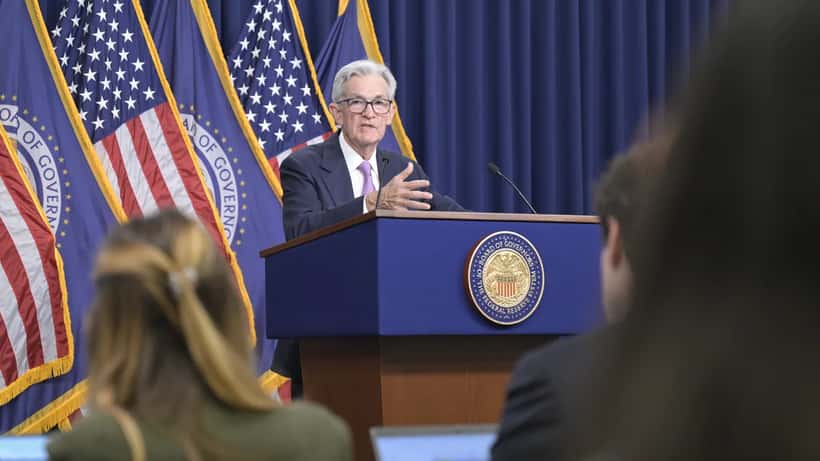
The Federal Reserve voted 11-1 on March 18, 2026 to keep its benchmark interest rate unchanged at 3.5% to 3.75%, signaling that the single rate cut projected for 2026 remains on the horizon — but only when inflation shows meaningful progress toward the Fed's 2% target. For millions of Americans managing savings accounts, mortgages, and retirement portfolios, this decision has direct and immediate consequences.
Fed Chair Jerome Powell emphasized that the pause is deliberate: economic uncertainty driven by Middle East tensions, persistent goods inflation amplified by tariffs, and a softening labor market all argue for caution. With Powell's term set to end in May 2026, and former Fed Governor Kevin Warsh named as his likely successor, the coming months could bring a significant shift in how monetary policy is communicated and executed.
What "Rates on Hold" Actually Means for Everyday Finances
When the Federal Reserve holds its benchmark rate steady, it affects virtually every financial product tied to variable interest — which covers most Americans' most important financial decisions.
High-yield savings accounts will continue to offer competitive returns in the 4.5-5.0% range for savers who have moved money into online banks or money market accounts. This is one of the few direct benefits of a high-rate environment: cash held in the right accounts is genuinely earning meaningful interest for the first time in two decades.
Credit card debt remains expensive. The average American credit card APR was hovering above 21% in early 2026, according to Federal Reserve consumer credit data. Every month rates remain elevated, high-balance cardholders face compounding interest charges that erode their financial position. Paying down revolving debt aggressively remains the highest-return financial move available to most households.
Variable-rate mortgages and HELOCs remain in a holding pattern. Homeowners with adjustable-rate mortgages or home equity lines of credit should be aware that rates are unlikely to drop significantly until the Fed signals a clear easing path — which Powell indicated requires "progress in reducing inflation, especially goods inflation boosted by tariffs."
The One Rate Cut Projection: What Investors Should Know
The Federal Open Market Committee's "dot plot" — the projection of where policymakers expect rates to go — showed a consensus around one 25-basis-point cut in 2026. This is a modest outlook, and financial advisors note it creates a specific set of planning considerations.
For bond investors, a single small cut produces modest price appreciation in existing bonds, but does not dramatically reshape fixed-income returns. For those holding short-duration treasuries or CDs maturing in the next 6-12 months, reinvestment risk is a real concern: rates may be slightly lower when those instruments mature.
For equity investors, the Fed holding steady removes one uncertainty from markets — but the bigger risks remain geopolitical (the conflict in Iran) and trade-related (tariff-driven inflation in consumer goods). A wealth advisor can help translate these macro signals into a portfolio strategy appropriate to a specific investor's timeline and risk tolerance.
Powell's Tenure Ending: Does a New Fed Chair Change Your Strategy?
Powell's expected departure in May 2026 raises a question many investors are asking: does a change in leadership at the Federal Reserve require changes to personal financial strategy?
The short answer is: rarely immediately, but the transition bears watching.
The Fed operates as an institution with strong continuity mechanisms — the FOMC's decision-making is collective, not driven by a single chair. That said, different chairs can signal different tolerances for inflation versus unemployment, and Kevin Warsh, Trump's reported pick, is generally seen as having a more hawkish inflation stance than the current committee median.
For individuals within 5-10 years of retirement, the implications of a potentially more hawkish Fed (meaning rates could stay higher for longer) include reconsidering bond duration exposure and revisiting the yield assumptions built into retirement income projections.
What a Wealth Management Expert Can Do Right Now
The current rate environment — elevated but with one projected cut — creates a narrow window of opportunity that is genuinely time-sensitive. A qualified wealth management advisor can help you:
- Maximize the high-yield window: Move idle cash from traditional bank accounts to high-yield savings or money market funds before rates begin to fall.
- Lock in CD rates: Certificates of deposit at current rates — with terms extending 12-24 months — can capture today's yields even after the Fed begins cutting.
- Rebalance fixed income: Review bond ladder structures and short-duration holdings in light of the "lower for longer, but not much longer" rate outlook.
- Review mortgage strategy: Homeowners with ARMs should understand their rate reset timelines and model whether refinancing to a fixed rate makes sense now versus waiting for a potential cut.
The Fed's March 2026 decision was a reminder that monetary policy moves slowly and that the gap between "the Fed held rates" and "what this means for my finances" requires expert translation.
On ExpertZoom, you can connect with licensed wealth managers and financial advisors who can assess your specific situation, help you take advantage of the current rate environment, and build a strategy that remains sound regardless of which direction Jerome Powell's successor steers the Fed.
Financial disclaimer: This article is for informational purposes only and does not constitute financial advice. Consult a licensed financial professional before making investment or savings decisions.
