 Bernard Stone
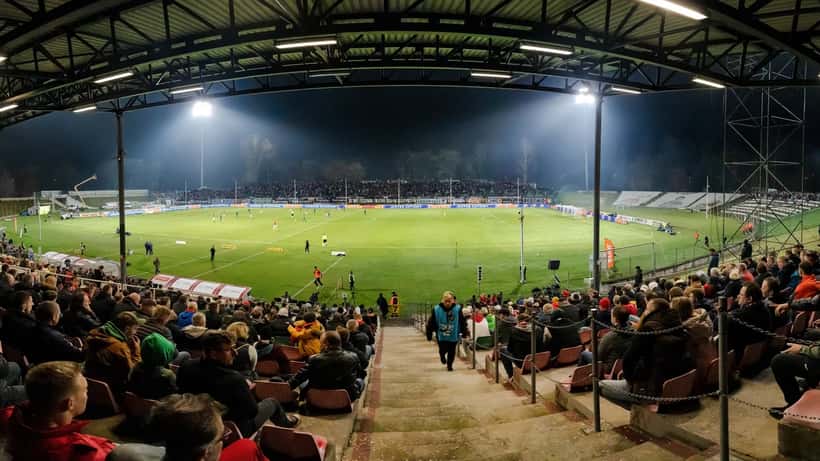
On August 18, 2026, in Istanbul's Şükrü Saracoğlu Stadium, Fenerbahçe hosts Olympique Lyonnais for the first leg of the UEFA Champions League playoff — a 90-minute match that controls access to a guaranteed €18.62 million prize pool and has the potential to reshape the balance sheets of both clubs for years to come.
For American sports investors and wealth-management clients watching European football's financial evolution, this match is more than a sporting contest. It is a live stress test of two competing investment strategies: Fenerbahçe's aggressive summer spending on high-profile signings, and Lyon's post-acquisition survival arithmetic under new American ownership.
What the UEFA Prize Structure Actually Shows
The 2026-27 Champions League distributes €2.467 billion across 36 qualifying clubs. Every team that reaches the league phase receives a guaranteed €18.62 million baseline — before a single match in the group stage is played. That figure climbs sharply with results: each win adds €2.1 million, a draw brings €700,000, and the eventual winner can accumulate well over €100 million when broadcast market pool payments are factored in.
Tonight's playoff is the final gateway to that ecosystem. The winning club steps into €18.62 million in guaranteed revenue. The eliminated club falls to the Europa League, where the financial baseline drops to roughly €10-12 million — a gap of at least €6 million that flows directly to operating budgets, transfer capacity, and commercial contract valuations. According to UEFA's official prize distribution framework for the 2026-27 season, this is the largest qualifying prize differential in the competition's modern history.
Lyon's Ownership Story Makes Tonight's Stakes Extraordinary
In June 2026, American entrepreneur Michele Kang's Olympe Bidco completed the acquisition of 87.78% of OL Groupe — Lyon's publicly listed parent company — from Eagle Football Holdings. The price: $30 million (approximately €26.45 million), at €0.1713 per share. OL Groupe trades on Euronext Paris under the ticker OLNV, making it one of the few European football clubs directly accessible to US retail investors through international brokerage accounts.
The arithmetic of tonight's match is striking when laid against that purchase price. The Champions League league phase alone guarantees €18.62 million — equivalent to 70% of the entire acquisition cost arriving as prize money within a single season. Analysts tracking European football equities note that club valuations historically expand when Champions League revenue is secured, because it anchors multi-year commercial sponsorship renewal negotiations and amplifies a club's leverage in January transfer windows.
Lyon entered this season having finished 4th in Ligue 1 in 2025-26 — a result that required navigating the Champions League preliminary qualifying rounds, including a victory over Sparta Prague — before reaching tonight's playoff against Fenerbahçe. Under new ownership with a lean balance sheet, every round represents a meaningful financial variable.
Fenerbahçe's Summer Gamble — A Roster Priced for Champions League Returns
Fenerbahçe approached the 2026-27 season with one of the most expensive roster buildouts in their history. N'Golo Kanté, who returned to European football after a stint in Saudi Arabia, anchors the midfield. Former Manchester City goalkeeper Ederson provides international-caliber depth. Milan Škriniar, the former Inter Milan and Paris Saint-Germain center-back, leads the defensive line. Mason Greenwood, whose career took a complicated path following his 2022 Manchester United contract suspension, completes an attacking roster that cost Fenerbahçe a significant portion of their annual payroll.
Turkish clubs operate under UEFA's Financial Sustainability Regulations, which cap the losses clubs can accumulate over a three-year assessment cycle. If Fenerbahçe qualifies for the Champions League league phase, the €18.62 million baseline — plus potential performance bonuses — provides a buffer that makes the roster investment viable within those regulatory constraints. If they are eliminated tonight and in the second leg, Europa League revenues run roughly half that figure. The roster cost does not change. The revenue model does.
As reported in the Champion League financial breakdown for the 2026 World Cup host nations, the financial stakes tied to single elimination matches in European competition have never been higher. For clubs that built their squads anticipating Champions League-level income, early exits create structural budget gaps that take multiple seasons to correct.
The $2,000 Scenario: When a Fan Becomes a Shareholder
Consider David, a 38-year-old financial planner based in Denver, Colorado, who began following European football closely after the 2026 FIFA World Cup was held across the United States, Canada, and Mexico. Following the news of Michele Kang's acquisition of OL Groupe in June 2026 — and the narrative of an American entrepreneur acquiring a historic European club at historic lows — David purchased 9,100 OLNV shares at €0.22 each: a total investment of €2,002 (approximately $2,200 at August 2026 EUR/USD rates), allocated as a speculative position within his international equity sleeve.
David's wealth advisor built a three-scenario model tied specifically to tonight's result and its August 26 second-leg resolution:
If Lyon qualifies for the Champions League league phase: OL Groupe secures €18.62 million in guaranteed UEFA revenue. Sponsorship renewals, paused during the qualifying uncertainty, close at improved rates. European football club equities with confirmed Champions League status have historically traded 18-35% higher in the 10 trading sessions following league-phase confirmation, based on prior OLG performance in the 2022-23 and 2023-24 cycles. Applied to David's stake, that range projects a gain of €360–€700 on his €2,002 position.
If Fenerbahçe eliminates Lyon: Lyon drops to the Europa League, guaranteeing roughly €10-12 million in UEFA income — a shortfall of €6-8 million versus the Champions League baseline. Under tight ownership finances, this likely triggers player sales in the January 2027 transfer window, delayed stadium infrastructure projects, and reduced sponsorship capacity. David's advisor models a –15% to –22% share price response in this scenario, implying a loss of €300–€440 on the position. The stop-loss trigger sits at –15%.
If the aggregate score is level after both legs: Second-leg uncertainty extends share price volatility. David's advisor recommends holding, not adding, until the August 26 return match resolves the outcome.
The critical takeaway from this model: European football club stocks behave as event-driven securities. Understanding the UEFA calendar — playoff dates, league-phase draw windows, performance milestones — is as important as understanding balance sheet fundamentals when managing a position like OLNV.
What to Ask a Wealth Advisor Before Investing in European Football Clubs
European football club equities occupy a niche and volatile corner of international small-cap markets. OLNV traded below €0.20 for much of 2025-26. Before allocating any capital — even a speculative sleeve — a licensed wealth management professional should address several structural risks that do not appear in standard equity screeners.
Revenue concentration: Most European football clubs derive 30-60% of total annual revenue from a single source: broadcast and UEFA distribution rights. Champions League or Europa League status determines the revenue tier. One playoff result can shift that tier by €6-8 million, which is enormous for a company with total revenues in the €150-250 million range.
Currency exposure: OLNV is denominated in euros. A US investor holds both equity risk and EUR/USD foreign exchange risk on any OL Groupe position. As covered in the Bayern München 2026 Bundesliga financial analysis, the multi-currency dimension of European club investing is one of the most underappreciated risks for American retail participants.
Regulatory risk: UEFA's Financial Sustainability Regulations, French football governance via the DNCG, and Turkish Football Federation oversight all create material risks that affect player registration, squad eligibility, and competitive standing — events that move club valuations without advance warning.
Liquidity constraints: OLNV has limited average daily trading volume on Euronext. Exiting a position under market stress may require accepting a significant discount to last-traded price.
Important note: Nothing in this article constitutes investment advice. European football club equities are speculative and high-volatility instruments. Consult a licensed wealth management advisor before investing.
For US investors who want exposure to European sports economics without single-club concentration risk, wealth advisors increasingly recommend sports-sector funds or broadcast infrastructure vehicles that capture UEFA rights economics across multiple clubs and tournaments.
Tonight's match in Istanbul — Fenerbahçe vs. Lyon — resolves in 90 minutes. Its financial consequences extend across the next 36 months of both clubs' operating plans. If you have a stake in that outcome, financial or emotional, the right professional guidance starts before the final whistle.
