 Bernard Stone
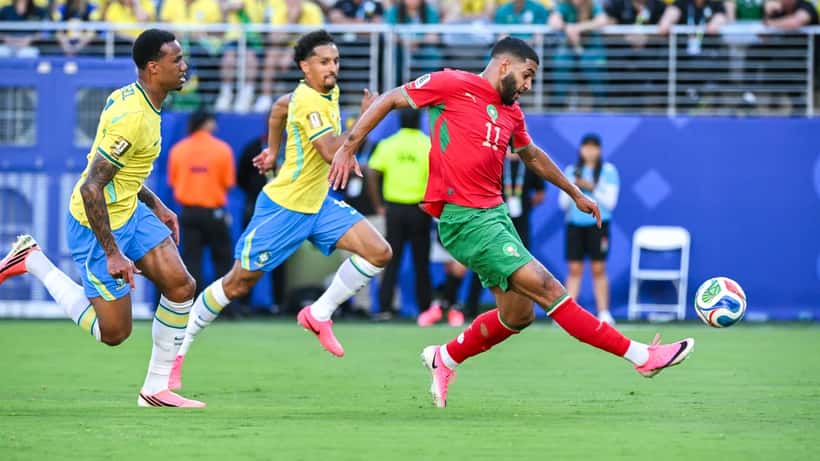
As the Netherlands and Morocco faced off in the Round of 32 at the 2026 FIFA World Cup in Monterrey on June 29, the scoreboard determined more than bragging rights — it determined which federation walks away with an extra $4 million in prize money, and potentially the path toward a $50 million payday if they go all the way to the final.
The Record-Breaking Prize Pool Behind the Beautiful Game
The 2026 FIFA World Cup in Canada, Mexico, and the United States features the largest prize pool in football history. According to FIFA's official announcement, the tournament distributes a record $871 million across all 48 participating nations — nearly double the $440 million distributed at the 2022 Qatar World Cup.
Every qualified team received at least $12.5 million before kicking a single ball: $10 million in qualification funding plus $2.5 million in preparation fees. But what happens on the pitch determines the final payout, and the difference between rounds is staggering.
What Was On The Line for Netherlands and Morocco in Monterrey
Here's how the prize money breaks down by stage at World Cup 2026:
- Group stage exit: $9 million
- Round of 32 exit: $11 million
- Round of 16: $15 million
- Quarter-finals: $19 million
- Fourth place: $27 million
- Third place: $29 million
- Runner-up: $33 million
- Champion: $50 million
Both the Netherlands and Morocco had already secured $11 million for advancing from their respective groups. The June 29 match determined which team earns $15 million — a $4 million difference for a single 90-minute match — while also keeping alive the chance to chase an additional $35 million should either side ultimately lift the trophy.
For context, the champion's $50 million prize represents more than twice what the 2022 winner earned in per-capita tournament prize money. With the United States, Mexico, and Canada splitting hosting duties, commercial revenue, television rights, and sponsorship deals have surged to unprecedented levels, all flowing back into the total prize pool.
How World Cup Money Actually Reaches Players
Here's where it gets complicated — and where financial advisors earn their fees.
FIFA distributes prize money directly to national football federations, not individual players. What happens next varies enormously from country to country. Some federations distribute fixed bonuses per game played; others offer tiered payments based on performance, tournament stage reached, or individual metrics. The Royal Dutch Football Association (KNVB) and Morocco's Royal Moroccan Football Federation (FRMF) each maintain their own distribution models, which may or may not be publicly disclosed to players at the start of the tournament.
For established stars — like Netherlands captain Virgil van Dijk or Morocco midfielder Hakim Ziyech — World Cup bonuses are one income stream among many, alongside club salaries, image rights, and endorsement deals. But for players from mid-table clubs or lower-profile domestic leagues, a World Cup bonus can represent the single largest payment they have ever received in one transaction.
And that is precisely when wealth management mistakes happen most frequently.
The Sudden Wealth Challenge in Elite Football
Research on professional athletes consistently documents a troubling pattern: a significant proportion face serious financial difficulties within a few years of their playing careers ending. Estimates vary, but the Sports Illustrated analysis that tracked NFL players found roughly 78% faced financial stress within two years of retirement — a pattern financial planners confirm is not unique to American sports.
The causes are consistent across cases: sudden large payments without a structured investment plan, limited financial literacy during peak earning years, pressure from family and social networks to redistribute wealth, and a compressed earning window that leaves little margin for error. A player who receives $500,000 in World Cup bonuses in June 2026 may have no roadmap for reinvestment, tax optimization, or long-term capital preservation.
Even high-earning European players face specific complexity. Netherlands players are subject to Dutch income tax on global income, while many Moroccan national team players hold dual nationality — born or raised in Belgium, France, or the Netherlands — and may trigger tax obligations in multiple jurisdictions simultaneously. Add in earnings attributed to tournament play in the United States, and the cross-border tax picture becomes genuinely complex.
As explored in a related analysis of World Cup athlete finances at Expert Zoom, the wealth gap between football stars who invest strategically and those who don't often comes down to the quality of financial advice received early — not the size of the paycheck.
What a Wealth Management Expert Would Advise Tonight
A certified financial planner working with a World Cup-level athlete would typically address three priorities immediately after a large payment is confirmed:
Tax planning first. World Cup prize money may be subject to income taxes in the player's country of residence, the country where the tournament was played (U.S., Canada, or Mexico depending on the match location), and potentially their country of origin. Tax treaties between these nations affect withholding rates, and the timing of when funds arrive in a player's account can create or eliminate specific tax events. Missing this window is expensive and irreversible.
Liquidity versus investment balance. Not all prize money should be deployed into long-term investments immediately. A proportion needs to remain liquid to cover lifestyle costs, career uncertainties — injuries, unexpected contract gaps, sudden early retirement — and short-term obligations. The general principle used by sports wealth managers is to keep three to six months of personal operating expenses immediately accessible at all times, regardless of total net worth.
Long-term capital preservation through compounding. Football careers average 15 to 20 active years at the professional level, meaning most players will fund 40 to 50 years of post-career life from earnings accumulated over a short window. Diversified investment portfolios — combining index funds, real estate, and conservative fixed-income instruments — are the mechanism through which players who earn well stay wealthy. Those who don't take this step often don't.
Whether you followed the Netherlands vs. Morocco match in Monterrey for the football or the financial stakes, the lesson extends well beyond the pitch. Sudden financial windfalls — from bonuses, inheritance, business exits, or tournament prizes — require the same structured approach. Getting expert guidance before spending, committing, or investing a large sum is the single step with the highest long-term return.
Expert Zoom connects you with certified wealth management professionals who specialize in high-income earners, cross-border tax planning, and long-term capital preservation strategies.
This article is for informational and educational purposes only. It does not constitute financial or tax advice. Consult a certified financial advisor or tax professional for guidance tailored to your specific situation.
