 Odette Caplan
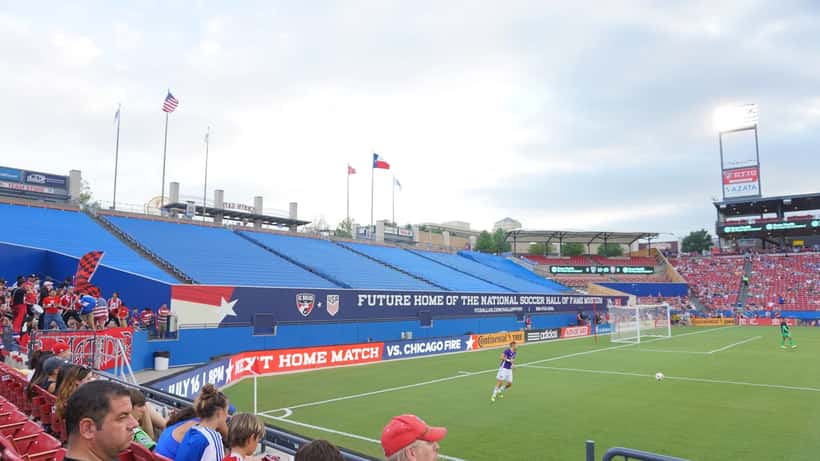
The August 5, 2026 kickoff between FC Dallas and Querétaro FC at Texas Health Mansfield Stadium marked the first-ever competitive meeting between the two clubs in the Leagues Cup. It was billed as a milestone in MLS's most ambitious cross-border experiment — a tournament that brings all 18 Liga MX clubs onto U.S. soil for group-stage matches between August 4 and September 6, 2026. But as the Gallos Blancos arrived in the Dallas–Fort Worth area fresh off back-to-back Liga MX wins over Pachuca and Tigres, a question that rarely makes the pregame broadcast loomed over the competition: what legal framework protects a Mexican player who gets injured in the United States?
The answer is complicated, contested — and critically important for any player stepping onto an American pitch.
Leagues Cup 2026: Where Two Legal Worlds Collide
The 2026 Leagues Cup is, at its core, a tournament built on legal complexity. Thirty-six clubs — 18 from MLS and 18 from Liga MX — compete across U.S. venues, meaning dozens of Mexican-contracted players are temporarily subject to U.S. jurisdiction for weeks at a time.
Standard MLS player contracts include workers' compensation coverage under U.S. state law. According to MLS roster rules and regulations, clubs remain financially responsible for a player's full Salary Budget Charge even when that player is placed on the Season-Ending Injury List — a protection that MLS-contracted players take for granted.
Liga MX players enjoy no such guarantee on U.S. soil. Their contracts are governed by Mexican labor law (Ley Federal del Trabajo), which provides injury protections through Mexico's social security system (IMSS). But those protections are designed for injuries sustained on Mexican territory, at Mexican workplaces. A training ground in Dallas — or a stadium in Mansfield — is not a workplace under Mexican law.
The Questions Every Agent Should Be Asking Before the Whistle
When Liga MX clubs enter Leagues Cup, their players' representatives face a set of legal questions that have no clean answers.
Does U.S. workers' compensation apply to a Mexican athlete playing for a Mexican club on U.S. soil? Potentially yes — and this surprises many clubs. In most U.S. states, workers' compensation law applies based on where the work is performed, not where the employer is based. If a Querétaro player is injured in Texas during a Leagues Cup match, that player may have a legitimate claim under Texas workers' compensation law — provided the club has, or was required to have, Texas workers' comp coverage.
What does the Leagues Cup tournament agreement say? The Leagues Cup organizers — jointly managed by MLS and Liga MX — publish tournament rules that address some liability questions. But tournament rules typically cover on-field conduct and competition format, not the civil and insurance law questions that arise when a player is seriously hurt. Those questions default to whatever legal framework applies in the state where the injury occurred.
Is the club covered by the tournament's liability insurance? Tournament organizers carry event liability insurance, but this typically covers third-party claims — for example, a fan struck by a projectile — rather than first-party worker injury claims brought by players against their employing club.
The result: a serious injury during Leagues Cup group-stage play can trigger a multi-jurisdictional legal dispute that most clubs, and most players, are entirely unprepared for.
U.S. Workers' Compensation: Does It Apply to Foreign Athletes?
The short answer is: it depends on Texas law, the club's insurance coverage, and the specific facts of the injury. Consulting a U.S. sports lawyer before the injury happens is far cheaper than litigating afterward.
Texas is one of the few states where workers' compensation is not mandatory for private employers. Unlike California or New York, Texas employers — including foreign sports clubs temporarily operating in the state — can opt out of the workers' comp system. A Liga MX club hosting a match in Texas without U.S. workers' comp coverage creates a legal gap. In that scenario:
- The injured player cannot file a Texas workers' comp claim.
- The player's Mexican IMSS coverage may apply, but IMSS was not designed to cover injuries occurring outside Mexico.
- The player's individual contract may include private injury insurance from the club — coverage that varies widely between Liga MX clubs.
- The player could potentially sue the club directly under U.S. tort law — a longer, more expensive, and less predictable route.
For MLS teams like FC Dallas, the picture is cleaner. MLS players' employment contracts are governed by U.S. law, and clubs are required to carry appropriate insurance under the MLS Collective Bargaining Agreement. The MLS Players Association confirms that clubs provide health insurance to players on full-contract rosters. The disparity between MLS and Liga MX injury protections — visible in real time during Leagues Cup — is precisely the kind of gap that sports law attorneys flag when advising cross-border competition organizers.
The U.S. Department of Labor's workers' compensation resources outline the official federal framework, including how state-level variations affect foreign workers performing labor on U.S. soil.
This article provides general legal information for educational purposes only. It does not constitute legal advice. Players, agents, or club officials facing an injury liability question should consult a licensed U.S. sports attorney.
If Querétaro's Goalkeeper Tears His ACL in Dallas: Breaking Down the Real Costs
Consider a specific situation: a Querétaro goalkeeper starts the August 5 Leagues Cup match at Texas Health Mansfield Stadium. In the 34th minute, he dives for a cross, lands awkwardly, and tears his anterior cruciate ligament. He is stretchered off and taken to a Dallas-area hospital for emergency surgery.
Under this scenario, four financial obligations stack up immediately:
1. Emergency hospital costs in Texas. ACL surgery in a U.S. hospital averages $20,000–$35,000 without insurance, according to publicly available U.S. healthcare cost data. If Querétaro FC carries no U.S. health coverage for traveling players, that bill falls on the club — or on the player personally.
2. Salary continuation. The player's Mexican contract almost certainly requires the club to continue paying salary during recovery. A Querétaro goalkeeper earning a mid-range Liga MX salary of approximately $300,000 USD/year would cost the club roughly $75,000 in salary over a standard 6-month ACL recovery period.
3. Rehabilitation costs. Post-surgical rehab in Mexico may be covered by IMSS — but only if the injury is formally classified as an accidente de trabajo (workplace accident). If IMSS determines the U.S. injury falls outside its jurisdiction, the club absorbs rehabilitation costs directly, which can add another $10,000–$20,000.
4. Replacement player logistics. Leagues Cup roster rules permit squad adjustments, but registering a replacement goalkeeper mid-tournament carries its own administrative timeline and financial burden.
The if/then logic: If Querétaro FC had proactively obtained a U.S. short-term international sports insurance policy — available from specialist insurers for as little as $500–$1,500 per player per tournament period — the $35,000 hospital bill would be covered, the IMSS classification dispute would be moot, and the club's net exposure would shrink to the contractual salary continuation obligation alone. If the club did not obtain that coverage, total financial exposure from a single serious injury could exceed $110,000 for a group-stage match whose prize money is modest by comparison. This is not a fringe scenario. It is the exact fact pattern that U.S. sports law attorneys prepare for every time a Liga MX club sets foot on American soil during Leagues Cup.
What Clubs and Players Should Do Before the Next Match
FC Dallas vs. Querétaro is one of dozens of Leagues Cup matches on the calendar through September 6. For Liga MX clubs still competing — or planning ahead for future editions — and for MLS rosters facing opponents under different legal coverage, the practical steps are clear.
For Liga MX clubs traveling to U.S. venues:
- Obtain a U.S.-compliant short-term sports liability and medical insurance policy covering the full tournament period, not just individual match days.
- Confirm with Leagues Cup organizers what insurance the host venue provides and where gaps in that coverage exist.
- Designate a U.S.-licensed sports attorney contact before the opening match — not to call after an injury happens, but to review the club's coverage position in advance.
For Liga MX players personally:
- Review your contract's injury clause: does it explicitly cover injuries sustained outside Mexico?
- Ask your agent whether the club carries supplemental international sports insurance.
- Understand that your IMSS rights were built for Mexican territory — they may not travel with you to Texas.
For MLS players on rosters like FC Dallas:
- Your protections are substantially stronger under U.S. law, but tournament rules can still create gray areas — particularly around whether a Leagues Cup injury falls under your club contract's standard workers' comp provisions or into a tournament-specific liability category.
A sports law attorney specializing in cross-border athletic labor can map the specific coverage picture for any player or club currently in the Leagues Cup bracket. The consultation is typically far less expensive than the first line on a Texas hospital invoice.
The Leagues Cup brings marquee competition to U.S. stadiums. It also imports a legal complexity that neither the match preview nor the tournament schedule covers. That gap is worth closing before the next final whistle.
