 Odette Caplan
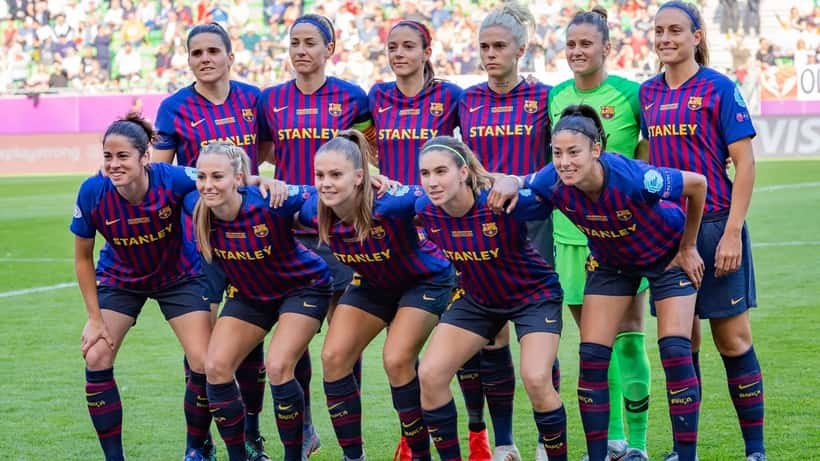
FC Barcelona Femenino kicked off their 2026/27 UEFA Women's Champions League title defense on September 23, 2026, hosting Paris FC at Estadi Johan Cruyff — and this opening fixture spotlights something far larger than a single result. UEFA is distributing a record €37.7 million per season across women's club football, yet the players performing on that stage still face contract structures that many sign without fully understanding. Whether you're a US-based player eyeing a European move, an agent negotiating a first professional deal, or a fan wondering why explosive growth doesn't always translate to fair pay, the numbers deserve a closer look.
Barcelona vs. Paris FC: The Match That Signals a New Era
Barcelona enter as defending champions with one of the most dominant home records in Champions League history: they have won all 15 of their league-phase home matches, scoring 77 goals across those games. Paris FC, who reached the round of 16 last season after eliminating Real Madrid in the playoffs, arrive as credible opponents — and as representatives of a new wave of serious investment in European women's club football.
The 2026/27 Women's Champions League features 18 clubs in the league phase, with Barcelona chasing a fifth European title. The competition has changed dramatically: crowds regularly topping 15,000 at women's UEFA games are no longer the exception. Paris FC drew more than 15,000 supporters to Stade Jean Bouin when they hosted Barcelona in the previous season. Ratings figures and sponsorship revenues have followed, creating the conditions for those record UEFA distribution figures — and raising legitimate questions about where the money actually flows once it leaves UEFA's headquarters.
This is not a story only for players and agents. US sports fans who follow the NWSL, parents supporting youth athletes, and anyone who watched the USWNT's decade-long equal pay battle understands the stakes: a sport can experience explosive, globally-visible growth while its workforce captures only a fraction of the value they create.
What the €18.2M Prize Pool Actually Means
According to UEFA's record revenue distribution announcement, clubs competing in the 2025–2027 Women's Champions League league phase each receive a flat starting fee of €505,000. Performance bonuses for wins and draws, plus a final league ranking bonus, mean that the eventual champions can earn up to €1.995 million across the first two seasons. Total distribution to clubs in the league phase and qualifying rounds reaches €37.7 million per season — a genuine record for UEFA women's club competition.
Those figures are significant by historical standards. They also look different when placed next to the men's competition: the 2025–26 UEFA Champions League distributes over €2.4 billion in total, with league-phase participants receiving approximately €18.6 million each simply for qualifying — roughly 37 times what a women's club earns for the same achievement.
That gap matters for individual player contracts in a direct way. Club revenue sets the practical ceiling for what clubs can afford to pay. When the participation fee is €505,000 rather than €18.6 million, even generous internal revenue-sharing produces dramatically smaller individual salaries. Players navigating European club contracts need to understand this structural asymmetry — and know what legal levers exist to improve their position before they sign.
Concrete Case: What a US Player Signing With a Champions League Club Actually Gets
Consider this scenario: a 24-year-old American midfielder — call her Jordan — finishes her NWSL season and signs a two-year contract with a Women's Champions League club comparable to Paris FC in late September 2026. Her new club is in the UEFA league phase and will receive €505,000 as their starting participation fee from UEFA that season.
Under a standard mid-tier Women's Champions League contract, Jordan negotiates a base salary of €72,000 per year (roughly $79,000 at current exchange rates). Her deal includes a performance bonus clause tied to the club's UEFA results: specifically, €5,000 per win in the league phase. If the club wins four of their six league-phase matches, she earns an additional €20,000 that season — bringing her total to €92,000.
Here is the critical if/then: if Jordan's contract does not include an explicit individual image rights clause, then any commercial deals the club strikes using her likeness — jersey sales featuring her name, media appearances, branded content — generate revenue for the club only. Jordan receives nothing from that stream. At a men's club at any comparable level, image rights are negotiated aggressively as a separate line item; at women's clubs, players frequently sign standard-form deals without anyone flagging that omission. A sports employment lawyer reviewing her contract before signing can identify this gap and negotiate a 15–20% image rights carve-out. On Jordan's modest contract, that is worth €5,000–€10,800 per year — and potentially far more as her profile grows with Champions League exposure. A legal review typically costs between $500 and $1,500 in attorney fees: a strong return.
For more on how women's club contracts work in Spain's top-tier competition, see our earlier breakdown of player contract structures in the Real Madrid vs. Atlético Femenino rivalry.
The Legal Landscape: What US Players Face When Signing in Europe
The US Soccer Federation's landmark 2022 equal pay agreement established that men's and women's national team players now share World Cup prize money equally — with each 2026 World Cup player eligible for approximately $246,153.85 from the men's $16 million prize pool, according to Fortune. That agreement covered federation-level contracts. Individual club contracts in European leagues are governed by the domestic law of the country where the club is registered.
For Jordan signing with a French club like Paris FC, her contract falls under French labor law and the relevant collective bargaining agreement for professional football in France. For a player at FC Barcelona, Spanish labor law applies. Neither framework automatically imports the protections won through the US Soccer CBA — and neither is automatically player-friendly.
Key legal risks for US players in European women's clubs include:
Classification disputes. Some clubs still register women's players as semi-professional, which affects access to social insurance, paid maternity leave, and sick pay under local law. The distinction can cost thousands of euros annually in benefits denied.
Unilateral termination clauses. European standard-form contracts frequently include club-side termination options — often at very low compensation thresholds — that would be considered unconscionable under US employment law. A player who doesn't understand this provision can be released mid-season with minimal financial recourse.
Dual tax residency. Moving from the US to France or Spain mid-career creates overlapping residency obligations. Without structured advice, players can face double-taxation on their salary for the first year of a contract. The gap between gross and net income is wide enough to materially change whether a move makes financial sense.
None of these issues are unique to women's football — but female players at smaller clubs have less leverage, fewer resources, and less institutional support when disputes arise. Getting legal advice before signing, not after a problem emerges, is invariably cheaper and more effective.
What Players, Families, and Agents Should Do Before Signing
The Barcelona–Paris FC fixture is a reminder that professional women's soccer is no longer operating in the margins. It is a growing, internationally visible ecosystem with record prize money, genuine crowds, and real money on the table. The legal infrastructure governing contracts has not always kept pace with that growth.
If you are navigating a professional women's soccer contract — in Europe, the NWSL, or elsewhere — these practical steps matter:
- Have the contract reviewed before signing. Standard-form clauses vary between clubs and countries. A single 90-minute legal review can prevent costly errors on a two- or three-year deal.
- Treat image rights as a separate negotiation. Commercial use of your likeness is a distinct revenue stream. Don't let it default to the club by inaction.
- Understand the termination structure. Does the club have the right to release you without cause? Under what conditions? What compensation is owed, and in what timeframe?
- Get cross-border tax advice if moving internationally. The timing and structure of your signing affects your net income materially in year one.
The right lawyer — one with sports employment experience and, ideally, cross-border expertise — costs a fraction of what a poorly-negotiated contract costs over two years. ExpertZoom connects athletes, families, and agents with licensed professionals who can review European and domestic contracts before you commit.
This article is for informational purposes only and does not constitute legal advice. Consult a licensed attorney for guidance specific to your situation.
