 Michael Campbell
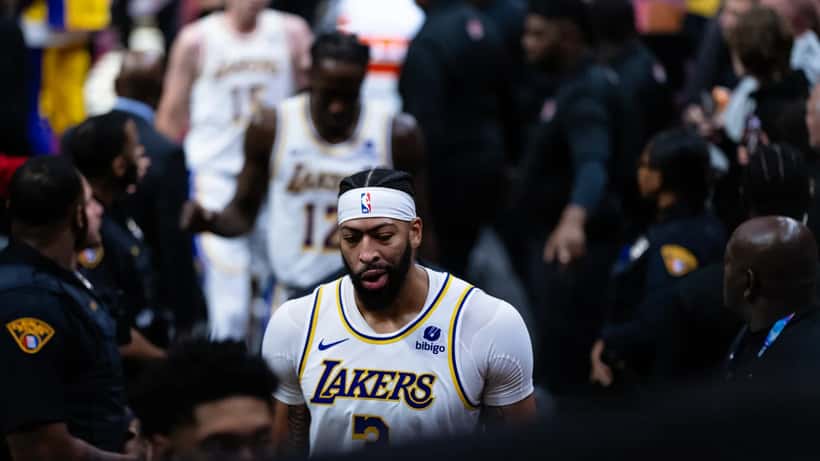
Anthony Davis will become eligible on August 6, 2026 to sign one of the most significant contracts in basketball history: a four-year deal worth up to $275 million with the Washington Wizards. The decision, which could pay the veteran forward-center more than $76 million per season well into his mid-30s, comes at one of the most turbulent moments of his career — with trade rumors swirling, a new franchise core forming around him, and questions about his durability still unanswered.
The $275 Million Question
Davis arrived in Washington via a blockbuster Lakers-Wizards trade and currently has one guaranteed year remaining on his deal — worth $58.5 million for the 2026-27 season — plus a $62.8 million player option for the year after that. The extension window opening in August would lock in four additional years and fundamentally reshape his financial trajectory.
The Wizards have made their intentions clear. General manager Will Dawkins addressed the situation directly after the 2026 NBA Draft, where Washington selected AJ Dybantsa with the first overall pick. Days earlier, the team committed four years and $212 million to point guard Trae Young. The message from Washington's front office: we are building around Davis, and we want him here long-term.
But Golden State isn't sitting still. The Warriors have been linked to a blockbuster scenario that would bring Davis west alongside free-agent LeBron James, reportedly involving Jimmy Butler and his expiring $57 million contract. The Portland Trail Blazers have also signaled interest. Washington has pushed back publicly, but the next six weeks will test those assurances.
An Injury History That Complicates Everything
Whatever Davis decides, the durability question looms over every calculation. Over the past five NBA seasons, Davis has averaged just 48.6 regular-season games per year — barely two-thirds of the 82-game calendar. For a franchise committing $275 million to a single player, that figure carries enormous financial and competitive risk.
This is precisely where sports wealth management experts pay closest attention. A contract extension of this size isn't simply about the dollar amount in the agreement. It's about what happens when games are missed, when performance incentives don't trigger, and when insurance riders — or the absence of them — become the difference between long-term security and financial exposure.
Davis's situation mirrors what wealth advisors see repeatedly in professional sports: a player who earns at the very top of the market but whose career is structurally unpredictable. The numbers on the contract may be guaranteed, but the ability to maintain the lifestyle and investment commitments built around those numbers is not.
What Wealth Experts Say About Managing Sudden Wealth
Financial advisors who specialize in athlete wealth management consistently highlight the gap between gross contract value and actual post-career net worth. The pattern is well documented. According to the U.S. Securities and Exchange Commission's investor education division, a significant share of high-income individuals — including professional athletes — encounter serious financial difficulty within years of their peak earning period. The cause is rarely insufficient income. It's structural failure in how that income was managed.
A $275 million extension, if Davis signs it, will not yield $275 million in spendable income. Federal income tax at the top marginal rate (37% in 2026) takes a substantial portion immediately. Washington D.C. state-level taxes add another 8–9%. The "jock tax" — levied by states and cities where away games are played — further complicates Davis's effective rate on a game-by-game basis. And that's before accounting for agent commissions, which typically run 3–4% of total contract value. On $275 million, that represents between $8.25 million and $11 million in fees before a single dollar is invested.
Four Moves Every Athlete Should Make Before Signing
Professional wealth advisors point to four non-negotiable steps for any individual facing a major financial commitment — whether that's an NBA supermax deal or a significant bonus, inheritance, or business exit:
Understand your total tax exposure first. The headline figure on a contract is rarely what you keep. A qualified tax advisor can model your effective rate across different scenarios — including residency options, deferred compensation structures, and state-specific strategies that legally reduce your exposure before the money lands.
Budget for professional fees before you spend. Agents, attorneys, and financial managers are worth their cost — when they're good — but their fees must be planned for in advance. On a deal like Davis's, agent commissions alone could exceed $11 million.
Build a diversified investment strategy from day one. Real estate, public equities, private equity, and fixed-income instruments each serve distinct purposes in a long-term portfolio. The athletes who retire with generational wealth are those who started that allocation process before the money arrived, not after.
Draft an estate and legacy plan early. Trusts, charitable foundations, and beneficiary designations should be in place before any major contract is signed. The earlier these structures exist, the more tax-efficient the eventual transfer of assets becomes — and the more protected those assets are during the earning years.
These principles apply well beyond professional basketball. For a broader look at how similar high-stakes contract decisions have played out, see the wealth management analysis surrounding Giannis Antetokounmpo's contract situation and Rui Hachimura's financial planning approach.
What Davis Decides — and What It Means for You
The clock is ticking. August 6 is the earliest Davis can sign an extension, and NBA free agency opened July 1, meaning the next few weeks will be defined by trade negotiations, extension talks, and competing offers. Washington, Golden State, and Portland are each making their case. Davis must weigh financial certainty against competitive opportunity — and do it in a compressed timeline.
From a pure wealth management standpoint, the extension offers stability: $275 million guaranteed, a defined role with a franchise building around him, and continuity. The trade scenarios offer upside but less predictability, given the complexity of mid-season roster construction and the physical demands on a 33-year-old who has already dealt with significant injury history.
Whatever the outcome, Davis's contract decision is a reminder that enormous sums of money still require disciplined planning. The athletes who protect their wealth long-term are those who treat major financial decisions with the same focus they bring to performance.
You don't need an NBA contract to benefit from that discipline. Whether you're managing a major career milestone, a business windfall, or a long-term investment decision, a qualified wealth management advisor can help you build a strategy that protects your financial future — at any income level.
Disclaimer: This article is for informational purposes only and does not constitute financial or investment advice. Consult a qualified financial professional before making investment decisions.
