 Daniel Sterling
When the Arizona Diamondbacks take the field against the Houston Astros this week — a road series at Minute Maid Park followed by three games at Chase Field in Phoenix on September 8-10 — it isn't just playoff positioning driving the intensity. For the tens of thousands of fans attending those games, a quieter legal question follows them through the turnstile: what exactly are your rights if security pulls you from your seat?
The News: A Recent Diamondbacks Fan Ban Raised the Stakes
Less than a year ago, the Diamondbacks made national headlines when the club permanently barred a season ticket holder from Chase Field for the remainder of the 2025 season. The fan had repeatedly interfered with balls in play near the outfield wall — the team cited "multiple offenses" and stated the holder would only be welcomed back in 2026 under conditions the organization declined to fully disclose, according to CBS Sports.
The Diamondbacks weren't alone in drawing a hard line. When two fans reached over the wall and grabbed Mookie Betts' glove during Game 4 of the 2024 World Series at Yankee Stadium, Major League Baseball moved swiftly: both were banned indefinitely from all 30 MLB stadiums. A separate fan who directed a slur at Diamondbacks player Ketel Marte received the same league-wide indefinite ban.
Now, as the D-backs and Astros square off in a series carrying genuine playoff seeding weight in September 2026, stadiums on both ends are primed for the kind of charged atmosphere where emotions can escalate fast. Lawyers who specialize in sports venue liability say this is exactly the moment fans should understand how lopsided the legal framework is — because almost no one walking through the gate does.
The Expert Analysis: Your Ticket Is a Revocable License, Not a Seat Guarantee
The first thing legal experts establish: a ticket to a Diamondbacks or Astros game is not a contract guaranteeing you a seat for nine innings. In legal terms, it is a revocable license — permission granted by a private property owner that can be withdrawn at almost any time, for almost any reason.
Stadiums are not public spaces. Chase Field and Minute Maid Park are privately owned facilities, and the U.S. Constitution's First Amendment applies only to government actors, not to private organizations like MLB clubs. In practice, that distinction matters enormously:
- You can be ejected for language that would be fully protected on a public sidewalk outside the park.
- You can be removed for behavior security deems disruptive, whether or not you intended it to be.
- You can be banned — from one stadium or from all 30 in the league — without a formal hearing, without charges, and without a court order.
Since 2018, MLB has operated a league-wide Fan Code of Conduct covering intoxication, verbal abuse, physical altercation, interference with play, and a deliberately broad category: "disruptive behavior." Under that code, clubs have the authority to remove any fan whose conduct, in their judgment, crosses the line. That judgment is theirs, not yours.
One important caveat: anti-discrimination law still applies. A team cannot legally eject a fan based on race, religion, disability, or other protected categories under federal civil rights law. If that happens, formal legal recourse — including a civil rights complaint — is available. But absent discrimination, the venue holds the power, and the courts have consistently upheld it.
When Your Seat Disappears: A Concrete Scenario at Chase Field
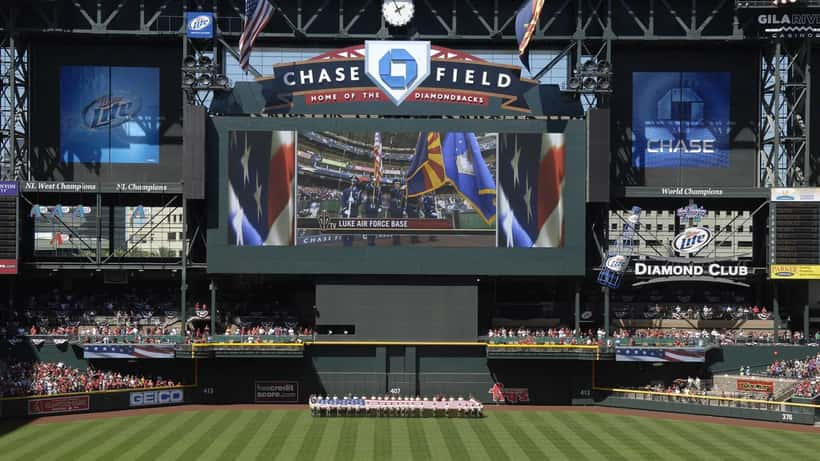
Consider a situation that maps directly onto what could happen during the September 8-10 Diamondbacks-Astros series at Chase Field. A fan purchases a three-game ticket package at $95 per game — $285 total. During game two on September 9, a beach ball is tossed from the section behind them onto the field during a key at-bat. Security responds, chaos follows, and two nearby fans who weren't involved in the toss are flagged in the confusion and escorted out. At the exit, both receive a written notice: banned from Chase Field for the remainder of the 2026 season.
What just happened legally? The moment that notice was served, the revocable license was revoked. If either fan attempts to use their ticket for game three — even a ticket already paid for — they are trespassing. Under Arizona Revised Statutes § 13-1502, knowingly entering or remaining on property after being notified to leave is criminal trespass in the third degree: a Class 1 misdemeanor carrying fines up to $2,500 and up to six months in county jail.
What about the $95 remaining ticket? Most MLB clubs offer refunds for unused tickets upon ejection as a matter of business policy — but it is not a legal requirement. If the team declines, a fan can dispute the charge through their credit card company or file in small claims court, arguing the license was revoked before the full event value was delivered. Outcomes vary significantly by club and circumstance.
If the ban is league-wide, the stakes multiply: all 30 MLB stadiums become off-limits, and re-entry at any of them constitutes trespassing in that venue's jurisdiction — potentially in a different state with different criminal classifications.
The if/then logic is blunt: if you receive a written ban notice after ejection, then every unused ticket you hold becomes legally worthless, and returning is a criminal offense — not just a civil one.
Practical Implications: Four Things Every Fan Should Know Before These Games
The September Diamondbacks-Astros slate carries extra emotional weight — both clubs are fighting for October positioning, which tends to amplify crowd energy and security responsiveness in equal measure. Legal and venue experts point to four things fans should understand before attending:
Stadium bans extend beyond baseball. A ban from Chase Field typically applies to all events the venue hosts — concerts, wrestling shows, soccer matches — not just Diamondbacks games. The physical ban follows the building, not the sport.
Enforcement has sharpened since 2024. The World Series interference incidents prompted MLB to press clubs on tighter identification protocols. Chase Field added secondary screening near outfield sections — exactly the area where the 2025 interference incident occurred — heading into the 2026 season.
Document the moment if you believe an ejection was unjust. Legal counsel advises requesting the security supervisor's name, asking for an incident report, and preserving any video captured before, during, or after removal. None of this reverses the ejection — but it creates a record that matters if you pursue a refund dispute or, in rare cases, a discrimination complaint.
Season ticket holders have slightly more contractual leverage. Several MLB clubs include provisions in their season ticket agreements requiring written notice and an informal review before a permanent ban takes effect. This is contractual, not statutory — it applies only if your agreement includes it, and standard single-game ticket holders have no such protection.
As the Brewers vs. Giants postponed game dispute earlier in 2026 illustrated, fan refund options at MLB events depend almost entirely on the fine print attached to a specific ticket — not on consumer protection law more broadly. The same principle applies to ejection.
What to Do If You're Ejected or Banned at a Diamondbacks or Astros Game
Most ejections don't justify consulting a lawyer — if you were removed for clear conduct violations, challenging the ban is unlikely to succeed. But certain situations warrant professional legal assessment:
- You were ejected based on a protected characteristic — race, religion, national origin, disability. This may constitute a civil rights violation.
- You were physically injured during removal and security used force that exceeded what was necessary. Venue liability law applies.
- You hold a season ticket agreement with a written notice clause that the club bypassed.
- The ejection appears retaliatory, linked to a complaint you filed with the team or an incident you reported.
A lawyer experienced in sports venue liability can assess whether a stadium acted within the substantial legal latitude it holds — or stepped outside it. That line is narrower than most fans expect, but it does exist.
With the Diamondbacks and Astros heading into a series that could determine October seeds, understanding that line before the first pitch is worth the few minutes it takes. If you've been ejected or banned from a stadium and believe something went wrong, a consultation with a qualified attorney is the right first step.
This article is for informational purposes only and does not constitute legal advice. Please consult a qualified attorney for guidance specific to your situation.
