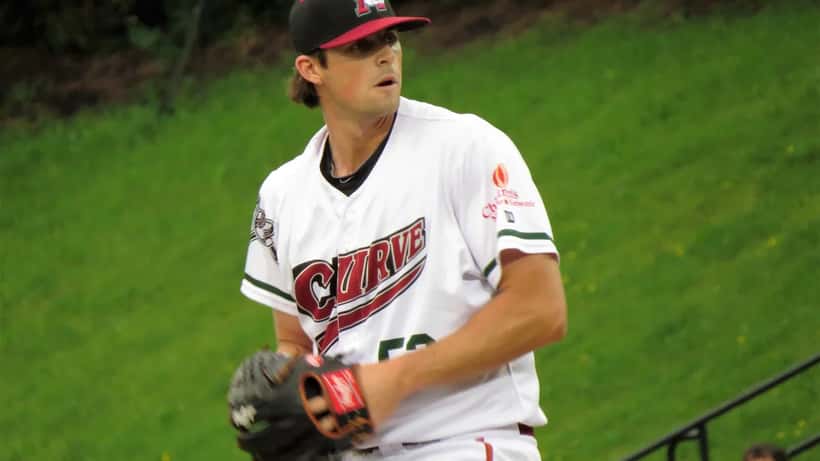
 Daniel Sterling
At 6:00 p.m. ET today — August 3, 2026 — the MLB Trade Deadline closes for business. And when it does, New York Mets right-hander Clay Holmes may be wearing a different uniform for the first time since signing his three-year, $38 million contract with the club. Holmes has not thrown a major-league pitch since May 15, when Yankees rookie Spencer Jones drilled a 111.1 MPH comebacker directly off his right shin, fracturing his fibula. Since that start, at least eight organizations — the Yankees, Dodgers, Phillies, Rays, Rangers, White Sox, and Diamondbacks among them — have sent scouts to evaluate Holmes as he completed his injury rehabilitation. Extension talks with the Mets have gone nowhere. "I don't think there's been a ton there," Holmes told reporters in late July. A trade tonight looks all but inevitable.
Beyond the sports headline, Holmes' situation forces a question that matters well past baseball fans: what actually happens, legally and financially, when a professional athlete is traded while on the injured list? Sports contract attorneys say the answer is more protective than most players expect — but only if the right provisions were negotiated into the original deal.
What the Trade Deadline Means for an Injured Player's Contract
Under Major League Baseball's Collective Bargaining Agreement (CBA), an injured player's contract does not pause or reset when a trade is completed. The acquiring team steps in as the new employer and assumes every financial obligation attached to the existing deal from the moment the transaction is officially processed.
For Holmes, that means whichever team acquires him before tonight's 6 p.m. deadline must pay the remaining prorated portion of his $12.67 million 2026 salary — covering every game from today through the end of the regular season. The medical costs associated with his fractured right fibula, including potential surgical intervention, also transfer to the acquiring organization. Holmes confirmed in late July that surgery remains a possibility, though he expects the fracture to heal without it. The acquiring team has no legal mechanism to offset his salary against the weeks he spent on the Injured List before the trade.
Crucially, Holmes holds a $12 million player option for the 2027 season. That clause travels with him intact. No acquiring team can restructure, reduce, or remove it as a condition of the trade.
Expert Analysis: The Contract Rights That Protect Injured Athletes
Sports attorneys who work with professional players and agents highlight three core legal protections that apply any time a professional athlete is traded while injured.
Assignment rights — and why a no-trade clause matters. The standard MLB Uniform Player Contract gives teams the right to assign a player to any affiliated organization without the player's consent. A no-trade clause overrides that right — but it must be explicitly negotiated into the deal before signing. Holmes' contract reportedly does not include one. That means the Mets can move him tonight without his approval, regardless of whether he is healthy or recovering from a broken bone. Players who don't secure this protection during initial negotiations often discover that gap at the worst possible moment: when a trade would most affect their career trajectory or medical situation.
Salary continuation during injury is not discretionary. Article XVII of the CBA requires teams to continue paying a player's full contract salary while that player is on the 60-day Injured List, provided the injury occurred while performing their contractual duties. Holmes' fibula fracture — caused by a batted ball during a regular-season start — squarely meets that standard. The acquiring team inherits this obligation the instant the trade clears. There is no cooling-off period, no reduced-rate window for rehabilitation time, and no clause allowing the new employer to renegotiate salary based on the player's current unavailability. Per the CBA, those obligations are non-negotiable and fully enforceable by the MLBPA.
Player options and opt-out clauses are personal rights. Per MLB CBA Article XIX, options, vesting bonuses, and opt-out windows attached to a player contract are legally personal rights of the athlete, not the team. They cannot be modified unilaterally by the current club or by any acquiring organization. Holmes holds a $12 million player option for 2027 that he must notify his employer about by December 1, 2026. Most analysts expect him to decline it and test the free-agent market, where a healthy Holmes — who posted a 2.39 ERA with 45 strikeouts across nine starts before his injury — would likely command well north of $12 million annually. Whichever team trades for him tonight must honor that right unconditionally.
When a Comebacker Changes Everything: A Concrete Scenario
Consider what Holmes' situation looks like through the lens of real contract mechanics as of today's deadline.
Holmes was injured on May 15, 2026, more than eleven weeks ago. Under the CBA, service time continues to accrue for players on the 60-day IL, meaning those weeks still count toward his arbitration eligibility and free-agency thresholds — protecting him from losing career advancement simply because an opponent's line drive ended his season early.
Here is the exact if/then breakdown any team's front office and legal department worked through before scouting Holmes:
If the trade is completed before 6:00 p.m. ET today, the acquiring team immediately assumes the remainder of Holmes' prorated 2026 salary. His annual rate is $12.67 million — roughly $1.06 million per month — meaning two months of regular season remaining represents approximately $2.1 million in immediate salary obligations, regardless of whether he pitches a single inning for the new club this year.
If Holmes requires post-trade surgery — a possibility he publicly acknowledged in late July, though he expects the fracture to heal naturally without an operation — the acquiring team absorbs all associated medical and rehabilitation costs on top of his salary, a figure that could add several hundred thousand dollars depending on the procedure and recovery timeline.
If Holmes declines his $12 million player option for 2027 by December 1 — the widely expected outcome — the acquiring team will have paid approximately $2.1 million for a partial season of potential appearances and the upside of having Holmes in their rotation the following spring if they re-sign him as a free agent. There is no contractual mechanism to recoup that outlay if his health prevents him from pitching at all this year.
The acquiring team is buying risk as much as talent. But that risk framework works both ways: Holmes is equally protected. The $12 million option can't be stripped. His salary can't be cut. His service time can't be revoked. That is the contract doing exactly what it was designed to do.
What This Means for Athletes at Every Level
Holmes benefits from the full weight of the MLBPA — one of the most powerful labor unions in American professional sport. The CBA he plays under was the product of decades of collective bargaining and hard-won legal precedent, including landmark labor actions in the 1970s and 1990s that established the modern framework for free agency and player rights.
But most professional athletes do not play under a CBA with that level of protection. Minor league contracts, non-union professional sport agreements, contracts in overseas leagues, and agreements in emerging sports categories like esports and extreme sports often have far fewer guaranteed protections. Salary continuation during injury, service-time accrual, no-trade rights, and option clause protections that Holmes takes for granted may simply not exist in the contract a minor league pitcher or professional arena football player signs at the beginning of a career.
The legal standard for employee rights in collective bargaining — including the right to union representation and legal counsel during any unilateral employer action affecting a contract — is outlined by the National Labor Relations Board. Understanding how those rights interact with your specific sport's governing contract framework is something every professional athlete should do before a comebacker, a torn ACL, or a front-office decision puts the question at center stage.
For more on how MLB contract mechanics affect professional players earlier in their careers — particularly around service time and roster status — ExpertZoom's breakdown of Ben Rice's Yankees contract and service time implications covers the foundational concepts in detail.
What to Do if You're Facing a Sports Contract Question
Holmes has an experienced agent and the full legal apparatus of the MLBPA working through this deadline in real time. The average professional or semi-professional athlete does not.
If you play under a written sports contract — in any league, at any level — the most important conversation you can have is the one before you sign, not after a diagnosis or a trade changes the equation. Key questions any sports attorney should address: Does your contract guarantee salary during injury? Is there any mechanism to block a trade or assignment? Can performance bonuses be voided if you miss time due to an injury that occurred during your duties? Who pays if you require surgery?
Getting that review done before an injury is the difference between a contract that protects you and one that merely pays you — until it doesn't.
Disclaimer: This article is for informational purposes only and does not constitute legal advice. Professional athletes and their representatives should consult a licensed sports law attorney regarding their specific contract terms and situation.
ExpertZoom connects you directly with licensed sports contract attorneys and labor law specialists who work with professional athletes, agents, and players navigating MLB, minor league, and non-union sports contracts. Whether you're evaluating a first professional offer, disputing an assignment, or heading into arbitration, find the expert matched to your situation at ExpertZoom.
