 Odette Caplan
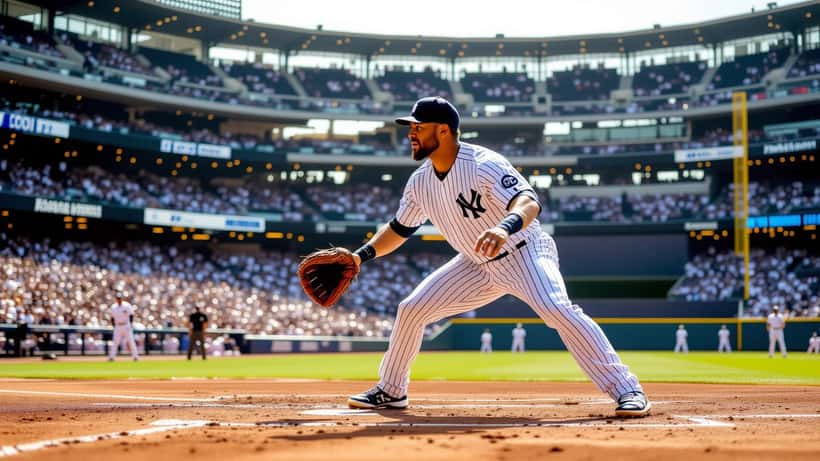
Ben Rice entered May 2026 leading Major League Baseball with a .330 batting average, slugging 10 home runs, and posting an OPS of 1.211 that ranks among the elite in all of baseball. The 26-year-old Yankees first baseman is on pace for one of the best offensive seasons in franchise history. What most fans watching him hit don't realize: his extraordinary performance has set a quiet legal clock ticking — one that could affect his career for the next decade.
That clock measures MLB service time. And for players like Rice, understanding how it works is as important as what they produce on the field.
What Is MLB Service Time and Why Does It Matter
Service time in Major League Baseball is the measure by which a player's path to financial freedom — free agency — is determined. Every day a player is on a team's active roster or disabled list counts toward their service clock. Players need approximately 172 days of service (one full MLB season) to earn one year of credit. It takes six accumulated years to reach free agency.
This creates enormous financial stakes. The difference between six and seven years of team control is the difference between a player choosing their next employer and being obligated to return to their current team. For a hitter on pace for 57 home runs, that difference could be worth $100 million or more in future contract value.
Rice made his MLB debut with the Yankees in 2024 and spent portions of that season in the big leagues before establishing himself as the clear starter at first base in 2025. The exact number of service days he accumulated in those seasons determines when he can first file for salary arbitration — and ultimately, when he becomes a free agent.
The Three Milestones That Define an MLB Player's Contract Career
Pre-Arbitration (Years 0-2): For the first roughly two to three years of a player's MLB career, he is paid at or near the league minimum ($740,000 in 2026). The team controls his salary completely. For a player performing like Rice, this creates a stark imbalance: elite production at minimum pay.
Super Two Status: Players who rank in the top 22% of service time among those who have between two and three years of accumulated service become eligible for arbitration a year earlier than their peers — after their second full season rather than their third. This "Super Two" designation adds an additional year of salary arbitration eligibility and can mean millions of dollars more for the player over the course of his early career. Whether Rice qualifies for Super Two status depends on how his 2024 service time stacks up against peers in his cohort.
Salary Arbitration (Years 3-6): A player eligible for arbitration can have his salary set by a neutral arbitrator if he and his team cannot agree. The arbitration process compares the player's statistics and contributions to those of similarly positioned players at similar career points. For a first baseman batting over .320 with elite exit velocity and power, arbitration could produce substantially higher salaries than a minimum player would receive.
Free Agency (After Year 6): Only after six full years of service can a player sign with the team of his choosing. For Ben Rice, depending on his exact debut date and service accumulation, free agency eligibility could arrive as early as after the 2029 season — or be pushed back a year.
The Practice of Service Time Manipulation
One of the most controversial aspects of MLB's collective bargaining framework is the practice of service time manipulation — when teams intentionally keep prospects in the minor leagues at the start of a season to delay their service clock by a few days.
By keeping a player in the minors for even 13 days at the start of a season, a team can prevent him from crossing a threshold that would give him an extra year of service credit. This was the subject of the landmark grievance filed on behalf of Kris Bryant in 2015 and later became a central issue in the 2022 Collective Bargaining Agreement negotiations between MLB and the MLB Players Association (MLBPA).
The 2022 CBA includes a provision that awards compensation draft picks to teams that promote top prospects by Opening Day of their first full season in the majors — creating an incentive to bring up talent early rather than manipulate the service clock. But the system still allows teams significant control over the early years of a player's career.
For the Yankees and Rice specifically: any perceived delay in his full-time opportunity in prior seasons could be a point of discussion between his representation and the organization as his arbitration years approach.
What Players in Rice's Position Should Consider
When a player's performance suddenly surpasses expectations at this level, the financial and legal calculus shifts significantly. Players in Rice's position — having recently transitioned to a full-time role with elite production — benefit from working with advisors who understand both the legal framework of the CBA and the financial planning implications of the coming arbitration years.
Key considerations include:
- Exact service time calculations: A few days can change Super Two eligibility. Players and their agents should independently verify their service accumulation records.
- Comparables for arbitration: The arbitration process rewards recent statistical performance but also compares to historical precedents. For a first baseman with Rice's exit velocity metrics, building the right comparables file matters.
- Long-term contract extension timing: Some players elect to sign team-friendly long-term extensions before reaching free agency in exchange for guaranteed security. The decision depends on individual risk tolerance and financial guidance.
- State tax implications of arbitration awards: Players earning higher salaries across multiple states need clear financial advice on how state income taxes affect their net compensation.
The Department of Labor's Office of Labor-Management Standards, which oversees union reporting requirements applicable to players' associations, underscores that collective bargaining agreements carry enforceable legal weight for all covered workers — including professional athletes. Independent legal and financial counsel helps players navigate these provisions effectively.
Disclaimer: This article is for general informational purposes only and does not constitute legal or financial advice. Players and agents with specific service time or contract questions should consult a licensed sports attorney and certified financial planner familiar with MLB's CBA.
Ben Rice's bat is doing the talking in 2026. But the service time clock, the arbitration system, and the CBA provisions that govern every MLB player's early career will quietly determine how much financial reward that performance ultimately produces. For Rice and every young player watching his breakout season, understanding those rules is the first step toward getting fairly compensated for extraordinary work.
Need guidance on MLB contract law, sports arbitration rights, or athlete financial planning? ExpertZoom connects you with licensed legal and financial professionals who specialize in sports contracts.
