 Elizabeth Chen
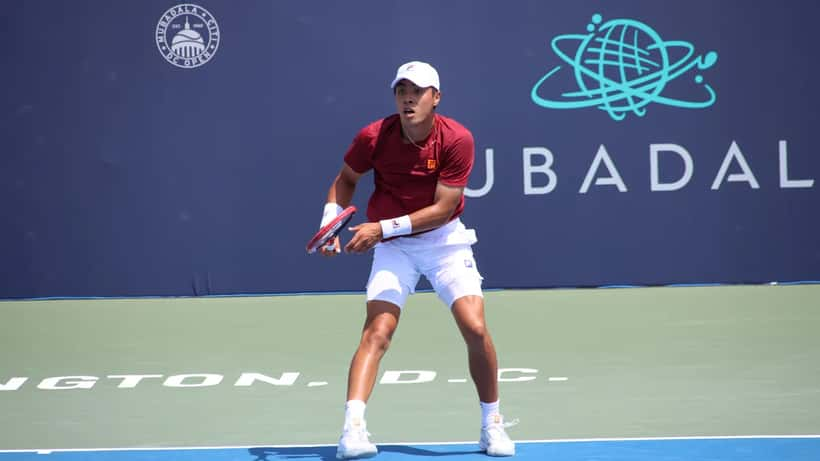
Brandon Nakashima is 24 years old and posting the best results of his career — ranked inside the top 20 and competing at the Japan Open in early October 2026 after a dominant North American hard-court summer. But behind his breakout numbers is a medical story that most recreational tennis players recognize from their own lives: years of accumulated joint stress, a serious injury setback, and a structured comeback built around professional sports medicine support. Sports specialists say Nakashima's trajectory holds a direct lesson for the millions of amateur players who skip the consultation that could keep them on the court.
A Season Built on Recovering the Right Way
Nakashima's 2026 campaign came after a turbulent 2024 in which he missed nearly two months with a left knee injury that threatened to derail his career just as he was entering his prime. He returned cautiously, rebuilt match fitness under ATP physiotherapy supervision, and by mid-2026 had posted career-best rankings and a deep run at the US Open.
According to research published in the British Journal of Sports Medicine, overuse injuries account for approximately 55% of all professional tennis injuries, with the knee, shoulder, and wrist as the three most common sites. For players competing 50–70 matches per year across hard, clay, and grass surfaces, the accumulation of subclinical micro-damage is constant. Hardcourt — Nakashima's strongest surface — transmits the highest ground reaction forces of any playing surface, placing particular stress on the knees and hips.
What allowed Nakashima to return and improve was not simply talent. It was access to consistent sports medicine oversight, load management protocols, and the discipline to follow them. The American College of Sports Medicine (ACSM) defines load management as the structured balance between training stress and recovery — and identifies violations of this principle as the primary driver of overuse injury in both professional and recreational athletes.
The ATP Calendar as a Risk Blueprint
The professional tennis calendar runs roughly 11 months per year, cycling through dramatically different surface demands. That constant surface variability — clay one week, hardcourt the next — means the body rarely fully adapts to any single loading pattern before it is exposed to a different one.
Nakashima's comeback from knee injury required rebuilding his match fitness from nearly zero while peers continued accumulating ranking points. The medical team managing his return used progressive load protocols: no more than a 10% weekly increase in playing volume, daily joint monitoring, and surface-specific conditioning drills. That approach is textbook sports medicine. It is also rarely applied by recreational players.
Sports physiotherapists who work with adult tennis players report that the overwhelming majority of overuse injuries they treat were preceded by a recognizable risk trigger: a sudden increase in playing frequency, a surface switch from indoor to outdoor, or the ramp-up to a club tournament. Each of these scenarios is addressable at the consultation stage — before the injury occurs.
Why Recreational Players Underestimate the Same Risks
Here is what Nakashima's career arc reveals about amateur tennis players: the mechanical forces that wear down professional players act on the same joints and tendons in recreational players, just at lower frequency. That lower frequency creates a false sense of safety.
Recreational players typically seek sports medicine care only after pain has limited function. By that point, what a three-week conservative management program would have resolved becomes a three-to-four-month rehabilitation episode. The injury mechanisms are identical to those in professionals. The difference is that professionals have sports medicine built into their support structure. Recreational players have to choose it proactively.
Internal link: For a parallel example at the elite junior level, see how young British player Arthur Fery managed his breakthrough season with professional health support.
A Scenario That Plays Out Weekly Across US Club Tennis
This is the kind of case a sports medicine specialist sees regularly:
Marcus is a 37-year-old software engineer in Austin, Texas, who plays USTA league tennis twice a week. In March 2026, he decides to increase to three sessions per week to prepare for a June club tournament — a 50% volume increase. By late April, he notices medial elbow pain after serves. He takes ibuprofen and keeps playing.
By the first week of June, the pain has escalated from post-session soreness to sharp discomfort during serves and groundstrokes. An orthopedic evaluation confirms early medial epicondyle tendinopathy — the kind of overuse injury that begins as a whisper and turns into a halt.
Without intervention in April: the full timeline is 4–6 months of conservative management, two months of restricted play, and $600–$1,400 in physical therapy costs, plus the missed tournament.
With a sports medicine consultation in April: the recommendation would have been straightforward. Reduce to two sessions per week. Add targeted forearm strengthening three times per week using resistance bands (approximately $20 in equipment). Monitor for four weeks. Adjust before the tournament ramp-up begins.
Cost of the April consultation: $150–$300. Cost of skipping it: $800–$1,700 and a summer largely off the court.
The 50% volume increase Marcus made in March crossed a recognized injury-risk threshold — from two to three sessions per week in a single week. A sports medicine physician identifies that threshold at a consultation. Most recreational players cross it without ever knowing it has a name.
What Sports Medicine Experts Recommend for Tennis Players at Every Level
Sports medicine physicians and physiotherapists who work with tennis athletes at both the professional and recreational level consistently emphasize the same core principles.
The 10% rule for volume progression. No more than a 10% weekly increase in total playing time. Nakashima's 2024 comeback protocol followed this guideline precisely. Recreational players who accelerate toward a tournament date routinely violate it.
Surface transition monitoring. Moving from winter indoor hardcourt or clay to outdoor hardcourt in spring increases impact loading by a measurable degree. A biomechanical screen at the start of the outdoor season takes one session and costs less than a single physical therapy appointment.
Pain location as a diagnostic signal. Lateral elbow pain (outer side) is classic tennis elbow — lateral epicondylitis. Medial elbow pain (inner side) is golfer's elbow — medial epicondylitis. Both respond well to early conservative intervention. Both worsen substantially with continued unmodified play.
Age-adjusted recovery windows. A 24-year-old like Nakashima recovers from a competitive three-set match in 18–24 hours. A recreational player over 40 requires a minimum of 36–48 hours between high-intensity sessions. Ignoring this biological difference — training at the frequency appropriate for a 25-year-old on a 45-year-old musculoskeletal system — is the single most common cause of overuse injury in adult recreational sports.
The ACSM's guidelines for recreational athletes in racket sports specifically recommend consultation with a sports medicine specialist at the start of any significant training increase, following any acute injury regardless of apparent severity, and annually after age 40 as a preventive baseline.
When to Book a Consultation
A sports medicine consultation is indicated when any of the following applies:
- Pain that persists more than 48 hours after a session
- Discomfort that begins during play rather than only afterward
- A planned increase in playing frequency or intensity exceeding 10% per week
- A transition from one playing surface to another (especially to outdoor hardcourt)
- Age over 40 with no recent musculoskeletal baseline assessment
The initial consultation does not require a specialist referral. A sports physiotherapist or primary care sports medicine physician can provide the assessment, identify the specific risk factors, and determine whether imaging or specialist involvement is warranted. That first conversation — the one most recreational players skip — is where most overuse injuries are preventable.
Disclaimer: This article discusses general sports medicine principles and does not constitute individual medical advice. Consult a qualified healthcare professional for any specific injury or training concern.
The Lesson in Nakashima's Numbers
Brandon Nakashima's 2026 season is, among other things, a study in what structured medical support looks like at the professional level. His comeback from a significant knee injury followed protocols that sports medicine specialists apply precisely because they work — not just for ATP Tour professionals, but for anyone whose joints are exposed to the repetitive mechanical demands of tennis.
Recreational players deserve the same quality of guidance, calibrated to their context. The injury mechanisms are identical. The costs of untreated overuse injuries — financial and in terms of quality of life — are real and well-documented. And the barrier to accessing a sports medicine professional is lower than most players assume.
Whether Nakashima is competing in Tokyo or a USTA club player is warming up for a Sunday-morning match in Austin, the body's response to load follows the same biomechanical rules. The question is whether there is someone in your corner who knows them.
