 Bernard Stone
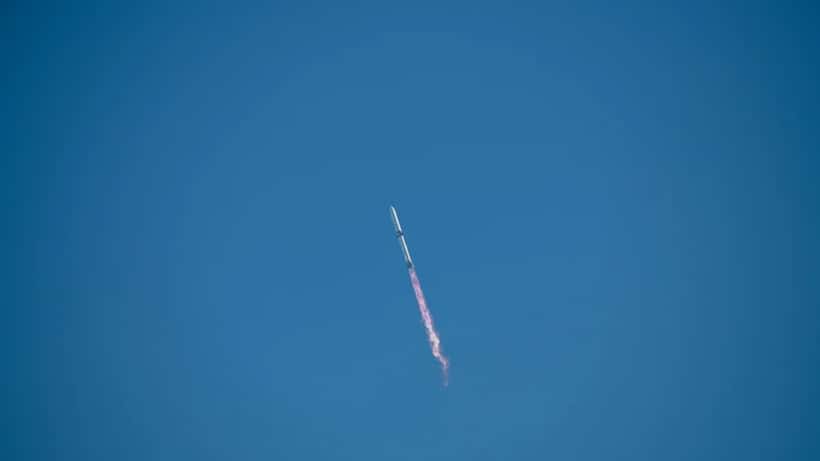
Blue Origin's New Glenn rocket is scheduled to lift off for the third time on April 19, 2026, from Cape Canaveral Space Force Station — and for the first time, the company is reusing a previously flown booster. The mission carries AST SpaceMobile's BlueBird 7 satellite, designed to deliver 4G and 5G broadband directly to unmodified smartphones anywhere on Earth.
This launch milestone is more than a technical achievement. It is a signal that the commercial space economy is entering a new phase — one with serious implications for investors who have not yet thought seriously about where their money sits.
Why the New Glenn NG-3 Mission Matters to Investors
The NG-3 launch window opens at 6:45 a.m. EDT on April 19, 2026. The booster being reflown — named "Never Tell Me the Odds" — was last used in November 2025 and successfully landed on Blue Origin's ocean-going platform, "Jacklyn." According to Blue Origin's official mission announcement, engineers replaced all seven engines and added new thermal protection upgrades before the reflight.
Booster reuse is the key economic lever in modern commercial spaceflight. When SpaceX proved it viable with Falcon 9, launch costs dropped from roughly $60,000 per kilogram to orbit to under $3,000. Blue Origin is now pursuing the same curve. If New Glenn achieves reliable reusability, the addressable market for satellite deployment, space tourism, and orbital logistics expands dramatically.
The payload itself tells part of the story. AST SpaceMobile's BlueBird constellation is designed to end mobile dead zones globally — a service with an estimated addressable market of 3 billion people without reliable cellular access, according to the company's investor filings.
The Space Economy: Bigger Than Most Portfolios Reflect
Morgan Stanley estimated in 2024 that the global space economy would reach $1 trillion by 2040. That forecast is being revised upward by analysts as launch costs continue to fall and satellite constellations like Starlink and now BlueBird demonstrate commercial viability.
Yet most retail investors have minimal or zero direct exposure to this sector. Traditional index funds hold aerospace giants like Lockheed Martin and Boeing, but these companies derive most of their revenue from defense contracts and legacy aviation — not the commercial space economy growing around them.
The companies at the center of the new space economy — Blue Origin (private, owned by Jeff Bezos), SpaceX (private, owned by Elon Musk), and AST SpaceMobile (NASDAQ: ASTS) — are difficult to access for ordinary investors. Of the three major launch providers, only AST SpaceMobile trades publicly. The others remain private, meaning exposure requires either direct venture investment or access to pre-IPO funds.
What a Wealth Manager Can Actually Do For Space Exposure
This is the practical question: how does an investor who wants meaningful exposure to the space economy build it without speculative risk that overwhelms the rest of their portfolio?
A qualified wealth manager can help with four specific tasks:
1. Audit your existing exposure. Before adding anything, understand what you already hold. Many growth ETFs and technology funds hold satellite communications companies, aerospace suppliers, and adjacent infrastructure plays. You may already have more space exposure than you realize — or far less.
2. Identify the access points. Publicly traded space-economy equities include AST SpaceMobile (ASTS), Rocket Lab (RKLB), Planet Labs (PL), and several satellite communications operators. Each carries distinct risk profiles. A wealth manager with sector knowledge can distinguish which are speculative bets and which represent genuine business models with revenue.
3. Size the position correctly. Emerging-sector allocations typically represent 3-8% of a growth-oriented portfolio. Going beyond that creates concentration risk that can damage long-term performance. Blue Origin's streak of successful launches does not eliminate the risk of a catastrophic failure that would send sector stocks down 30% in a week.
4. Watch the regulatory calendar. The FCC, FAA, and international spectrum bodies make decisions that can make or break satellite constellations overnight. A professional advisor monitoring these regulatory developments can help you act before news reaches the general market.
This article is for educational purposes only and does not constitute investment advice. Consult a qualified financial advisor before making investment decisions.
The Bigger Picture: What This Launch Signals
Beyond the specific NG-3 mission, the April 2026 Blue Origin launch reflects a structural shift in who controls access to space. Five years ago, two players dominated commercial launch. Today there are six credible providers, with more emerging from China, India, and Europe.
More competition means lower prices. Lower prices mean more satellites. More satellites mean faster deployment of services — broadband, Earth observation, precision agriculture, climate monitoring — that create investable business models downstream.
The investors who positioned early in cloud computing in 2010, in electric vehicles in 2018, and in AI infrastructure in 2022 did so while the underlying technology still felt speculative. The space economy in 2026 is at a similar inflection point.
Talking to a wealth management expert now — before the next wave of space IPOs generates mainstream attention — gives you the analysis you need to decide whether and how much to participate.
Disclaimer: This article is for general informational purposes only and does not constitute financial or investment advice. Please consult a licensed wealth management professional before making any investment decisions.
