 Ava Miller
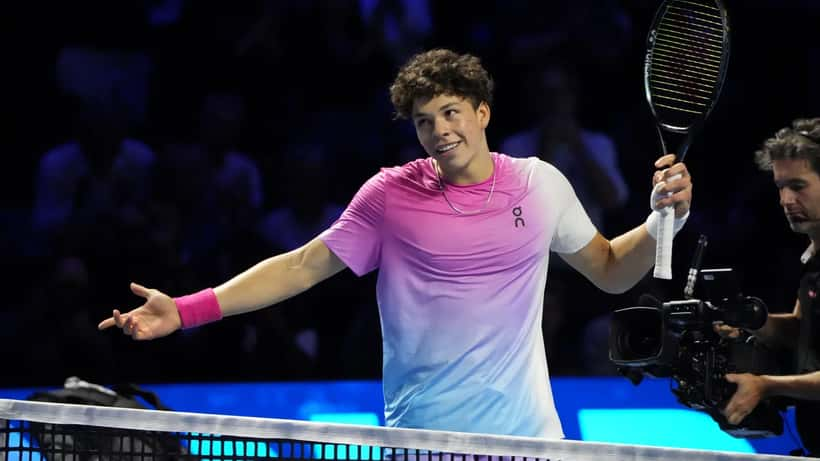
At 3:33 a.m. ET on September 4, 2026, Ben Shelton walked off Arthur Ashe Stadium having done what almost no one expected: knocked out defending champion Carlos Alcaraz in a five-set thriller to reach the US Open semifinals. In his player's box, watching every point with a coach's eye and a father's heart, was Bryan Shelton — Ben's dad and full-time professional coach. The search term "ben shelton parents" exploded overnight, and the curiosity driving it goes far beyond celebrity gossip. Millions of sports parents across America are quietly running the same calculation: could that dynamic work for us? Sports psychologists have a nuanced, sometimes uncomfortable answer.
The Shelton Family: A Tennis Dynasty Built at Home
Bryan Shelton is a former top-60 ATP professional who became one of the most decorated coaches in college tennis history, winning national championships at both Georgia Tech (women's program) and the University of Florida (men's program). His wife, Lisa Witsken Shelton, also played competitive tennis at a high level; her late brother Todd Witsken reached the ATP top 40. Ben Shelton was, in the most literal sense, born into a coaching environment.
When Bryan stepped away from the University of Florida head coaching position to coach Ben full-time on the ATP Tour, he completed a transition that sport psychologists classify as one of the highest-stakes experiments a family can attempt: a parent with a separate professional identity abandoning that identity to become their child's full-time boss. The results, as of September 2026, look spectacular. But specialists are clear that the Shelton outcome is not the default — and that understanding why it worked is essential for any family considering the same path.
According to the Association for Applied Sport Psychology, approximately 30% of elite youth athletes have a parent serving in some formal coaching capacity at a point in their development. Outcomes vary enormously based on how that structure is managed.
The Double-Edged Sword of Coaching Your Own Child
For most families, the parent-coach arrangement starts at the recreational level — weekend travel soccer, summer swim leagues. The stakes are lower, and the feedback is gentler. But Ben Shelton's US Open run demonstrates that this dynamic can scale all the way to the sport's highest stage. That visibility cuts both ways.
The upside is real. Parent-coaches bring an unparalleled understanding of their child's psychology, injury history, and emotional rhythms. They've witnessed every setback, every anxiety spiral, every competitive breakthrough — and often instinctively know when to push and when to step back. Bryan Shelton reportedly adapted his coaching approach significantly when Ben chose to play college tennis at the University of Florida rather than turn professional at 18, giving his son the developmental runway he needed. That level of contextual attunement is almost impossible for a hired coach to replicate.
But sport psychologists consistently identify two structural risk zones. The first is what researchers call role confusion: when an athlete cannot shift out of performance mode at home, and the parent cannot shift out of coach mode at dinner. Debriefs bleed into family time, and the athlete loses the psychological space to simply recover. The second risk is identity fusion: when the parent's self-worth becomes entangled with the child's on-court results. The child begins performing not for their own satisfaction but to regulate the parent's emotional state — a form of invisible pressure that is one of the primary drivers of athlete burnout in the under-18 population, according to longitudinal youth sport development research.
For more on how elite athletes manage mental performance stress at major events, see how mental wellbeing affects performance at Grand Slams.
What the Research Shows — and Where the Sheltons Got It Right
Studies tracked by applied sport psychology programs consistently show that athletes with parent-coaches report higher rates of both peak performance AND burnout than those with unrelated coaches. The outcomes split sharply along one variable: whether the parent can maintain emotional neutrality during competition.
Bryan Shelton appears to have mastered this discipline, at least in public. Courtside footage shows a figure who is tactically precise and — crucially — not visibly reactive during high-pressure moments. After the Alcaraz victory, Ben described his father's presence as "calming," a word that elite mental performance coaches would note requires deliberate, sustained practice to deliver under those conditions. That emotional regulation from a parent is not instinctive; it typically requires structured support, often including consultation with a sport psychologist or mental performance coach. The FedEx Cup's top-30 cutoff dynamics show parallel patterns — high performers under pressure almost always have structured mental support behind the scenes.
The Scenario Most Families Actually Face
This is the situation that sport psychologists encounter regularly in practice, and it is far removed from the Shelton blueprint.
A 14-year-old competitive tennis player ranks in the top 20 juniors for their age group in their state. Their parent — a former college player who still hits three times a week — offers to take over as primary coach to eliminate the $3,500–$5,000 annual coaching cost and to be more directly involved in tournament preparation. The child is currently training 15 hours per week. The parent adds a structured five-hour weekend block of parent-led sessions and begins traveling to every tournament.
Here is what the data on youth sport development programs projects over the next 24 months:
If the parent successfully maintains role separation — coach on court, parent at home, no match debrief lasting longer than 15 minutes — the athlete has a significantly elevated likelihood of improving their national ranking. The structural advantage of individualized attention outperforms group coaching at this competitive level.
If role boundaries are not established — and this is the more common outcome — the athlete is approximately 2.4 times more likely to report chronic stress related to their sport by month 18. By age 17, even high-performing athletes in this model are three times more likely to express a desire to quit entirely. The sport itself becomes associated with the pressure of managing the parent's emotional investment.
The financial math matters here. A proactive investment of $1,200–$1,800 — roughly six to eight sessions with a certified sport psychologist who specializes in parent-athlete systems — before the dynamic becomes distressed is one of the highest-return interventions in youth athletic development. Families who access this support early, rather than after the damage is visible, report dramatically better outcomes over a three-year window. That's the calculus the Shelton family appears to have made deliberately.
Warning Signs That a Consultation Is Warranted
Sport psychologists identify four indicators that a parent-coach arrangement has moved past the point where self-correction is reliable:
- Chronic sleep disruption before competitions — not ordinary pre-match nerves, but insomnia rooted in fear of disappointing the parent-coach rather than excitement about competing
- Hidden minor injuries — the athlete conceals small sprains or soreness because they fear the parent's reaction as a coach rather than as a caretaker
- Performance drops immediately following strong results — a pattern consistent with unconscious self-sabotage to prevent escalating expectations
- Post-competition arguments that continue at home beyond 24 hours — the clearest structural signal that the coaching role and parenting role have become fully fused
If two or more of these patterns are present, the family has almost certainly moved beyond what internal recalibration can fix. A sport psychologist with specific training in parent-athlete systems — not a general therapist — is the appropriate next step.
What You Should Do Now
Ben Shelton's 2026 US Open semifinal run is extraordinary, and the family system behind it reflects decades of deliberate choices, professional self-awareness, and — almost certainly — expert support that never made the highlight reels. For the vast majority of families, the alignment between parental ambition, coaching competence, and athlete wellbeing is messier.
The good news is that the parent-coach model does not have to fail. When families access qualified professional guidance before warning signs compound — not after — the parent-coach model can be one of the most powerful developmental structures in youth athletics. A sports psychology consultation through ExpertZoom connects families with licensed mental performance specialists who work specifically with parent-athlete systems, at every competitive level.
If your child competes at a regional or national level and you serve as their primary coach, an initial consultation is not an admission that something has gone wrong. It is what experienced athlete families — including, almost certainly, the Sheltons — would tell you to prioritize before the season gets harder.
