 Cora Nelson
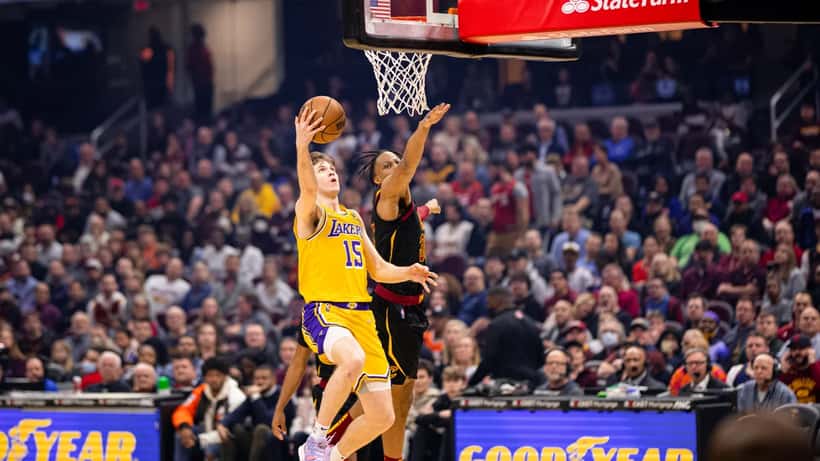
Austin Reaves just had the best regular season of his career, averaging 23.3 points, 5.5 assists, and 4.7 rebounds per game for the Los Angeles Lakers in 2025-26. Then, in the middle of his best run as a professional, he was sidelined for nine consecutive games with a strained oblique.
He returned in time for the playoffs. The Lakers are down 0-3 to the Oklahoma City Thunder, and Reaves — the team's second-best player behind Luka Doncic — is performing through what doctors describe as one of the more painful, slow-healing muscle injuries a basketball player can sustain.
The timing matters beyond basketball. This is Reaves's contract year. The Lakers are expected to offer him a five-year, $241 million maximum extension this offseason. The question every sports medicine doctor is being asked right now is the same one every athlete with a significant muscle injury faces: what does this injury actually mean for my future, and how do I make sure I fully recover?
What an Oblique Strain Is — and Why It Matters for Basketball Players
The oblique muscles are a group of muscles that run diagonally along the sides of the abdomen, connecting the lower ribs to the pelvis. They are responsible for trunk rotation, lateral bending, and core stability — all of which are essential to nearly every athletic movement in basketball, from shooting and ball-handling to defensive positioning and jumping.
An oblique strain occurs when these muscle fibers are overstretched or torn, typically during sudden rotation or forceful contraction. Strains are classified in three grades:
- Grade I: Minor tearing of muscle fibers; athlete typically returns in 1-3 weeks
- Grade II: Moderate tear; return to full activity may take 4-8 weeks with proper rehabilitation
- Grade III: Complete muscle rupture; rare in oblique injuries, but can require months of recovery and occasionally surgical repair
Reaves's nine-game absence suggests a Grade I or Grade II strain. Nine games in the regular season equates to roughly three to four weeks — consistent with a moderate Grade I injury with precautionary management given the stakes of a contract year.
According to MedlinePlus, the National Library of Medicine's patient resource on muscle strains, most muscle strains heal fully with appropriate rest, ice, compression, and progressive rehabilitation — but returning to full sport too early significantly increases the risk of re-injury, sometimes more severe than the original.
The Return-to-Play Risk That Doctors Watch For
The most significant concern for an athlete returning from an oblique strain is not the initial injury itself — it is the scar tissue that forms during healing and the tendency for athletes (and teams under playoff pressure) to accelerate the return-to-play timeline before full tissue maturation is complete.
Scar tissue from a muscle strain is less flexible and less resistant to sudden load than healthy muscle. This creates a specific vulnerability: an athlete who returns before the scar tissue has matured is at higher risk of a second strain, often in the same location, which typically heals more slowly and sometimes results in a permanent reduction in muscle elasticity.
Sports medicine physicians who treat professional basketball players note that oblique strains are particularly prone to this pattern because the muscle is constantly engaged during normal movement — unlike a hamstring, which an athlete can partially rest by limiting sprinting, an oblique is active throughout almost every basketball motion, including simple walking.
For athletes facing a major contract decision or high-stakes performance moment, the psychological pressure to return early is enormous. The financial and career stakes create a conflict that sports medicine physicians must actively manage in partnership with the athlete and team.
What a Return-to-Play Protocol Actually Involves
For a Grade I-II oblique strain at the professional level, a proper return-to-play protocol typically includes:
- Rest and inflammation management (Days 1-5): Anti-inflammatory medication, ice, and complete rest from rotational or load-bearing activity
- Range of motion restoration (Days 5-14): Gentle stretching and movement to prevent stiffness while avoiding re-aggravation
- Progressive strengthening (Weeks 2-4): Core stability exercises that load the oblique gradually, beginning with static holds and progressing to dynamic movements
- Sport-specific rehabilitation (Weeks 3-5): Basketball movements — passing, light shooting, defensive slides — under medical supervision
- Full clearance and monitoring: The athlete is cleared only when pain-free through a full range of sport-specific motion, not merely when resting pain resolves
The timeline can be compressed at the professional level with access to elite physical therapists, Class IV laser therapy, and daily monitoring — but it cannot be shortened indefinitely without risk.
What Reaves's Recovery Means for Recreational and Amateur Athletes
For everyday athletes — weekend basketball players, gym-goers, and recreational sports participants — an oblique strain is one of the most underdiagnosed injuries. Because the pain is located in the side or lower ribs, it is frequently confused with a side stitch, a rib bruise, or even a pulled intercostal muscle.
Left undiagnosed and unmanaged, oblique strains can become chronic, limiting core function for months or years. Medical professionals consistently advise imaging (ultrasound or MRI) if side pain during athletic activity lasts more than 72 hours after the triggering event, particularly if accompanied by sharp pain during twisting or rotational movements.
If you are an athlete experiencing persistent side pain after a game, practice, or workout, a consultation with a sports medicine physician or orthopedic specialist can confirm the diagnosis, grade the injury, and set an evidence-based recovery plan — rather than the common approach of "playing through it" until re-injury forces a longer absence than the original injury would have required.
