 Laura Clark
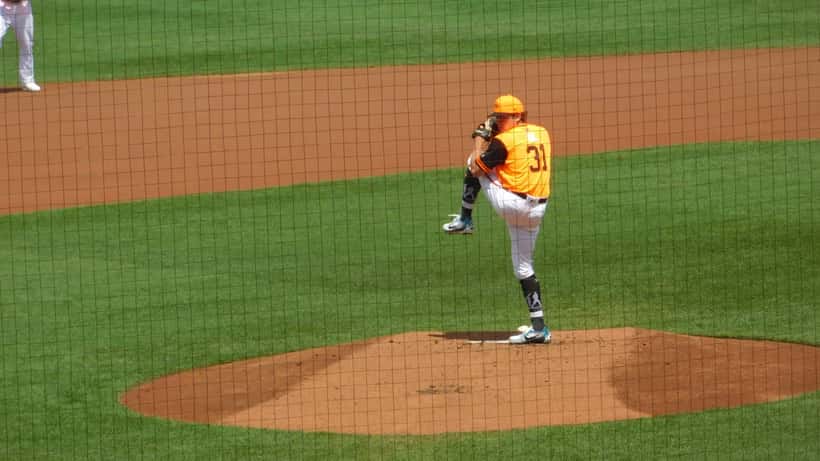
The Houston Astros open a three-game series at Yankee Stadium this week carrying a 65-66 record and fading playoff hopes. The Yankees arrive at 74-56, but their rotation is the story the medical community is watching: Ryan Weathers was placed on the 15-day injured list on Aug. 23 with a low-grade left forearm flexor strain, and Max Fried — nursing a left elbow bone bruise — is testing his limits in monitored bullpen sessions after throwing 26 pitches on Aug. 22 at Yankee Stadium. His playoff availability remains a live question for New York's front office.
These are not just roster transactions. They are clinical events that mirror what happens every Saturday and Sunday in recreational baseball leagues, tennis clubs, and CrossFit gyms across the United States — events that are routinely under-treated because the professional surveillance system that flagged Weathers' injury within hours simply does not exist for non-professional athletes.
What the MLB Arm Injury Data Actually Shows
Pitcher forearm injuries carry a statistical tail that the casual sports fan rarely sees behind the injury report abbreviation. Research published in the American Journal of Sports Medicine found that 20% of MLB pitchers who sustained a forearm flexor muscle strain required Tommy John surgery within one year of that initial injury. The average time on the injured list for a forearm strain across all MLB players: 117 days — nearly four months, even when the initial classification is "low-grade."
The anatomical reason is straightforward. The flexor-pronator muscle mass on the inner forearm shares its origin point near the ulnar collateral ligament (UCL), the tissue that Tommy John surgery reconstructs. When the muscle strains, the body compensates by increasing load on the UCL. If that compensatory demand accumulates before healing is complete, partial UCL tearing can follow — sometimes silently.
The 2026 season has already produced a textbook example. Twins ace Pablo López sustained a forearm strain in September 2025. When an MRI was taken in February 2026, it revealed significant tearing in his UCL, according to MLB.com. His team confirmed the forearm strain itself had healed. The UCL had not. Weathers' "low-grade" designation is genuinely encouraging — but it occupies the same diagnostic category that precedes outcomes ranging from a two-week rest to reconstructive surgery.
Why This Injury Pattern Belongs in Your Doctor's Office
The flexor-pronator muscle group decelerates the forearm during any throwing, gripping, or twisting motion — not exclusively a 95 mph fastball. Tennis players, recreational softball participants, warehouse workers who use repetitive grip tools, and yoga practitioners who load the wrist in extension all stress the same muscle chain that Weathers injured.
For non-professionals, two structural problems compound the risk. First, the pain presentation of a forearm flexor strain — a dull, inner elbow ache that rates 3 or 4 out of 10 — is "manageable" enough that patients typically continue light activity, delay consultation, and develop compensatory movement patterns that transfer additional load to the UCL over the following weeks.
Second, there is no clinical way to distinguish between a mid-belly muscle strain (3-4 weeks recovery, lower UCL risk) and a tendinous insertion strain near the medial epicondyle (6-10 weeks recovery, higher UCL proximity risk) without imaging or hands-on specialist evaluation. The pain location feels similar to the patient. The treatment protocol and prognosis are meaningfully different.
Max Fried's parallel situation — a bone bruise in the left elbow — illustrates another layer of complexity that recreational athletes encounter without recognition. Bone bruises are sub-chondral injuries invisible on standard X-ray but detectable on MRI. Fried's graduated 26-pitch bullpen session represented a medically supervised return-to-activity test, not a simple "how does it feel today?" check. His team used pitch count, velocity data, and mechanical video analysis to evaluate tissue response. This is precisely the kind of structured assessment that a sports medicine consultation at Expert Zoom can replicate for a recreational athlete — at a fraction of the cost of finding out the hard way.
The Scenario That Might Match Your Last Doubleheader
Consider a specific situation: you play in a recreational baseball or softball league and throw hard through a Saturday doubleheader. By Sunday morning, there is a dull ache running from the inner elbow toward the wrist on your throwing arm — a 3 out of 10. You take ibuprofen, ice it overnight, rest Monday, and throw lightly in your backyard on Wednesday. It feels "okay." You return to the league the following Saturday.
Here is what the clinical data says about that decision:
If your grip strength dropped measurably on Sunday — you struggled to open a jar or turn a doorknob without discomfort — there is likely tendinous rather than purely muscular involvement. At that insertion point near the medial epicondyle, returning to full throwing within seven days without specialist evaluation carries a re-injury rate exceeding 35% within 30 days, compared to an 8% re-injury rate for patients who followed a supervised three-phase return-to-throw protocol.
If you experienced any tingling or numbness in the ring or little finger alongside the forearm ache, the ulnar nerve may be involved — a separate structure that requires specific treatment (nerve gliding, positional modification) that rest and ibuprofen do not address. Untreated ulnar nerve irritation can progress to cubital tunnel syndrome, requiring its own course of intervention.
If you are 40 or older and the injury occurred at maximum effort — a hard throw to home plate, a full tennis serve — research indicates the probability of tendinous insertion involvement increases by approximately 60% compared to the same injury mechanism in athletes under 30. This shifts the cost-benefit analysis toward imaging significantly.
The numbers are not ambiguous: a sports medicine consultation with targeted diagnostic ultrasound typically costs $200 to $450 depending on location and insurance coverage. Ultrasound can confirm within 30 minutes whether the strain is muscular, tendinous, or approaching the UCL attachment. Tommy John surgery — the outcome you are trying to avoid — costs between $15,000 and $40,000 and requires 12 to 18 months of rehabilitation. For anyone active enough to injure their arm throwing, early evaluation is among the highest-value medical investments available.
Warning Signs That Require Evaluation, Not Rest
The American Orthopaedic Society for Sports Medicine identifies forearm and elbow injuries in throwing athletes as requiring specialist evaluation rather than primary-care or self-managed treatment, citing the UCL proximity risk and the inadequacy of imaging-free assessment.
Seek evaluation immediately if:
- You felt or heard a pop or sharp snap at the moment of injury, rather than gradual onset soreness
- Grip strength dropped sharply within the first 24 hours
- You have tingling or numbness in the ring or little finger — ulnar nerve involvement does not resolve with rest alone
Seek evaluation within 72 hours if:
- Resting pain persists beyond 48 hours after the original injury
- You can reproduce sharp pain by pressing firmly on the inner elbow, roughly one inch below the bony prominence of the medial epicondyle
- The ache runs along the inner forearm toward the wrist, matching the flexor-pronator distribution
The 72-hour window matters clinically. In the first three days, swelling management, initial imaging decisions, and activity modification set the recovery trajectory. Beyond that window, compensatory movement patterns become harder to unlearn and structural changes can silently progress.
The Stakes Behind This Weekend's Pitching Matchups
With Weathers on the IL, the Yankees turn to Will Warren, Gerrit Cole, and Cam Schlittler to navigate the Astros series — a rotation adjustment that will be studied and documented through every pitch. Weathers, meanwhile, has access to daily monitoring, ultrasound-guided therapy, and a return timeline based on tissue response rather than self-reported pain.
For the Tommy John surgery recovery data that Walker Buehler and others have made public, the consistent lesson is that the critical decision point is not surgery itself — it is what happened in the weeks between the first symptom and the first MRI. The athletes who caught UCL compromise early, when only partial fibers were involved, often avoided full reconstruction. Those who played through "minor" forearm strains did not.
The scoreboard at Yankee Stadium resets after the final out Tuesday night. Your forearm's healing capacity does not have a season reset. A sports medicine specialist — accessible through platforms like Expert Zoom without a months-long referral delay — can tell you which side of that 20% statistic you are actually on.
The information in this article is for educational purposes only and does not constitute medical advice. If you are experiencing arm or elbow pain, consult a qualified sports medicine specialist or licensed healthcare provider for evaluation and treatment.
