 Daniel Sterling
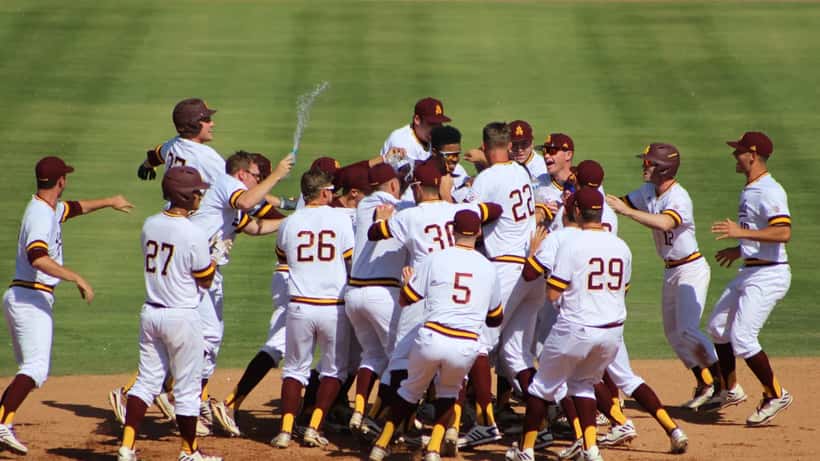
Arizona State's Sun Devils baseball team entered the 2026 Big 12 Tournament as the No. 3 seed, taking on Cincinnati in Surprise, Arizona on May 21 — the first time the conference tournament has been held at Surprise Stadium. With a 19-11 Big 12 record and a firm path toward the NCAA Tournament, the Sun Devils' postseason run arrives at a historic moment for college athletics: the first full season in which schools can legally pay athletes directly under the House v. NCAA settlement.
What the House Settlement Changes — and What It Doesn't
In June 2025, a federal district court gave final approval to the House v. NCAA settlement, a landmark $2.8 billion agreement that restructured the financial relationship between college athletes and their institutions. The settlement authorized schools to share athletic revenue directly with players — up to $20.5 million per school for the 2025-2026 academic year.
According to the Congressional Research Service, the settlement also created the College Sports Commission (CSC), a new enforcement body tasked with overseeing revenue distribution, NIL deal compliance, and roster management. The CSC replaced much of the NCAA's former enforcement authority over athlete compensation.
For Arizona State and other Power Five programs, this means head coaches and athletic directors are now distributing meaningful sums of money to athletes — something that was illegal under NCAA rules just three years ago.
Baseball Players Are Getting the Smallest Slice
Here's the reality that many college baseball players and their families are only beginning to understand: baseball is receiving a very small portion of this new revenue.
Data from Texas Tech University's athletic department — one of the first to publicly release its distribution plan — showed baseball athletes receiving approximately 1.9 percent of the total revenue pool. Football receives 74 percent. Men's basketball receives 17-18 percent. Most other Power Five schools are distributing roughly 90 percent of their revenue share to football and men's basketball combined.
For a Sun Devil baseball player at ASU, that 1.9 percent share translates to roughly $389,000 per year for the entire baseball roster. Split among 35 scholarship athletes, that's an average of about $11,000 per player annually — meaningful, but far from the figures football and basketball players are receiving.
This disparity has significant legal implications. College baseball players negotiating NIL deals, endorsement agreements, or revenue-share contracts are working from a much weaker financial position than their football counterparts — and they're just as likely to encounter complex legal documents they may not fully understand.
The Legal Complexity of NIL in a Post-House World
Before the House settlement, NIL (name, image, and likeness) deals operated under a patchwork of state laws and NCAA guidelines. Post-settlement, the landscape is more structured — but not simpler.
College baseball players at Arizona State and elsewhere can now receive both direct institutional revenue sharing and NIL payments. However, these two income streams are governed by different rules. NIL deals are private contracts subject to state contract law and NCAA NIL guidelines. Revenue-sharing payments fall under the House settlement framework. Both can be taxed as ordinary income.
A college athlete who signs an NIL deal without legal review may unknowingly violate the settlement's terms — for example, by accepting sponsorships from entities the school has existing exclusive contracts with, or by signing an exclusivity clause that conflicts with their school's revenue-sharing arrangement.
Additionally, the settlement includes roster limits for each sport, and baseball's limits are stricter than they were pre-settlement. Players who are cut due to roster reductions during the transition period may have claims worth pursuing — depending on the language in their scholarship agreements and the circumstances of the dismissal.
What Transfer Portal Rights Mean for Baseball Players
The transfer portal has become one of the most consequential legal gray areas in college baseball. Under current NCAA rules, players can enter the portal once per year with immediate eligibility — but the contractual language in scholarship agreements, team policies, and NIL contracts can complicate an otherwise clean transfer.
If a baseball player at ASU (or any Power Five school) transfers mid-NIL contract, they may face questions about whether their NIL obligations follow them to their new school. Some NIL deals are school-specific; others are brand deals that are transferable. The language in each contract determines the answer.
An entertainment and sports attorney can help a college baseball player review their scholarship agreement, NIL contracts, and revenue-sharing letters before signing — or before entering the transfer portal.
When Should a College Baseball Player Consult a Lawyer?
Many college baseball players — and their parents — assume they don't need legal representation because they're not being drafted into the major leagues. But the reality of the post-House environment is that legal guidance is valuable at several key moments:
- Before signing any NIL deal — even a small local sponsorship can create obligations
- Before entering the transfer portal — especially if an active NIL contract exists
- When receiving a revenue-sharing letter from the athletic department — these are binding agreements
- If a scholarship is reduced or not renewed — athletes have limited but real grounds for appeal
- After a significant injury — scholarship protection policies vary by school and may require advocacy
On ExpertZoom, families can connect with sports and entertainment lawyers who specialize in college athlete rights, NIL contract review, and NCAA compliance. As the legal framework around college athletics continues to evolve — and as programs like Arizona State's baseball team compete for postseason glory — knowing your rights before you sign anything has never been more important. You can read more about how NIL contract structuring works for top college recruits.
This article is for informational purposes only and does not constitute legal advice. College athletes and their families should consult a licensed attorney for guidance specific to their circumstances.
