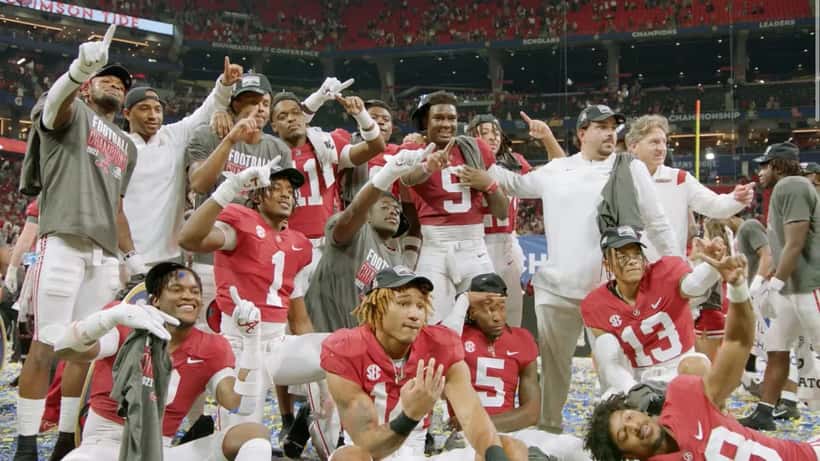
 Davis Caesar
Elijah Haven, the nation's No. 1 quarterback in the 2027 class, committed to Alabama on April 25, 2026, picking the Crimson Tide over Georgia and LSU after one of the most-watched recruiting battles of the spring. The Baton Rouge Dunham School star — 6 foot 5, 215 pounds, with 62 touchdown passes and a 72 percent completion rate as a junior, according to USA Today High School Sports — is now the headline name in a class where every blue-blood program is preparing seven-figure NIL packages. For his family, and for every household watching their teenager field similar offers, the contract terms surrounding that commitment matter as much as the school choice itself.
The numbers behind a top-tier NIL deal
Public reporting on top-recruit NIL packages in 2026 puts elite quarterback deals in the $2 million to $8 million range over a college career, depending on collective resources, roster value share rules and performance triggers. Haven himself has not disclosed financial terms, and Alabama has not commented on collective involvement in his recruitment. But CBS Sports and the WAFB report on his commitment both noted that NIL competition between Alabama, Georgia and LSU was a public fixture of the recruiting cycle that closed on April 25, 2026.
That backdrop matters. Since the NCAA's 2021 interim NIL policy and the broader 2024-2025 House v. NCAA settlement framework, top recruits sign two distinct categories of agreements: collective payments tied to roster spot and performance, and third-party endorsement deals with brands ranging from EA Sports to local dealerships. Each carries different legal risks.
What families typically negotiate
Specialist sports lawyers who advise top recruits and their parents focus on a small number of recurring contract clauses:
- Term and exit: How long the deal runs, what happens if the athlete transfers via the portal, and whether payments survive an injury that ends the season.
- Performance triggers: Whether bonuses depend on stats, snap counts or team outcomes — and how those triggers are measured if the athlete redshirts.
- Morality and image clauses: What conduct can void the agreement, and how broadly "image" is defined for social media use.
- Intellectual property: Who owns highlight clips, photographs and any AI-generated likeness derived from the athlete's name and image.
- Tax and entity structure: Whether income flows to a personal LLC, a family trust or directly, with consequences for state income tax and FAFSA reporting.
These are not theoretical. A meaningful share of NIL disputes that have reached state courts in 2025 and 2026 have turned on ambiguous transfer-portal clauses or on disputes over highlight footage ownership.
The disclosure trap most families miss
The Federal Trade Commission's endorsement guidelines apply to college athletes the same way they apply to any influencer. Sponsored social media posts must clearly disclose the commercial relationship, and "clearly" has a specific meaning that has tightened since 2023. Buried hashtags, off-screen captions or vague language do not qualify.
For a 17-year-old quarterback signing his first six-figure deal, the disclosure obligation typically lives in a single contract clause that the athlete is responsible for executing — and the FTC enforcement risk falls on the athlete, not just the brand. A specialist contract lawyer can rewrite that clause to require the brand to provide approved disclosure language for every post, shifting compliance work back to the party with the legal team.
Minor athlete contracts have their own rules
Haven turned 18 in 2026, but a meaningful portion of top recruits sign their first NIL deals while still minors. In Louisiana — and in most U.S. states — contracts with minors are voidable at the minor's option until they reach the age of majority and ratify the agreement. That makes the parent or legal guardian the actual contracting party, with fiduciary duties to the child for any income.
Several states, including California, now require NIL agreements with minor athletes to be reviewed by independent counsel before signature. Louisiana does not impose that requirement, but most experienced NIL attorneys recommend it anyway, because the cost of a contract review is a fraction of what one badly drafted exit clause can cost a year later.
What the Alabama choice signals about the market
Haven told reporters that the "longest relationship" with the Crimson Tide staff drove his decision, not money — a careful framing that has become standard in commitment announcements as the NCAA continues to police inducement rules. Whether or not finances were decisive, the fact that three flagship programs were openly competing for him for months illustrates how thoroughly NIL has reshaped recruiting since 2021.
For families further down the recruiting rankings, the lesson is that the same legal frameworks now apply to four-star and three-star athletes signing $25,000 to $100,000 deals. The contract clauses worth fighting over scale down with the dollar amount, but the legal risks — voided sponsorships, transfer-portal disputes, FTC disclosure failures — do not.
When to bring in a contract lawyer
Any recruit fielding offers from more than one collective should have a contract lawyer review every signed document before it is final. The same applies to families weighing brand endorsement offers stacked on top of collective payments — the two contract types frequently include conflicting exclusivity language that only a lawyer reading both will catch.
The full FTC endorsement compliance guide for athletes and influencers is available at the Federal Trade Commission's official endorsement page. Reading it before signing — not after a complaint — is the single cheapest legal step a recruiting family can take this spring.
