 Odette Caplan
Aaron Nola's $172M Slump: What MLB Contract Law Says When Your Ace Can't Deliver
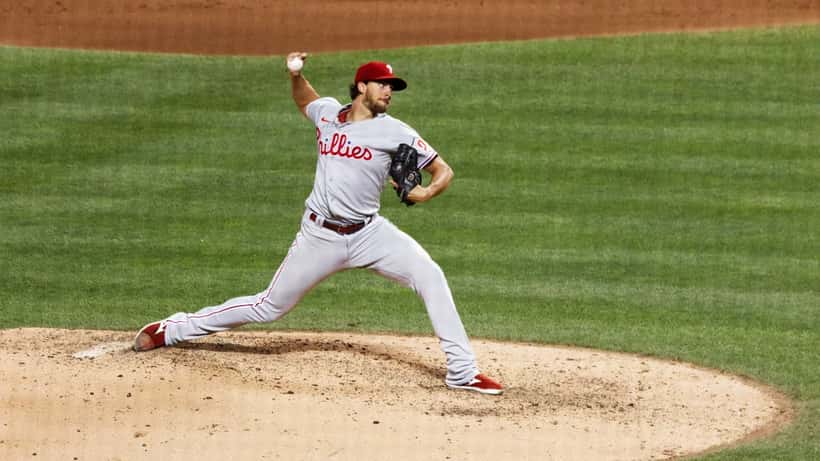
Aaron Nola is 5-10 with a 6.01 ERA through mid-May 2026. The Philadelphia Phillies owe him $172 million through the 2030 season. And according to analysts at FanSided, his contract is now effectively "untradeable." For fans watching from the bleachers, it feels like a simple question: how does this happen, and what can the team actually do? For athletes and agents negotiating their next deals, the Nola situation raises a different and more urgent question — what protections exist when performance declines?
How a $172M Contract Becomes "Untradeable"
Major League Baseball contracts are almost entirely guaranteed. Unlike the NFL — where most contract value can be cut with minimal financial penalty — an MLB player who signs a long-term deal is owed that money regardless of performance, injury, or trade status, with very limited exceptions.
Nola signed his 7-year, $172 million deal in 2023 after years of consistent Phillies service. At the time, he had career marks that justified the investment. Two seasons later, ankle and rib injuries cost him nearly three months of 2025. His ERA and WHIP hit career-worst marks. Now, through May 2026, the decline has continued with a 5-10 record and 6.01 ERA across his starts.
In most professions, chronic underperformance creates legal mechanisms for separation — performance-improvement plans, termination clauses, or buyouts. In MLB, the Collective Bargaining Agreement (CBA) makes these paths narrow and expensive for teams.
What the MLB Collective Bargaining Agreement Actually Allows
The MLB CBA, negotiated between the league and the MLB Players Association (MLBPA), is one of the most protective labor agreements in professional sports. It governs nearly every aspect of player contracts, including what teams can and cannot do when a player struggles.
Under the CBA, teams have three main options when a player on a long-term guaranteed deal underperforms:
Option 1: Continue starting the player. This is what the Phillies have done with Nola. Unless a player is injured or placed on the injured list (IL), teams are generally required to maintain their roster commitments. Sitting a healthy player without IL designation while still paying full contract value is an option — but an expensive one.
Option 2: Trade the player. Trades involving high-salary players require the receiving team to agree to take on contract obligations. When performance metrics are poor and salary is high, finding a trading partner becomes nearly impossible — hence "untradeable." The National Labor Relations Board oversees collective bargaining rights in professional sports, and any contract modification or trade requires agreement from all parties.
Option 3: Release the player. A team can release a player even under a guaranteed contract — but they still owe the full remaining salary. A released player can then sign with any other team, potentially collecting two salaries simultaneously (the buyout from the original team and a new contract elsewhere). This is sometimes called "eating a contract," and for a deal of Nola's size, the financial hit would be enormous.
What Courts Say About Performance Decline in Sports Contracts
Courts have rarely needed to intervene in MLB contract disputes because the CBA provides its own binding arbitration system. All player-team disputes go through the MLBPA grievance and arbitration process, not civil courts — unless the dispute involves conduct outside the CBA's scope (such as criminal activity or intentional misrepresentation during contract negotiations).
This matters because it means teams cannot simply sue a player for damages when performance declines due to injury or age-related wear. Performance decline, even dramatic decline, is not breach of contract under MLB's labor framework. A pitcher who throws 35 starts a season while pitching poorly has, by definition, fulfilled his contractual obligation to play.
The only exception is the rarely invoked "just cause" termination clause, which applies to severe misconduct — not poor ERA numbers.
What Athletes Should Know Before Signing Long-Term Deals
The Nola situation illustrates the mirror image of contract risk: what protects a player also constrains a team. For athletes at any level negotiating long-term employment agreements, several legal principles apply beyond professional sports:
Guaranteed vs. non-guaranteed pay: Unlike MLB, most employment contracts in other fields are at-will and non-guaranteed. Understanding what "guaranteed" actually means in your specific contract requires careful legal review, not assumptions based on industry norms.
Performance-improvement clauses: In standard employment contracts — not sports, but corporate and executive roles — employers routinely insert performance triggers that allow renegotiation or termination if metrics fall below defined thresholds. If you're negotiating any multi-year deal, know whether these clauses exist and what they cover.
Injury and disability provisions: Nola's struggles in 2025 were partly injury-driven. In sports, disability protections are built into the CBA. In most professional employment contracts, they are not automatically present. An attorney can help you understand what injury-related protections your agreement includes.
No-trade clauses: Nola reportedly has a no-trade clause in his deal, which means even if the Phillies found a willing trading partner, he would have to consent to the move. This level of protection is available in some executive and specialized employment contracts outside sports — but only if you negotiate for it explicitly.
When to Consult a Sports or Employment Lawyer
Whether you're a professional athlete, a coach, a team front-office executive, or an entertainment professional negotiating a multi-year service agreement, the time to understand your contract rights is before you sign — not after performance problems surface.
A lawyer who specializes in sports law or employment contracts can help you:
- Review guaranteed payment structures and what triggers might void those guarantees
- Understand arbitration clauses and what disputes remain outside the arbitration process
- Negotiate no-trade, no-cut, or no-demotion protections
- Assess whether a restructuring proposal from an employer is in your legal interest
Aaron Nola's situation is a real-world case study in how long-term guaranteed contracts work — and how they constrain both sides. On Expert Zoom, you can connect with lawyers who focus on employment and contract law to understand your rights before your next major agreement.
This article provides general legal information only and does not constitute legal advice. Consult a licensed attorney for guidance specific to your situation.
