 Daniel Sterling
Contrary to what most West Virginia employees assume, state law does not require your employer to give you a lunch break. There is no West Virginia statute mandating meal or rest periods for adult private-sector employees. Understanding exactly what the law does — and does not — require is the first step to knowing your actual rights at work in 2026.
These are the 7 essential facts about West Virginia meal and rest break law that every worker and HR professional needs to know.
1. West Virginia Has No State Meal Break Law for Adult Employees
West Virginia Code Chapter 21 — which governs wage payment, child labor, and workplace standards — contains no provision requiring private employers to give adult employees meal breaks or rest periods. This is not a drafting gap; it reflects a deliberate legislative choice to leave break scheduling to employer discretion.
This places West Virginia in the same category as Ohio, Pennsylvania, and most other Southeastern states that also lack mandated adult break laws. By contrast, states like New Jersey require a 30-minute meal break for employees who work more than 6 consecutive hours, making NJ significantly more protective on this issue.
Practical impact: A West Virginia employer may legally schedule an 8-hour shift with no meal break, no rest break, and no mandated pause — and this is fully legal under state law. Whether a break is provided depends entirely on the employer's policy or employment contract.
2. Federal Rules Govern How Breaks Must Be Paid When Provided
Although West Virginia does not require breaks, the federal Fair Labor Standards Act (FLSA) creates payment rules that apply whenever an employer chooses to offer them. These rules are mandatory:
- Short rest breaks (20 minutes or less): Must be counted as hours worked and paid at the employee's regular rate. An employer cannot require a 15-minute break and then refuse to count those 15 minutes as work time.
- Meal periods (30 minutes or more, completely relieved of duties): Need not be paid, provided the employee is truly free to use the time as they wish. If the employer requires the employee to monitor the phone, stay on premises, or remain available during the meal period, it becomes compensable time.
À retenir: If your employer docks 30 minutes from your pay for a meal period but routinely interrupts that period with work demands, the deduction may constitute an FLSA violation — even though the break itself was never required by WV law.
3. Minors Under 16 Have Specific Break Protections Under West Virginia Law
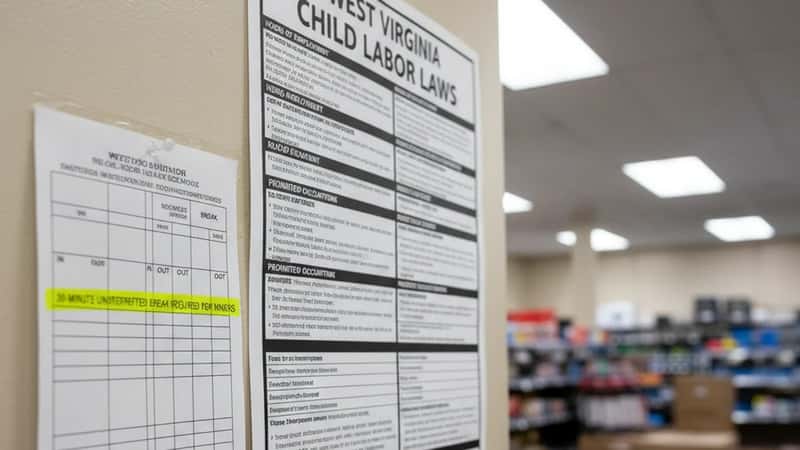
The one West Virginia statute that does mandate breaks is W. Va. Code §21-3-10a, which applies exclusively to employees under age 16. Under this provision:
- Minors under 16 must receive at least 30 minutes off after every 5 consecutive hours of work
- This break cannot be shortened by employer policy or employee agreement
- The 30-minute period must be completely off duty — working or being "on call" during this time is prohibited
This protection exists because the Legislature recognized that young workers are particularly vulnerable to exploitation through uninterrupted long shifts. Adult workers receive no equivalent protection under WV state law.
4. Your Employee Handbook May Create Enforceable Break Rights
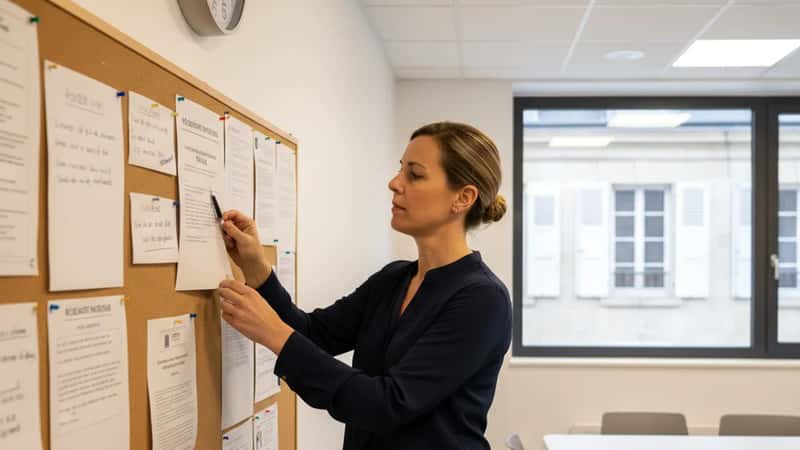
Even without a state mandate, a West Virginia employer's written break policy can become a legally enforceable obligation through contract principles. Once an employer establishes a written policy granting employees specific break rights — "All employees receive a 30-minute paid lunch and two 15-minute breaks per 8-hour shift" — that policy is generally enforceable as part of the employment relationship.
If an employer later stops honoring that policy without updating the handbook and notifying employees, affected workers may have a breach of contract claim — and depending on how the breaks interact with wage payment, a claim under the WV Wage Payment and Collection Act for unpaid compensable time.
Employer best practice: If your break policy changes, update the written handbook and have employees acknowledge the change in writing before implementation.
5. Certain Industries Have Break Obligations Beyond State Law
Some West Virginia employees have break rights that originate from sources other than state law:
Healthcare workers: Many WV hospitals and residential care facilities are covered by state Department of Health licensing requirements that include minimum staffing and break standards as a condition of operation — even though these are not part of the labor statutes.
Transportation workers: Truck drivers and commercial vehicle operators subject to U.S. Department of Transportation regulations must comply with federal Hours of Service rules, which mandate specific off-duty periods regardless of what WV state law requires.
Federal contractors: Employers performing work on federal contracts under the Service Contract Act (SCA) or Davis-Bacon Act may be required to provide breaks as part of the contract's labor standards, regardless of state law.
Unionized workplaces: If a collective bargaining agreement (CBA) governs the employment relationship, the CBA's break provisions control. WV's lack of a state break law does not nullify CBA protections — the contract standard applies.
6. Denying Promised Breaks Can Still Create Wage Claims
West Virginia employees who are denied breaks that were promised in writing can pursue multiple theories of recovery:
| Claim Type | When It Applies | Potential Recovery |
|---|---|---|
| FLSA violation | Short break (<20 min) treated as unpaid | Back wages + liquidated damages |
| WV Wage Act violation | Promised paid break denied | Back wages + up to 3× wages |
| Breach of contract | Written policy not honored | Actual damages |
| Retaliation claim | Fired for complaining about breaks | Reinstatement + back pay |
The WV Division of Labor handles complaints related to unpaid time and written policy violations. An employee whose 15-minute breaks were docked from pay can file a wage claim at labor.wv.gov and potentially recover back wages plus liquidated damages.
7. How to Report a Break-Related Wage Violation in West Virginia
If you believe your employer is violating FLSA payment rules for breaks or has denied you breaks promised in writing, take these steps:
Document the issue. Note the dates and times when breaks were denied or pay was improperly docked. Save pay stubs showing the deductions.
Review your written policy. Pull your employee handbook and any written communications about breaks. This is your primary evidence that a break right exists.
Raise it internally first. A written complaint to HR or management creates a paper trail and may resolve the issue. Keep a copy of your complaint.
File with the WV Division of Labor. Claims for unpaid compensable break time can be filed at labor.wv.gov or in person in Charleston. There is no filing fee.
Consider the FLSA route. The federal Wage and Hour Division also accepts complaints about improperly unpaid break time. Federal FLSA claims allow 2 years of recovery (3 for willful violations).
Avertissement: The information in this article is for general informational purposes only and does not constitute legal advice. Break entitlements depend on your industry, employment contract, and specific facts. Consult a licensed West Virginia employment attorney for guidance on your situation.