
 Carl Graham
When does a North Dakota employer legally have to hand over your last paycheck — and what happens if they don't? These are the questions that generate the most individual wage complaints filed with the North Dakota Department of Labor and Human Rights (NDLHR) each year. Unlike states that require immediate payment on the day of termination, North Dakota takes a more measured approach: final wages are due on the employee's next regularly scheduled payday, whether the employee quit, was fired, or laid off. That single rule sounds simple — but its application across vacation payout disputes, commission timing, and unlawful deductions generates significant litigation and administrative enforcement activity across Fargo, Bismarck, Grand Forks, and Minot.
The Core Rule: When Must a North Dakota Employer Pay the Final Paycheck?
NDCC § 34-14-03 is the governing statute: "Every employer shall pay all wages due to its employees on regular paydays designated in advance by the employer." When employment ends — for any reason — the final paycheck is due no later than the employer's next regularly scheduled payday after the last day of work. This standard applies uniformly:
Same Deadline Whether the Employee Quit or Was Fired
North Dakota does not distinguish between voluntary separations (resignation) and involuntary separations (termination, layoff, or reduction in force) when setting the final paycheck deadline. Both categories trigger the same "next regular payday" rule. This contrasts with states like California, which requires immediate payment on the termination date for employer-initiated separations. In North Dakota, a worker fired without warning on a Monday is owed their final check by the same payday that would have applied had they given two weeks' notice.
This uniformity simplifies compliance for employers but frustrates workers who need immediate access to earned wages to cover rent and basic expenses. Legal aid organizations in the state note that the gap between termination and the next payday — which can be up to two weeks or more — is a real hardship for workers living paycheck to paycheck.
What Counts as the "Next Regular Payday"?
The deadline is the payday the employer had designated before the separation — not an accelerated date, but also not a delayed one. If an employer's normal payday falls on Friday and the employee's last day was Monday, the deadline is Friday of the same week or Friday of the next week, depending on the regular schedule. Employers cannot legitimately delay the final paycheck by rescheduling paydays after the separation occurs. Courts and the NDLHR will look at the actual payday schedule in effect before the employment ended.
What Must Be Included in the North Dakota Final Paycheck?
Earned Wages and Overtime
The final paycheck must cover all hours worked through the last day of employment. This includes regular hourly pay, piece-rate earnings, and overtime at the correct 1.5× rate for hours over 40 in the final workweek. A scenario: Maria, a cashier at a Dickinson retail chain, works 44 hours in her final week before being laid off. Her final paycheck must include four hours of overtime at time-and-a-half — not just 44 hours at the straight-time rate.
Accrued Vacation and PTO: Policy Controls, Not State Law
North Dakota does not mandate payout of unused vacation or PTO upon separation. Whether an employee receives accrued vacation pay in the final paycheck depends entirely on the employer's written policy or employment contract. If the company handbook states "accrued vacation is paid out at separation," that commitment is enforceable. If the handbook is silent or says "vacation is forfeited at separation," the employer may lawfully pay nothing.
This is one of the most common sources of final paycheck disputes in North Dakota. Employees assume vacation pay will be included; employers rely on handbook language that was never clearly communicated. Workers should review their employee handbook carefully before resigning and ask in writing whether accrued leave will be included in the final check.
Commissions and Non-Discretionary Bonuses
Commissions earned under the terms of a commission agreement must be paid in the final paycheck — or by the next regular payday if the commission cycle has not closed at separation. The timing becomes complicated when commission calculations require post-separation data (such as project completion or invoice payment). In those cases, the employer must pay the commission as soon as it can be calculated, even if that falls after the regular final-paycheck deadline. Discretionary bonuses — those the employer has sole discretion to award — are generally not owed unless a bonus agreement says otherwise.
Permissible vs. Prohibited Deductions from the Final Paycheck
Not everything an employer claims as a deduction is legal. North Dakota law [NDCC § 34-14-04] limits the deductions employers may take from wages, including final paychecks:
| Deduction Type | Permitted? | Conditions |
|---|---|---|
| Federal/state taxes | Yes | Always required by law |
| Social Security / Medicare (FICA) | Yes | Required by federal law |
| Court-ordered garnishments | Yes | Must follow garnishment order |
| Health insurance premiums | Yes | If employee authorized in writing |
| 401(k) / retirement contributions | Yes | If employee authorized in writing |
| Unreturned company equipment | Conditional | Requires prior written agreement signed by employee |
| Cash register shortages | Conditional | Requires prior written agreement; cannot reduce pay below minimum wage |
| Damaged property | Conditional | Requires prior written agreement; must not be due to normal wear and tear |
| Uniform costs | Conditional | Requires prior written agreement; cannot reduce pay below minimum wage |
| Employer's general business losses | No | Not permissible under any circumstances |
| Training costs / signing bonuses clawbacks | Conditional | Enforceable only if agreed in writing before training/bonus, and if terms are reasonable |
The key principle: deductions beyond mandatory withholdings require a prior written agreement signed by the employee — not a policy buried in the handbook, but a specific authorization. An employer who discovers on the last day that a laptop is missing cannot unilaterally deduct the replacement cost from the final paycheck without that prior agreement. The proper recourse is a civil lawsuit against the former employee, not a paycheck hold.

The 10% Daily Penalty: What Happens When an Employer Is Late?
North Dakota's penalty provision [NDCC § 34-14-09] is clear and severe: an employer who fails to pay wages when due — including final wages — is liable for the unpaid wages PLUS a penalty of 10% of the unpaid amount per day until paid, up to 100% of the original amount. This penalty doubles the cost of any wage violation within 10 days of non-payment.
Example: A Grand Forks construction worker is owed $1,800 in final wages. The employer pays 20 days late. The penalty: $1,800 × 10% × 20 days, capped at 100% of $1,800 = $1,800 penalty. Total liability: $3,600.
The penalty accrues automatically — no court order is needed to trigger it. If the employer eventually pays the base wages but not the penalty, the worker can file a wage claim specifically for the accumulated penalty. The NDLHR has authority to recover both components.
À retenir: The 10% daily penalty is not theoretical — NDLHR enforces it. Employers who routinely pay final wages 1–2 weeks late are often surprised to learn they owe as much in penalties as in base wages. Processing the final paycheck on the normal payday cycle is not legally optional; it is the law.
Can an Employer Withhold the Final Paycheck Until Equipment Is Returned?
No. North Dakota law does not permit an employer to withhold a final paycheck as leverage to compel an employee to return company property — computers, key cards, vehicles, uniforms, or anything else. The wages were earned and must be paid by the next regular payday regardless of whether equipment has been returned. Withholding the check is a wage violation, full stop.
The legally correct path for an employer who needs property returned is: pay the final wages on time, then pursue the employee separately — through a demand letter, small claims court, or civil lawsuit — if property is not returned. Many employers do not know this rule and routinely hold final paychecks "pending return of equipment," creating liability for back wages plus the 10% daily penalty.
The inverse — an employee who refuses to sign a separation agreement or release of claims — similarly cannot be used as justification to delay the final paycheck. Conditioning payment on a signature is a wage violation. Separation agreements and final paychecks are separate matters.
For additional context on how North Dakota wage rules interact with workers' broader employment rights, the North Dakota Labor Law: The Complete 2026 Dossier for Workers, HR, and Employers provides a comprehensive overview of state employment law.
How to File a Wage Claim for Unpaid Final Wages in North Dakota
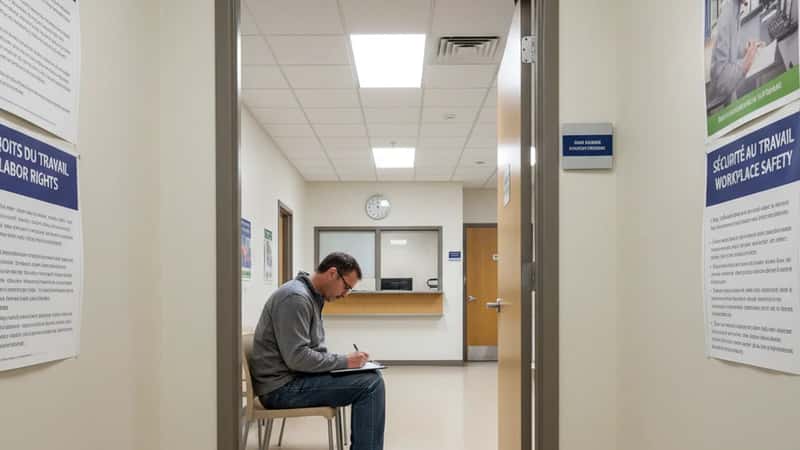
Step 1: Document Everything
Before filing, gather: pay stubs showing the final pay period, timesheets or records of hours worked, the offer letter or employment contract, the employee handbook (especially the leave payout policy), and any written communications about the final paycheck — including emails or texts from the employer.
Step 2: Contact the Employer in Writing
Send a brief written demand — email is fine — stating the amount owed, the date it was due, and requesting payment within seven business days. Some employers process late final checks once reminded of the legal obligation. Create a paper trail regardless of the outcome.
Step 3: File a Wage Complaint with the NDLHR
If the employer does not resolve the issue, file a wage claim at nd.gov/labor. The process is free and does not require a lawyer. The NDLHR will contact the employer, investigate, and may order payment of back wages plus the 10% daily penalty. Resolution in straightforward cases typically takes four to six months.
Step 4: Federal Option — Wage and Hour Division
Employees may also file a complaint with the U.S. Department of Labor's Wage and Hour Division for final paycheck violations that fall under FLSA jurisdiction. This is particularly relevant if the employer has a history of systemic wage violations affecting multiple workers — WHD investigations can recover back pay for all affected employees simultaneously.
For comparison of how other states handle these same situations, New Jersey Final Paycheck Law illustrates a stricter approach where immediate payment is required upon involuntary termination — a useful benchmark for understanding North Dakota's relative permissiveness.
Frequently Asked Questions About North Dakota Final Paycheck Law
Does North Dakota require immediate payment of the final paycheck on the last day of work? No. Unlike California and a handful of other states, North Dakota requires only that the final paycheck be paid by the employer's next regularly scheduled payday. There is no immediate-payment rule for either voluntary or involuntary terminations.
Does my employer have to pay out my unused vacation time when I leave? Only if your employer's policy or employment contract says they will. North Dakota law does not mandate vacation payout. Read your employee handbook before resigning — if payout is promised there, the employer must honor it. If the handbook is silent, do not assume you will receive it.
My employer is holding my final check until I sign a severance agreement. Is that legal? No. Conditioning payment of earned wages on signing a release or separation agreement is a wage violation in North Dakota. Your employer must pay wages earned by the next regular payday regardless of whether you sign anything. The severance agreement — and any additional money attached to it — is a separate negotiation.
What if my employer goes out of business before paying my final wages? File a wage claim with the NDLHR immediately. You may also have a secured priority claim against the business's assets in any bankruptcy proceeding under federal bankruptcy law [11 U.S.C. § 507(a)(4)], which protects employee wage claims up to $15,150 per employee for wages earned within 180 days before the bankruptcy filing.
How long do I have to file a wage claim for unpaid final wages in North Dakota? Under FLSA, the statute of limitations is two years from when the wages were due (three years for willful violations). Under North Dakota state contract law, you may have up to six years [NDCC § 28-01-16]. Filing sooner preserves more evidence and generates more penalty accumulation — do not wait.
This article provides educational information about North Dakota final paycheck law as of 2026 and does not constitute legal advice. For guidance specific to your situation, consult the NDLHR or an employment attorney licensed in North Dakota.